Linezolid and Tyramine Interaction: What You Need to Know
When you take linezolid, a prescription antibiotic used for serious bacterial infections like pneumonia and skin infections. Also known as Zyvox, it works differently than most antibiotics because it blocks bacterial protein production by targeting a unique part of their machinery. But this same mechanism makes it a powerful MAO inhibitor, a type of drug that stops the enzyme monoamine oxidase from breaking down certain chemicals in the body — and that’s where things get risky.
One of those chemicals is tyramine, a naturally occurring compound found in aged, fermented, or spoiled foods. Normally, your body breaks down tyramine quickly. But when linezolid shuts down the enzyme that does this job, tyramine builds up. Too much of it causes your blood pressure to spike suddenly — sometimes to dangerous levels. This isn’t just a minor side effect. It’s a medical emergency that can lead to stroke, heart attack, or death.
You don’t need to avoid all foods — just the ones with high tyramine levels. Think aged cheeses like blue cheese, parmesan, or cheddar. Fermented soy products like soy sauce, miso, and tempeh. Cured meats like salami, pepperoni, and pickled herring. Tap beer, red wine, and even overripe bananas or avocados can trigger a reaction. Even leftover food left in the fridge too long can develop dangerous levels of tyramine. If you’re on linezolid, your doctor should give you a clear list. Don’t guess. Don’t assume "a little won’t hurt." One bite can be enough.
It’s not just food. Some over-the-counter cold medicines, herbal supplements like St. John’s wort, and even certain antidepressants can interact with linezolid in similar ways. That’s why it’s critical to tell every doctor, pharmacist, or nurse you see — even for a simple cold — that you’re taking this antibiotic. You might not think it matters, but they need to know to avoid mixing it with something that could push your blood pressure through the roof.
This isn’t a theoretical risk. There are real cases of people ending up in the ER after eating a sandwich with aged cheese or drinking a glass of wine while on linezolid. The reaction can hit fast — within minutes to hours. Symptoms include pounding headache, blurred vision, chest pain, nausea, and sudden, severe high blood pressure. If you feel any of these, stop eating, sit down, and call for help immediately.
What’s tricky is that linezolid is often used when other antibiotics have failed. So you can’t just switch to something else easily. That means managing this interaction isn’t optional — it’s part of your treatment plan. Your health doesn’t depend on avoiding every risky food forever. It depends on avoiding them while you’re taking the drug. Once you finish your course, you can go back to your normal diet. But during those two weeks? No shortcuts.
Below, you’ll find real-world cases, practical tips, and clear guidance on what to eat, what to skip, and how to talk to your pharmacist about safe alternatives. This isn’t just about avoiding a bad reaction — it’s about making sure the medicine that’s saving your life doesn’t accidentally hurt you instead.
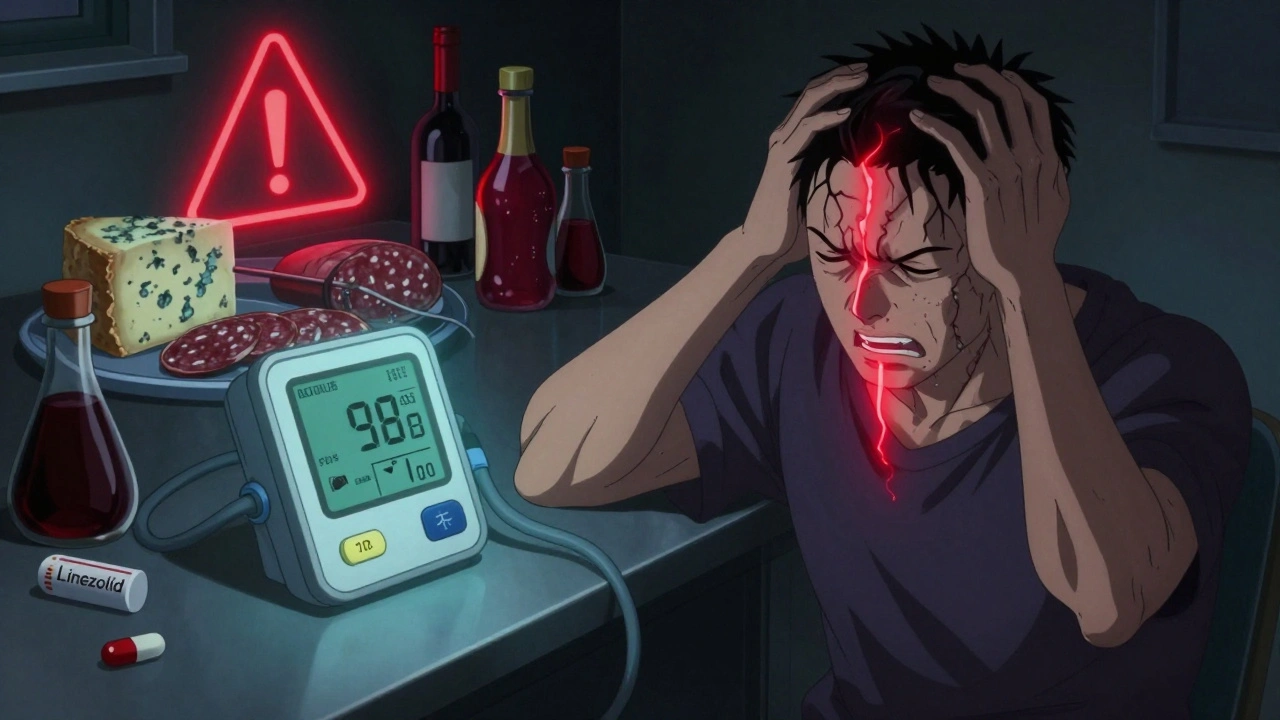
Linezolid and Tyramine: How to Avoid Hypertensive Crisis While Taking This Antibiotic
Linezolid can cause a dangerous blood pressure spike if you eat tyramine-rich foods like aged cheese, cured meats, or red wine. Learn exactly what to avoid, what’s safe, and why you must wait 14 days after treatment.
learn more