Hypertensive Crisis Prevention: What Works and What to Avoid
When your blood pressure spikes dangerously high—above 180/120 mm Hg—you’re facing a hypertensive crisis, a sudden, life-threatening rise in blood pressure that can damage organs like the brain, heart, or kidneys. Also known as hypertensive emergency, it doesn’t always come with warning signs, but when it does, symptoms like severe headache, chest pain, blurred vision, or confusion mean you need help right away. This isn’t just a number on a monitor—it’s a medical event that can lead to stroke, heart attack, or kidney failure if ignored.
Preventing a hypertensive crisis starts with managing high blood pressure, a chronic condition affecting nearly half of U.S. adults, often without symptoms. Most people don’t realize their blood pressure is climbing until it’s too late. Regular checks matter, especially if you’re on medication, have kidney disease, diabetes, or a history of heart problems. Skipping doses, using NSAIDs like ibuprofen too often, or consuming too much salt can push you over the edge. Even stress, lack of sleep, or sudden cold weather can trigger dangerous spikes in some people.
Medications play a big role. Drugs like blood pressure meds, including ACE inhibitors, beta-blockers, and calcium channel blockers, are designed to keep pressure steady—but they only work if taken consistently. Some people stop taking them when they feel fine, not knowing that high blood pressure doesn’t cause pain until it’s already hurting your organs. Others mix supplements like licorice root or decongestants with their prescriptions, unaware these can cancel out the meds or make them dangerous. And while lifestyle changes like reducing sodium, losing weight, or cutting alcohol help, they’re not enough on their own if your blood pressure is already unstable.
What you won’t find in most guides is how often people miss the early red flags. A headache that won’t go away, mild shortness of breath after walking, or sudden swelling in your legs aren’t just "getting older"—they’re signals your body is under strain. If you’re on blood pressure meds and notice your readings creeping up—even slightly—don’t wait. Talk to your doctor. Adjustments are easier to make before you’re in crisis mode.
There’s no magic bullet, but prevention is simple: know your numbers, take your meds like clockwork, avoid triggers, and act fast if something feels wrong. The posts below cover real cases, medication risks, and practical steps—like how certain antibiotics can raise blood pressure, why some painkillers are dangerous for hypertensive patients, and what to do when your usual treatment stops working. You won’t find fluff here. Just what you need to stay out of the ER.
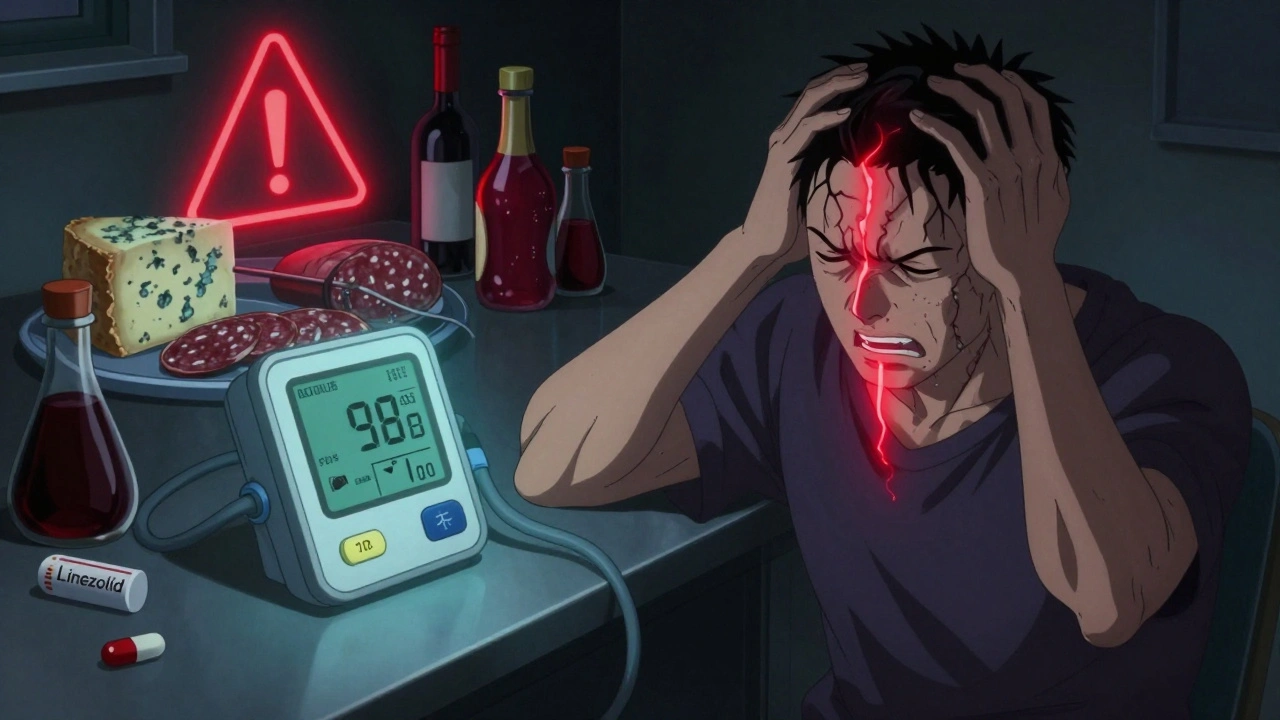
Linezolid and Tyramine: How to Avoid Hypertensive Crisis While Taking This Antibiotic
Linezolid can cause a dangerous blood pressure spike if you eat tyramine-rich foods like aged cheese, cured meats, or red wine. Learn exactly what to avoid, what’s safe, and why you must wait 14 days after treatment.
learn more