TCA Therapeutic Window Checker
Serum Level Analysis
Imagine a medication that can pull someone out of the deepest depression or stop chronic neuropathic pain, but carries a risk so high that a single tablet's overdose could be fatal. That is the reality of Tricyclic Antidepressants (TCAs). While newer drugs like SSRIs are safer and more common, TCAs remain a powerhouse for treatment-resistant cases. The catch? They have a narrow therapeutic index, meaning the gap between a dose that works and a dose that poisons you is dangerously small.
To handle this risk, doctors use Therapeutic Drug Monitoring (TDM). This isn't just a routine check-up; it's a precise scientific process of measuring drug concentrations in the blood to keep patients in the "Goldilocks zone"-not too low to be ineffective, and not too high to be toxic. When done right, TDM can reduce the risk of hospitalization by about 35% compared to just guessing the dose based on symptoms.
Why TCAs Require Constant Vigilance
TCAs like Amitriptyline and Nortriptyline work by stopping the reuptake of norepinephrine and serotonin. However, in high doses, they become "dirty drugs," meaning they start hitting receptors they shouldn't. They block alpha-adrenergic, histaminic, and muscarinic receptors, leading to a dangerous cocktail of symptoms.
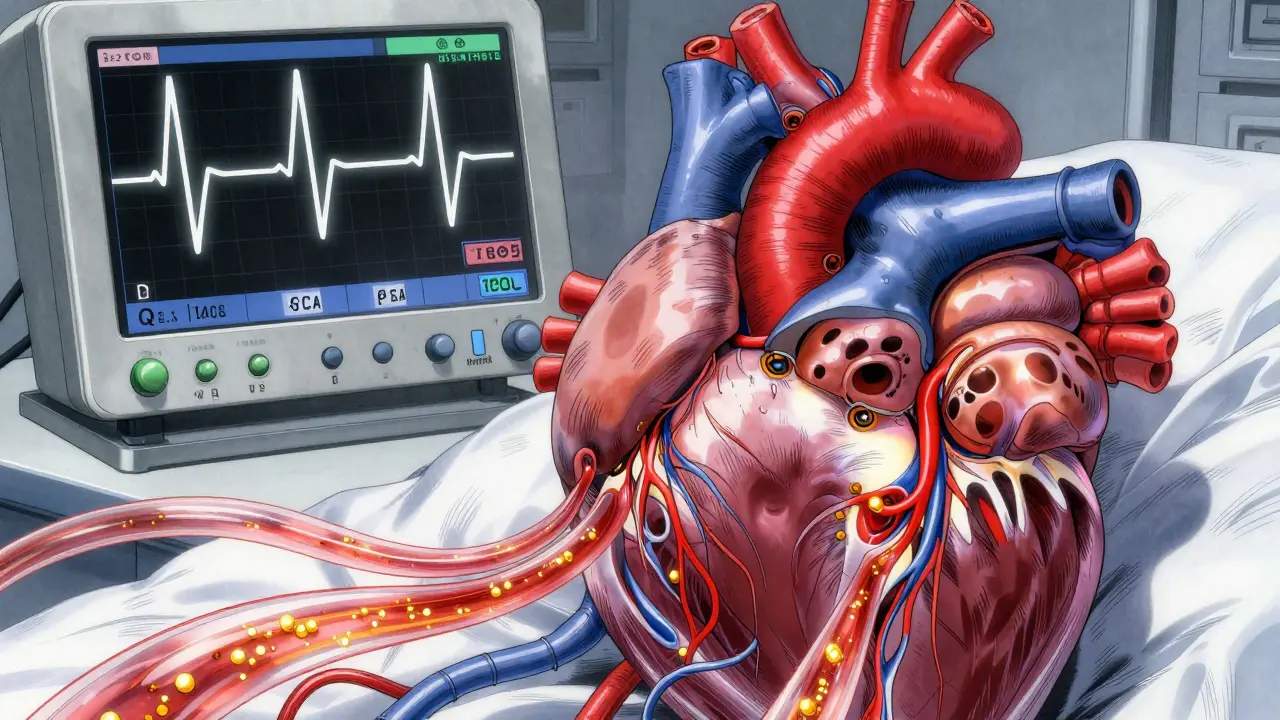
The most terrifying aspect of TCA toxicity is its effect on the heart. These drugs block fast sodium channels in myocardial cells. On an ECG, this shows up as QRS prolongation. If that QRS interval widens beyond 100 ms, you're looking at a medical emergency. Combine that with potassium channel blockade, and the risk of a lethal heart rhythm called torsades de pointes becomes very real. Because a person can deteriorate so quickly, relying solely on how a patient "feels" is a gamble.
The Technical Side of TDM: Numbers That Matter
TDM is all about the numbers. To get an accurate reading, blood must be drawn at the "trough"-which is the lowest concentration of the drug in the bloodstream, occurring immediately before the next dose. This usually happens after 5 to 7 days of consistent dosing, once the body reaches a steady state.
Different TCAs have different "safe zones." If the levels climb too high, the risk of seizures, severe tachycardia, and coma spikes. The following table breaks down the standard therapeutic windows used by clinicians to avoid toxicity.
| Drug Entity | Therapeutic Range (ng/mL) | Toxicity Threshold (ng/mL) |
|---|---|---|
| Amitriptyline | 80 - 200 | > 500 (Severe) |
| Nortriptyline | 50 - 150 | Critical above 150 |
| Desipramine | 100 - 300 | Variable |
The Genetic Wildcard: CYP450 Enzymes
Why does the same 50mg dose make one person feel great and another feel like they've been poisoned? The answer lies in the liver, specifically the CYP2D6 and CYP2C19 enzymes. These enzymes are responsible for breaking down TCAs.
Some people are "poor metabolizers," meaning their liver can't clear the drug efficiently. Others are "ultrarapid metabolizers," who chew through the drug so fast it never reaches a therapeutic level. The difference in plasma concentrations between these two groups can be a staggering 20 to 30 fold. This is why modern clinics are now combining TDM with pharmacogenetic testing. By knowing a patient's genetic makeup first, doctors can cut the time it takes to find the right dose by up to 40%.
Real-World Pitfalls and Implementation
Even with the technology available, TDM often fails in the real world due to human error. A common mistake is drawing blood before the patient has reached a steady state, or failing to list other medications that interfere with liver enzymes. In one study of European hospitals, nearly 38% of TDM requests were missing critical information about concurrent meds.
There is also the issue of the "therapeutic" trap. It's possible to have blood levels that look perfectly normal on paper but still be experiencing toxicity. For example, a case study described a woman with amitriptyline levels at 190 ng/mL-well within the safe range-who still developed a dangerous QRS widening of 140 ms. This proves that the blood test is a tool, not the final answer. Clinical signs must always trump the lab report.

Who Needs Monitoring Most?
Not every patient needs the same level of scrutiny. For a healthy 30-year-old with normal organ function, TDM might be less frequent. However, for the elderly, it is non-negotiable. Elderly patients make up about 40% of TCA users and often have reduced hepatic metabolism. They are far more sensitive to anticholinergic effects, such as confusion, dry mouth, and urinary retention.
In acute poisoning cases, the rule is simple: don't wait for the lab. While TDM is great for long-term management, a patient in a TCA overdose needs immediate supportive care, typically including sodium bicarbonate to stabilize the heart, regardless of what the serum levels are. The average 24-to-48-hour turnaround time for HPLC (High-Performance Liquid Chromatography) tests is simply too slow for an emergency.
The Future of Toxicity Reduction
We are moving toward a world where we won't have to wait two days for a lab result. New developments in point-of-care testing are bringing handheld devices to clinics that can provide results in 20 minutes. Even more impressive is the rise of AI-powered platforms like PsychX Analytics, which combine blood concentrations with ECG data and clinical symptoms to predict a toxicity crisis before it happens.
We are also seeing research into continuous interstitial fluid monitoring-essentially a "glucose monitor" but for antidepressants. While still in trials, this could provide a real-time stream of drug levels, eliminating the guesswork of trough-level blood draws entirely.
What is the main goal of TDM for TCAs?
The primary goal is to maintain drug concentrations within a specific therapeutic window to maximize efficacy while minimizing the risk of severe toxicity, particularly cardiovascular and CNS instability, due to the narrow therapeutic index of these medications.
When should the blood be drawn for a TCA test?
Blood must be drawn at the trough level, which means immediately before the next dose is administered. This should typically occur after 5-7 days of consistent dosing to ensure the drug has reached a pharmacokinetic steady state.
Why are some people more sensitive to TCAs than others?
Sensitivity is largely driven by genetics, specifically the CYP2D6 and CYP2C19 enzymes in the liver. Poor metabolizers accumulate higher levels of the drug, increasing toxicity risk, while ultrarapid metabolizers may find the drug ineffective at standard doses.
What is a "critical" ECG finding in TCA toxicity?
A QRS interval widening of more than 100 ms is considered a critical marker of toxicity. This indicates sodium channel blockade in the heart and requires immediate medical intervention, usually with sodium bicarbonate.
Can TDM replace clinical observation?
No. TDM is a supportive tool. Because individual sensitivity varies, a patient can show signs of toxicity even with "therapeutic" serum levels. Doctors must always correlate lab results with the patient's actual clinical symptoms and ECG findings.