Manufacturing Costs in Pharmaceuticals: What Drives Price and Quality
When you buy a pill, you’re not just paying for the chemical inside—you’re paying for the manufacturing costs, the full process of producing a medicine under strict quality controls, from raw materials to sealed packaging. Also known as pharmaceutical production expenses, these costs determine whether a drug is affordable, safe, and available when you need it. Many assume generics are cheaper because they’re lower quality, but that’s not true. The real difference lies in who pays for the factory, the testing, and the oversight—not the pill itself.
The FDA, the U.S. agency responsible for ensuring drugs meet safety and quality standards before they reach patients doesn’t allow corners to be cut. Every generic drug must prove it’s bioequivalent to the brand-name version, meaning it works the same way in your body. That requires exacting cGMP compliance, current Good Manufacturing Practices, the global gold standard for pharmaceutical production. Factories get inspected—sometimes without warning—across the U.S., India, China, and beyond. If a lab doesn’t meet standards, the whole batch gets rejected. That’s expensive. And it’s why you can’t just mix chemicals in a garage and sell them as medicine.
Manufacturing costs aren’t just about machines and labs. They include stability testing to make sure the drug doesn’t break down over time, quality control checks on every batch, and documentation that can fill filing cabinets. These aren’t optional. The bioequivalence, the scientific proof that a generic drug performs the same as the original in the body data alone can cost millions to generate. That’s why some generics are still pricey—they’re made in facilities that meet global standards, not just minimum ones.
It’s easy to think lower cost means lower quality, but the opposite is often true. The most affordable generics come from factories that produce huge volumes, spreading fixed costs thin. A single plant might make millions of tablets a day for dozens of drugs. That efficiency lowers the price per pill—without cutting safety corners. Meanwhile, smaller manufacturers or those making niche drugs pay more per unit because they can’t scale. That’s why some generics cost more than others, even if they contain the same active ingredient.
What you don’t see is the hidden cost of failure. A single recall due to contamination or instability can wipe out millions in revenue and damage trust for years. That’s why companies invest heavily in training, sensors, and audits. The Orange Book, the FDA’s official list of approved drugs and their therapeutic equivalence ratings exists because patients and doctors need to know which generics are truly interchangeable. It’s not just paperwork—it’s a safety net built on decades of manufacturing lessons.
So when you wonder why one generic costs $5 and another $15, it’s not about branding. It’s about where it was made, how many units were produced, and whether the factory passed its last FDA inspection. The system isn’t perfect, but it’s designed to protect you—not to inflate prices. Below, you’ll find real-world examples of how these costs play out in clinical settings, regulatory decisions, and everyday medication choices. You’ll see how quality isn’t an afterthought—it’s baked into every step of the process.
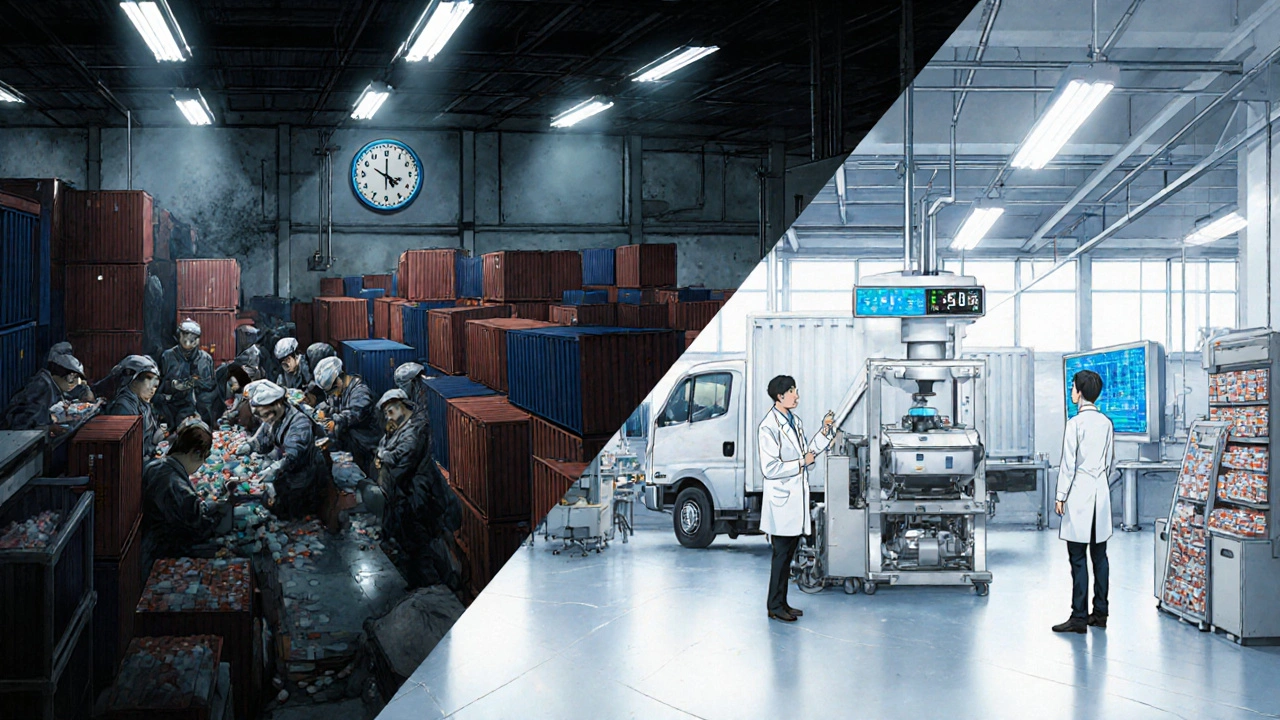
How to Evaluate Overseas vs. Domestic Generic Manufacturing
Choosing between overseas and domestic generic manufacturing involves more than cost. Learn how lead times, quality control, tariffs, and IP risks shape the best decision for your product and business.
learn more