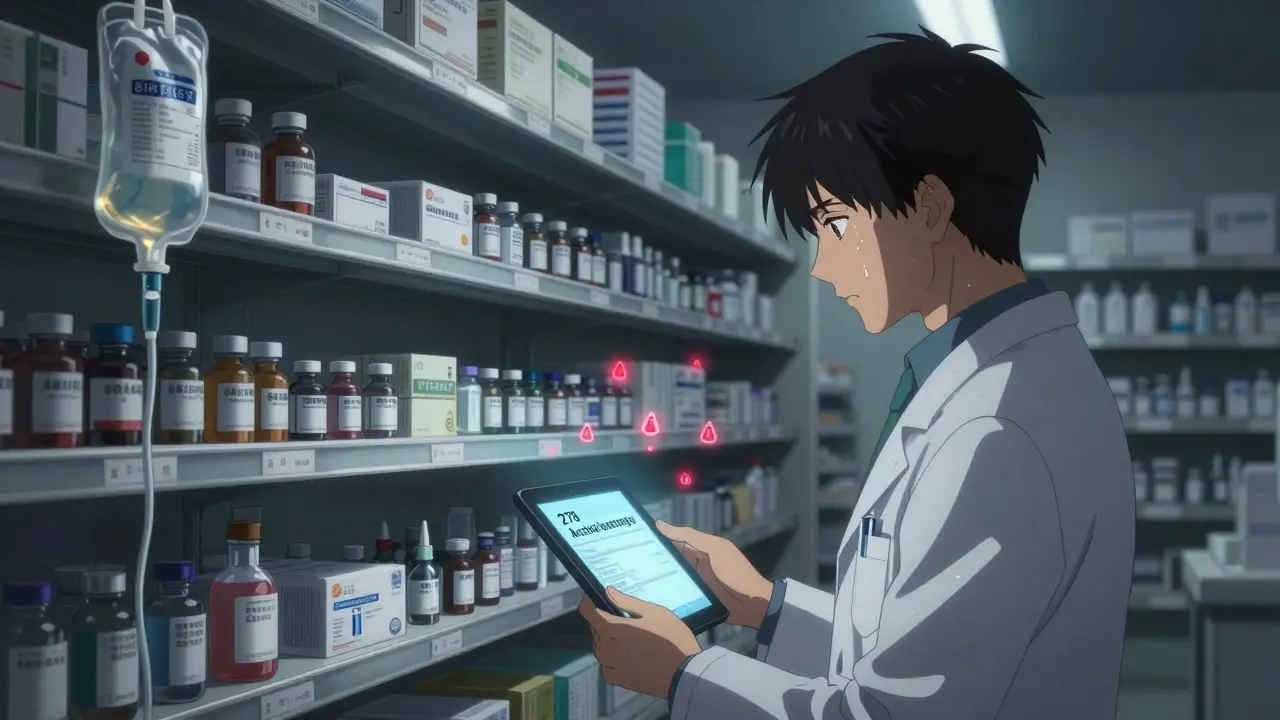
By now, most people know that generic drugs are cheaper. But few realize how fragile their supply really is. In April 2025, there were 270 active drug shortages in the U.S., and nearly all of them were generic medications. These aren’t obscure pills. These are life-saving drugs like IV fluids, chemotherapy agents, antibiotics, and epinephrine - the kind you rely on in a hospital, an ER, or even at home. When they disappear, the system doesn’t just slow down. It breaks.
Why Generic Drugs Are the First to Go
Generic drugs make up 90% of all prescriptions filled in the U.S. But they account for just 13.1% of total drug spending. That math doesn’t add up - unless you understand the business behind it. Generic manufacturers operate on razor-thin margins. A single vial of a generic antibiotic might cost less than $2. To stay profitable, companies must produce thousands of doses at ultra-low cost. That means cutting corners where they can - and relying on the cheapest suppliers possible. The biggest cut? Manufacturing. Less than 30% of active pharmaceutical ingredients (APIs) used in American drugs are made in the U.S. The rest come from just two countries: China and India. China alone supplies about 40% of the world’s APIs. That’s not just a supply chain. It’s a single point of failure. When a factory in India gets shut down by the FDA for quality violations - like what happened with cisplatin, a key chemotherapy drug - there’s no backup. There’s no extra inventory. There’s no alternative source. And because no one’s making a profit on that drug, no one rushes to replace it.Sterile Injectables: The Most Vulnerable
Not all generic drugs are created equal. Oral pills are simple to make. But sterile injectables - the ones given through IVs - are a whole different challenge. They require clean rooms, specialized equipment, and hours of precision. One tiny mistake, and the whole batch is contaminated. That’s why these drugs are the most common in shortage lists. Think about it: you can’t just swap out an IV bag of saline for a different one. You can’t substitute a chemotherapy drug without risking patient safety. In 2023, a tornado destroyed a Pfizer plant that made 15 different critical medications. That wasn’t a natural disaster. It was a supply chain collapse. And because those drugs had only one or two manufacturers, the entire country felt the impact. The FDA has documented over 20 essential drugs that teetered on the edge of shortage during the pandemic. Most were sterile injectables. And the problem didn’t start with COVID. It started decades ago, when manufacturers moved production overseas to save money - and nobody built a safety net.The Single-Point Failure Problem
For many generic drugs, manufacturing has shrunk to just one or two companies. If one of them has a quality issue, shuts down for repairs, or gets hit by a political or natural disaster, the drug vanishes. There’s no competition. No backup. No alternative. Take heparin, a blood thinner used in surgeries and dialysis. For years, it was made by just one company in China. When quality issues arose, the FDA paused imports. Hospitals scrambled. Patients faced delays. Some had to go without. This isn’t rare. The USP Annual Drug Shortage Report found that for nearly half of all shortage drugs, only one manufacturer remains. That’s not market competition. That’s market collapse.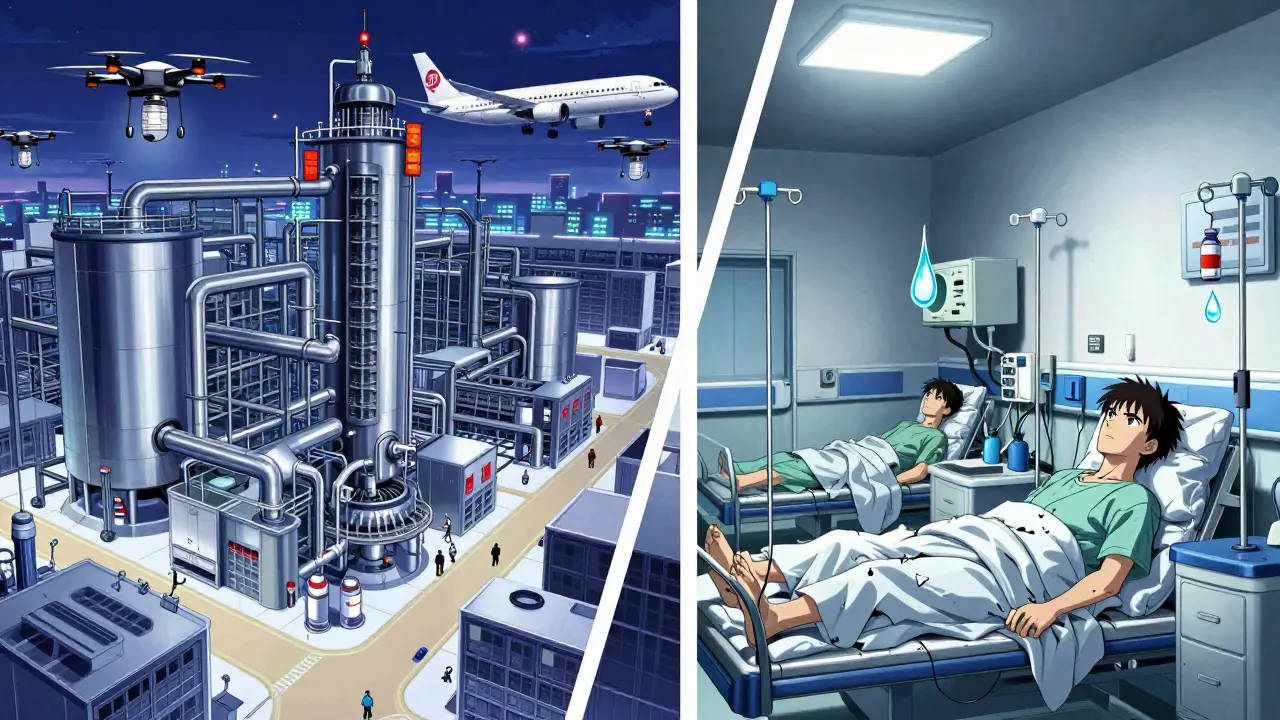
Why Tariffs Won’t Fix This
Some politicians say the answer is tariffs - slap a 50% or even 200% tax on drugs made overseas to force production back to the U.S. But that’s like trying to fix a leaky boat by throwing more weight into it. Tariffs raise the cost of APIs. That raises the cost of the final drug. But generic manufacturers can’t raise prices. They’re locked into contracts with hospitals and insurers that pay fixed, low rates. So what happens? They stop making the drug. The shortage gets worse. The CSIS analysis warns that tariffs could lead to “higher costs, delayed treatment, and increased shortages” - exactly the opposite of what’s intended. And it’s not just about money. Rebuilding domestic manufacturing takes five to seven years and $20-30 billion. That’s not a policy fix. That’s a national project.What’s Really Happening Behind the Scenes
Pharmacists are the ones on the front lines. One hospital pharmacist told Pharmacy Times they spend 20-30% of their workweek just managing shortages. That’s not filling prescriptions. That’s calling suppliers, compounding drugs from scratch, rationing doses, and convincing doctors to switch to riskier alternatives. Hospitals have started stockpiling. But they can’t stockpile everything. A single IV bag of saline lasts a few hours. A chemotherapy drug might be needed once a week. You can’t keep a six-month supply of every critical drug on hand. And even if you could, the cost would bankrupt the system. Patients feel it too. Cancer treatments get delayed. Surgeries get canceled. Antibiotics run out. People are being told to wait - sometimes for weeks - because the drug they need isn’t available.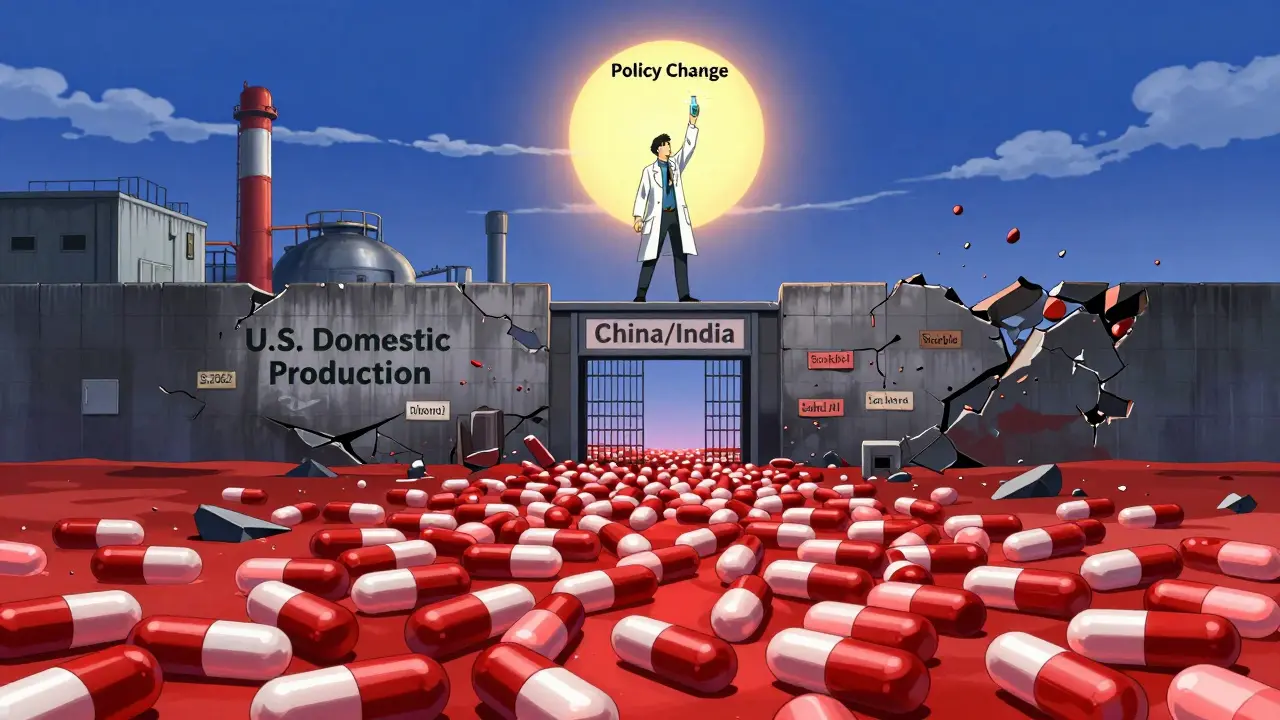
What Could Actually Help
There are no easy answers. But some ideas are starting to gain traction. One is the Strategic National Stockpile - but expanded. Right now, it holds mostly vaccines and emergency supplies. Experts are pushing to add critical generic injectables. Imagine having a federal reserve of essential drugs, ready to deploy when a factory shuts down. Another idea: require manufacturers to keep a six-month supply of high-risk drugs on hand. That’s what S.2062 proposes. It’s not perfect. It’s expensive. But it’s better than waiting for disaster to strike. Transparency matters too. Right now, you can’t tell if your generic drug was made in China, India, or the U.S. Requiring clear labeling on API origin would let regulators, hospitals, and even patients see where the risk lies. And finally - we need more manufacturers. Not just one or two. Dozens. If 10 companies make the same generic drug, one factory closing won’t cause a crisis. But right now, economic incentives are stacked against new entrants. Low prices mean low profits. No profit means no investment. No investment means no new factories.The Bigger Picture
The problem isn’t just about drugs. It’s about how we value health. We treat generic medications like commodities - cheap, replaceable, disposable. But when you’re the patient on the other end, they’re not commodities. They’re survival. We’ve built a system that depends on global suppliers, thin margins, and zero redundancy. And when things break - and they will - it’s patients who pay the price. The next time you hear about a drug shortage, don’t think it’s just a supply issue. Think of the hospital pharmacist working 12-hour shifts. The cancer patient waiting for treatment. The ER doctor choosing between two risky alternatives. This isn’t a problem that will solve itself. It needs policy. Investment. And a shift in how we see the most basic medicines we rely on every day.Why are generic drug shortages getting worse?
Generic drug shortages are worsening because manufacturing has become dangerously concentrated in just a few countries - mainly China and India - and only one or two companies typically make each drug. Low profit margins mean manufacturers have little incentive to invest in quality, backup production, or inventory. When one factory shuts down due to quality issues, natural disasters, or political disruptions, there’s no backup, and no one rushes to fill the gap.
Are brand-name drugs affected by shortages too?
Brand-name drugs are less affected because their manufacturers have higher profit margins, which let them maintain larger inventories, diversify suppliers, and absorb disruptions like tariffs or quality issues. They also invest in multiple production sites and flexible manufacturing. Generic drugs, by contrast, are priced so low that companies can’t afford those safeguards.
Can the U.S. just make all generic drugs domestically?
Rebuilding full domestic production for generic drugs would take 5-7 years and cost $20-30 billion. It’s technically possible, but economically unrealistic. Most generic drugs sell for pennies per dose, and no company will invest billions into a market that doesn’t pay enough to return a profit. A better approach is targeted domestic production for critical drugs - like IV fluids and chemotherapy agents - not everything.
How do drug shortages affect patient care?
Shortages force doctors to use less effective or riskier alternatives. Patients delay cancer treatments, surgeries get canceled, and antibiotics run out during outbreaks. One hospital pharmacist reported patients being told to wait weeks for essential medications. In extreme cases, shortages have led to preventable deaths - especially in intensive care and oncology units.
What role does the FDA play in drug shortages?
The FDA inspects foreign manufacturing facilities and can shut down production if quality standards aren’t met. But it has fewer inspectors for overseas sites than domestic ones. Meanwhile, U.S. inspection capacity has been reduced due to budget cuts. This creates gaps where unsafe products slip through - and then disappear from shelves when recalled.
Are there any current policy solutions being considered?
Yes. Congress is considering bills like S.2062, which would require manufacturers to maintain six-month reserves of critical generic drugs. Other proposals include public-private partnerships to fund domestic production, mandatory API labeling, and expanding the Strategic National Stockpile to include essential injectables. But progress is slow due to political gridlock and underfunded federal agencies.
Courtney Hain
February 20, 2026 AT 14:49Let me break this down for you people who think this is just about 'supply chains' - this is a deliberate, calculated dismantling of American healthcare by corporate oligarchs who want you dependent on foreign regimes. China doesn't just make the APIs - they control the entire pipeline. They've been stockpiling critical drugs for years, waiting for a crisis. The FDA? They're asleep at the wheel. They've been warned for a decade. Every time a factory in India gets shut down, it's not an accident - it's a signal. A test. They're gauging how fast we'll panic. And we're falling for it. Every. Single. Time. You think tariffs are the answer? No. You think making drugs in America is the answer? Still no. The real solution is nationalizing pharmaceutical production under military oversight. We do it for weapons, why not for life-saving IV fluids? This isn't a shortage. It's a hostage situation. And we're the ones holding the ransom money.
And don't even get me started on how the FDA lets Chinese labs use fake certifications. I've seen the documents. They're not even trying to hide it anymore. The system is rigged. And you? You're still checking CVS for your epinephrine like it's a grocery run.
Wake. Up.
Robert Shiu
February 20, 2026 AT 19:14Man, I just read this whole thing and I'm honestly terrified. But I’m also inspired. Like, yeah, this is a disaster waiting to happen - but we’ve got smart people in this country who know how to fix it. I work in a hospital pharmacy. I’ve seen the scramble when a batch of saline vanishes. I’ve watched nurses cry because they couldn’t give a kid their chemo on time. But I’ve also seen teams come together - compounding drugs from scratch, finding workarounds, calling every distributor in three states. We’re not helpless.
What if we started small? What if every hospital committed to stockpiling just ONE critical drug - like heparin or vancomycin - just enough to last 30 days? What if we pushed for a national registry so we could see where shortages are happening in real time? I know it sounds simple, but small actions add up. We don’t need a revolution. We need a movement. And I’m in. Who’s with me?
Let’s build a backup. Together.
Danielle Gerrish
February 21, 2026 AT 14:35OH MY GOD. I JUST REALIZED THIS IS WHY MY MOM’S CHEMOTHERAPY GOT DELAYED FOR THREE WEEKS LAST YEAR. I THOUGHT IT WAS JUST ‘BUREAUCRACY.’ NO. IT WAS THIS. IT WAS THIS ENTIRE SYSTEM COLLAPSING BECAUSE WE TREATED LIFE-SAVING DRUGS LIKE TOILET PAPER.
They don’t even tell you when this happens. You’re just told ‘there’s a delay.’ No context. No explanation. Like it’s normal. Like it’s not a crisis. I called my mom’s oncologist last week and asked, ‘Why can’t we just make more?’ And he said, ‘Because no one makes a profit on it.’ I cried. I literally screamed into my pillow.
And now I’m thinking - what if we made a public campaign? Like, ‘I Need My Drug’? We could post pictures of empty shelves. We could tag every senator. We could flood the FDA’s inbox. This isn’t just policy. This is human. This is my mother. This is your sister. This is your kid.
Someone has to scream louder than the corporate lobbyists. I’m starting the hashtag tonight. #MyDrugIsNotACommodity
madison winter
February 21, 2026 AT 20:36It’s ironic. We live in a world where we can order a pizza in 12 minutes, track a package to the inch, and stream 4K video from Mars - but we can’t guarantee a 50-cent IV bag of saline.
There’s no mystery here. It’s economics. Low margin. High risk. Zero incentive. We built a system optimized for efficiency, not resilience. And now we’re paying for it with lives.
Calling it a ‘crisis’ is dramatic. It’s just the logical endpoint of decades of deregulation, offshoring, and profit maximization. The fact that we’re surprised means we stopped thinking critically. We stopped asking ‘why?’
There’s no villain. Just inertia. And inertia kills.
Ellen Spiers
February 22, 2026 AT 01:41The structural vulnerabilities in the generic pharmaceutical supply chain represent a systemic failure of risk governance, predicated upon the neoliberal prioritization of cost-efficiency over redundancy. The concentration of active pharmaceutical ingredient (API) manufacturing in geographically proximate jurisdictions - namely, the People’s Republic of China and the Republic of India - constitutes a critical single-point-of-failure architecture, which, when subjected to exogenous shocks (e.g., regulatory non-compliance, natural disasters, geopolitical disruption), induces cascading supply disruptions.
Furthermore, the absence of statutory requirements mandating strategic inventory reserves, coupled with insufficient regulatory oversight of foreign manufacturing facilities, exacerbates the fragility of the system. The proposed solution of tariff imposition is economically incoherent, as it violates the principle of price elasticity in a market with rigid reimbursement structures.
Policy interventions must therefore be multivariate: (1) establishment of a federally funded, geographically distributed API production network; (2) implementation of mandatory six-month inventory buffers for Tier-1 essential drugs; and (3) mandatory API origin labeling under FDA regulation. Without these, the system remains in a state of perpetual vulnerability.
Marie Crick
February 24, 2026 AT 00:36You’re all overthinking this. It’s simple: stop letting China make our medicine. Period. If we can’t make it here, we don’t need it. Let people die waiting for a drug made in a foreign factory. That’s the price of outsourcing. I’m not crying over a vial. I’m done being the world’s pharmacy.
Benjamin Fox
February 25, 2026 AT 05:33John Cena
February 26, 2026 AT 13:59There’s truth in all of this. The system’s broken. But I don’t think the answer is blame. It’s not China’s fault. It’s not the FDA’s fault. It’s not even the manufacturers’. It’s us. We chose cheap. We chose convenience. We didn’t ask questions. We just clicked ‘buy.’
What if we started paying a dollar more for our generics? Just one. That extra dollar could fund a backup factory. That’s all. Not a revolution. Just a shift.
And if we did that? We’d be the generation that fixed it. Not with rage. Not with tariffs. But with choice.
Nina Catherine
February 27, 2026 AT 07:24