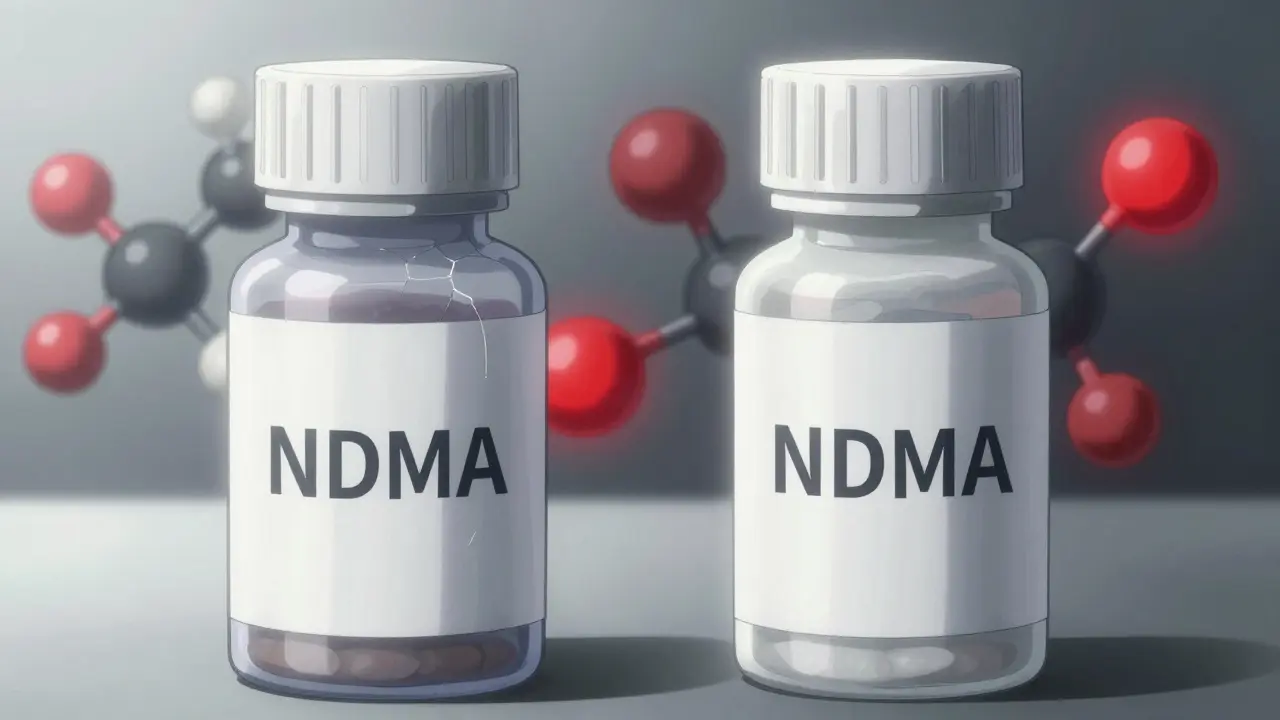
When you pick up a bottle of generic medication, you assume it works just like the brand-name version. But here’s the truth: generic drugs aren’t always stable in the same way. Even if they contain the same active ingredient, small differences in how they’re made can cause them to break down faster - and that’s not just a technical issue. It’s a safety issue.
What Does "Stability" Actually Mean?
Stability isn’t just about whether a pill looks the same after six months. It’s about whether it still does what it’s supposed to do. The FDA defines it clearly: a product must keep its strength, purity, and quality from the moment it’s packaged until the day it expires. That’s not a suggestion. It’s a legal requirement under 21 CFR 211.166.For a drug to be stable, four things must stay in check:
- Chemical stability: The active ingredient doesn’t break down into harmful byproducts. HPLC tests catch even tiny impurities - as little as 0.1% - that could be toxic.
- Physical stability: The pill doesn’t crumble, the liquid doesn’t cloud, the cream doesn’t separate. For inhalers, the dose must still be accurate. For nanoparticles, like those used in cystic fibrosis treatments, particles must stay under 200nm. Go over that, and they can’t reach the target cells.
- Microbiological stability: No mold, no bacteria. Non-sterile products can’t have more than 100 colony-forming units per gram. Sterile ones? They must have a 1 in 1 million chance of contamination.
- Functional stability: Does the delivery system still work? A metered-dose inhaler that spits out 85% of its labeled dose instead of 100% isn’t just underperforming - it’s dangerous.
These aren’t theoretical checks. They’re real, measurable limits. And if a product crosses any of them, it’s no longer safe to use.
How Long Is "Long-Term" Testing?
Companies don’t guess how long a drug lasts. They test it. The gold standard? ICH Q1A(R2). It says: test at 0, 3, 6, 9, 12, 18, 24, and 36 months. That’s real-time. Real conditions. Real storage.But here’s the catch: most companies also run accelerated tests. They put the product in a 40°C, 75% humidity chamber for six months and hope it predicts what happens over two years. It’s faster. Cheaper. But it’s not always right.
One quality assurance professional on the American Pharmaceutical Review forum lost $250,000 and 18 months because their accelerated test showed no problems - but the real-time study revealed crystallization at 24 months. Why? A polymorphic transition. A hidden change in the drug’s crystal structure. The high heat didn’t trigger it. Room temperature did.
Accelerated testing can miss things. Especially when degradation happens slowly, or depends on moisture, light, or packaging interactions. That’s why the FDA and EMA require long-term data to back up any expiration date.
Why Generic Drugs Are the Biggest Risk
Brand-name drugs go through years of clinical trials. Their stability is baked into the approval. But generics? They only need to prove they’re bioequivalent - meaning they get absorbed the same way in the body. That’s it.They don’t have to repeat the same stability studies. And here’s where it gets dangerous: generics often use different fillers, coatings, or manufacturing processes. These changes can affect how moisture gets in, how light affects the drug, or how the active ingredient crystallizes.
A 2020 FDA study found that 17.3% of generic levothyroxine products had stability issues the brand-name version (Synthroid) didn’t. Why? Moisture. The generic packaging didn’t protect as well. That meant some pills lost potency before the expiration date. For a thyroid drug - where even a 10% drop in dose can cause serious symptoms - that’s not minor.
It’s not just levothyroxine. The same pattern shows up in antibiotics, anticonvulsants, and blood pressure meds. Differences in excipients - the "inactive" ingredients - can change how fast the drug degrades. And no one checks that unless they’re looking.
Storage Isn’t Just a Label - It’s a Law
You’ve seen it: "Store at room temperature." But what does that even mean?USP defines "room temperature" as 15-30°C (59-86°F). But in a real warehouse, that’s not a single number. It’s a range. And if your storage area hits 32°C for 10 days straight? That’s not "room temperature." That’s a stability risk.
Here’s the kicker: 80% of FDA Form 483s (official warnings) about stability are because companies didn’t document storage conditions properly. Saying "room temperature" isn’t enough. You need temperature logs. Humidity readings. Proof that your warehouse didn’t overheat during summer.
And it’s not just pharma. Food companies face the same issue. One food scientist reported that switching to precise water activity (aw) and pH monitoring extended his refrigerated soup’s shelf life by 22%. Why? Because microbes don’t grow the same way in a soup with aw 0.94 vs. 0.97. Tiny differences. Huge consequences.
What Happens When Stability Fails?
It’s not just about potency. Degradation can create new chemicals - some toxic. A study in 2021 found that degraded metformin (a diabetes drug) could produce small amounts of NDMA, a known carcinogen. That’s why regulators require impurity profiles for every batch.Microbial growth? That’s not just spoilage. It’s infection risk. The Parenteral Drug Association found that 41.3% of stability-related recalls in the last five years were due to preservative failure. A preservative that works on day one might not work on day 180 if the product’s pH shifts or water content changes.
And then there’s the global problem. WHO says 28.7% of medicines in low-income countries fail stability tests - not because they’re fake, but because they’re stored in uncontrolled warehouses, trucks, and clinics. Heat, humidity, and sunlight destroy them before they reach the patient.
What’s Changing? The Future of Stability Testing
The industry is waking up. The ICH Q12 guideline (effective late 2023) lets companies make changes to their products after approval - without restarting stability studies - as long as they prove the change doesn’t affect safety. That’s a big shift.Companies like Amgen and Merck are using Risk-Based Predictive Stability (RBPS) tools. These models use data from multiple stress tests to predict degradation paths - not just heat, but light, vibration, packaging interactions. In pilot studies, they cut shelf-life determination time by 30%.
The FDA’s new Continuous Manufacturing Stability Testing (CMST) program showed that drugs made in continuous production lines (not batch-by-batch) can have their shelf life determined 40% faster. Why? Because every unit is monitored in real time.
But here’s the roadblock: regulators still don’t have clear rules for what counts as an "acceptable alternative." Many companies are afraid to innovate because they don’t know if the FDA will accept their data.
What You Should Know as a Consumer
You can’t test your pills at home. But you can protect yourself:- Check expiration dates. Don’t use pills past them - even if they look fine.
- Store meds in a cool, dry place. Not the bathroom. Not the car.
- If your generic meds seem less effective, talk to your pharmacist. It might be a stability issue.
- Report side effects or sudden changes in how a drug works. That data helps regulators spot patterns.
Stability isn’t glamorous. It’s not flashy science. But it’s the quiet guardrail that keeps you safe. When a drug degrades, it’s not just weaker - it can become harmful. And for generics, that risk is real - and often hidden.
Can expired generic drugs still be safe to take?
It’s not recommended. While some drugs may retain potency past their expiration date, there’s no guarantee. Degradation can produce harmful compounds, especially in liquids, creams, or temperature-sensitive products. Generic drugs may degrade faster than brand-name versions due to differences in excipients or packaging. The FDA advises against using expired medications because safety and effectiveness cannot be assured.
Why do generic drugs sometimes have shorter shelf lives than brand-name ones?
Generics don’t need to repeat the full stability studies done by the original manufacturer. Differences in inactive ingredients (like binders, coatings, or preservatives), manufacturing processes, or packaging can affect how the drug resists moisture, heat, or light. For example, a generic levothyroxine might use a less moisture-resistant capsule, leading to faster degradation. The active ingredient is the same, but the delivery system isn’t - and that’s what stability depends on.
Does storage temperature really affect drug stability?
Absolutely. A 2022 MIT study showed that rising global temperatures could reduce average drug shelf life by nearly five months by 2050. Even short spikes above 30°C can trigger chemical breakdown, crystallization, or microbial growth. A pill stored in a hot garage for a week might look unchanged - but its potency could have dropped 15%. Always store medications in a cool, dry place, ideally between 20-25°C.
What’s the biggest cause of stability-related drug recalls?
According to the Parenteral Drug Association’s 2022 survey, the top cause (41.3%) is microbial growth in preservative systems due to changes in water activity or pH. Other major causes include loss of potency from chemical degradation, physical instability like clumping or separation, and failure to meet dose uniformity standards - especially in inhalers and injectables.
Are there any regulations that specifically protect consumers from unstable generic drugs?
Yes. The FDA requires all generic drugs to meet the same quality, strength, purity, and stability standards as brand-name drugs under 21 CFR 211.166. Manufacturers must provide stability data from validated studies, and the FDA inspects facilities. However, enforcement relies on post-market surveillance. If a generic product fails stability testing after launch, the FDA can issue recalls or warning letters - but only after the problem is detected. Consumers should report unexpected side effects or changes in drug performance to help catch these issues early.
kenneth pillet
January 16, 2026 AT 14:07Been using generics for years. Never had an issue. Maybe I got lucky. But I’ve seen people panic over nothing. If it’s FDA-approved, it’s fine. Don’t overthink it.
Jodi Harding
January 17, 2026 AT 19:38Stability isn’t a technical detail-it’s a life-or-death calculation. One percent impurity can turn a cure into a slow poison. And we let corporations cut corners because it’s cheaper? That’s not capitalism. That’s negligence dressed up as efficiency.
Danny Gray
January 19, 2026 AT 00:23Wait, so you’re saying generics are dangerous because they’re *too* similar? That’s the funniest thing I’ve heard all week. If they’re bioequivalent, then they’re the same. If they’re not, then they shouldn’t be approved. End of story. Why are we pretending chemistry is magic?
Tyler Myers
January 19, 2026 AT 20:36They’re lying to you. The FDA doesn’t care. Big Pharma owns them. Generics are designed to fail slowly-so you keep buying them. The crystallization? The NDMA? All known for years. But you won’t hear it on the news. Why? Because if you knew how much of your medicine is just fancy sugar with a patent loophole, you’d never take another pill.
Zoe Brooks
January 20, 2026 AT 02:39Love this breakdown. So many people don’t realize how much science goes into something as simple as a pill. 🙌 Also-storage matters. I keep my meds in a drawer in my bedroom now. Not the bathroom. Not the car. No more excuses. 💪
Kristin Dailey
January 21, 2026 AT 02:28USA makes the best drugs. Everything else is a gamble. Stop importing cheap junk and start supporting American manufacturing. Safety isn’t negotiable.
Wendy Claughton
January 21, 2026 AT 19:01This is so important… I never thought about how packaging affects stability… I mean, really… the little things matter so much. 😔 I’ve started checking expiration dates more carefully, and even asking my pharmacist about the manufacturer. It’s scary, but knowledge is power. 🤍
Stacey Marsengill
January 22, 2026 AT 11:54Let’s be real-most generics are pharmaceutical dumpster fire with a barcode. I’ve seen pills crumble in my hand. I’ve seen liquids turn cloudy. I’ve watched people get sicker because their ‘equivalent’ drug stopped working. And no one’s held anyone accountable. It’s not a system failure. It’s a moral failure.
Aysha Siera
January 23, 2026 AT 01:59Who controls the FDA? Who owns the labs that test generics? Who profits when you get sick from expired meds? Think deeper. This isn’t about chemistry. It’s about control.