Don’t Just Take It-Ask About It
Every year, over 1.3 million people in the U.S. end up in the emergency room because of medication mistakes. Many of these aren’t caused by doctors or pharmacists-they happen because patients didn’t know what to ask. Your pharmacist isn’t just the person who hands you the bottle. They’re trained to catch errors, spot dangerous interactions, and help you actually understand what you’re taking. But you have to speak up.
What Is This Medicine For?
It sounds simple, but 30% of medication errors happen because people don’t know why they’re taking a drug. You might get a prescription for something like metoprolol and assume it’s for high blood pressure. But what if it’s actually for heart rhythm issues? Or migraines? Ask: “What condition is this meant to treat?” and “How will I know it’s working?” If you don’t understand the purpose, you’re more likely to skip doses or stop too soon.
How and When Should I Take It?
Timing matters. Some pills need food to be absorbed properly. Others can upset your stomach if taken on an empty belly. Some work best in the morning; others should be taken at night to avoid drowsiness during the day. Ask: “Should I take this with food or on an empty stomach?” “Is there a best time of day to take it?” And don’t forget: “Can I drink alcohol or take other meds with this?” One patient in Leeds stopped taking their statin because they thought it had to be taken at bedtime-only to find out later their doctor meant to take it in the morning. That mix-up cut the drug’s effectiveness in half.
What Are the Side Effects?
Not all side effects are created equal. Some are annoying but harmless-like dry mouth or mild nausea. Others signal something serious. Ask: “What side effects are common?” “Which ones mean I need to call my doctor right away?” For example, if you’re on an antidepressant and start feeling unusually agitated or have racing thoughts, that could be serotonin syndrome-a rare but dangerous reaction. Or if you’re on blood thinners and notice unusual bruising or bleeding gums, that’s not normal. Your pharmacist knows which symptoms to watch for and when to act.
Could This Interact With Anything Else?
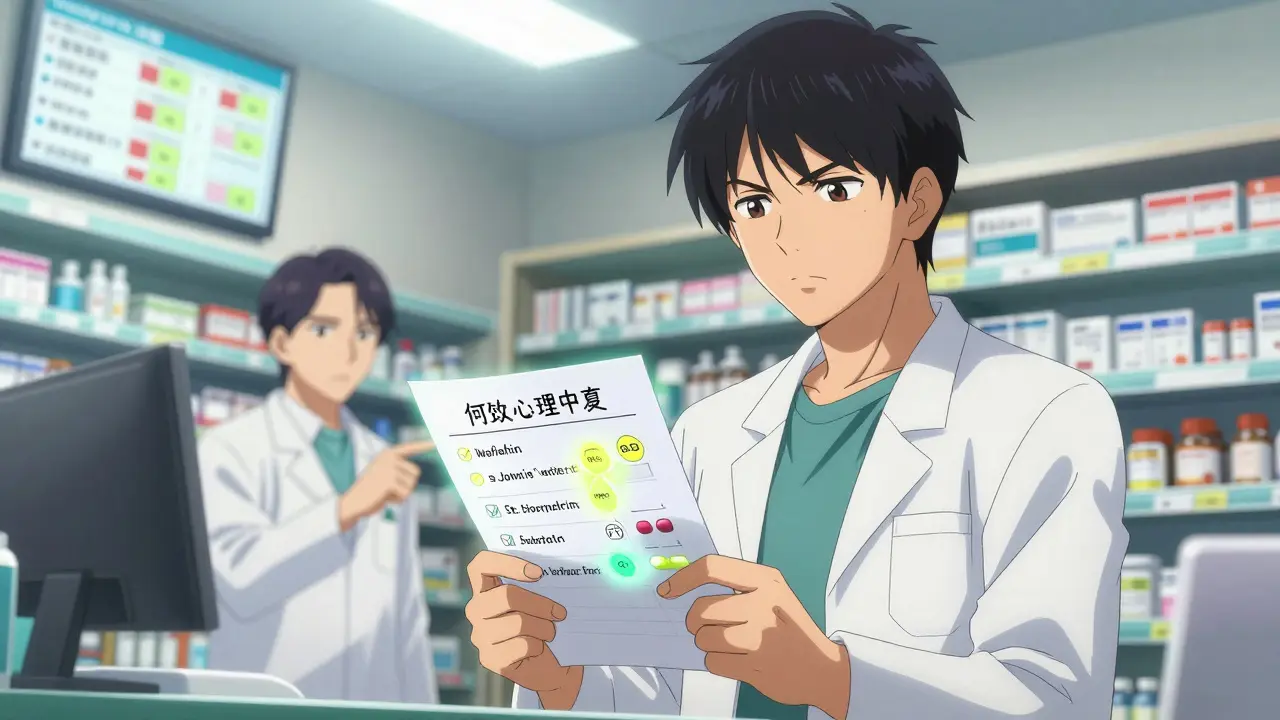
You’re probably taking more than one thing. Prescription drugs, over-the-counter painkillers, herbal supplements, even grapefruit juice can clash. The FDA says 15% of hospital admissions are due to drug interactions you could’ve avoided. A common one: warfarin (a blood thinner) and St. John’s Wort (a popular supplement for mood). Together, they can make warfarin useless-or dangerously strong. Another: ibuprofen and blood pressure meds. Taking them together can reduce the effectiveness of your BP drug and strain your kidneys. Bring a list of everything you take-including vitamins, CBD, and herbal teas. Your pharmacist will check for hidden risks.
What If I Miss a Dose?
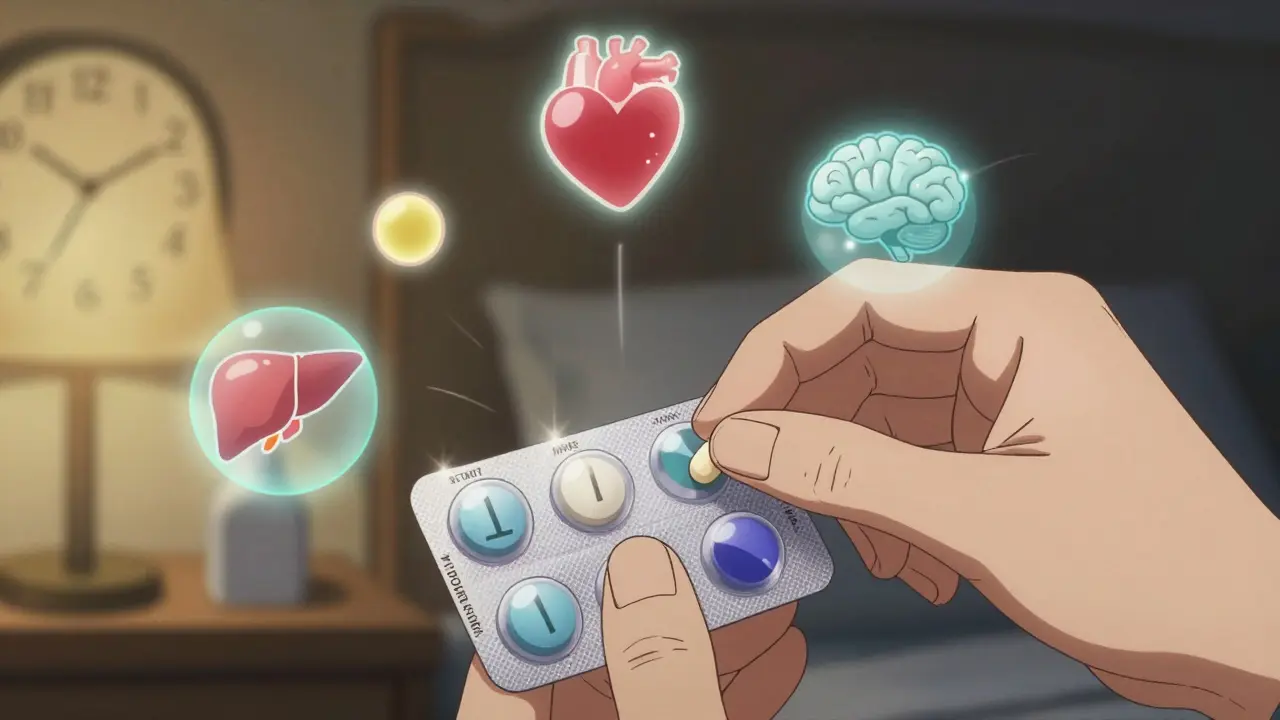
Life happens. You oversleep. You’re at work. You forget because the pill looks different this month. Instead of guessing, ask: “What should I do if I miss a dose?” Some meds, like antibiotics, need strict timing. Others, like cholesterol drugs, are more forgiving. Missing a dose of levothyroxine (for thyroid) can throw off your whole metabolism. But missing one dose of lisinopril (for blood pressure) might not matter as much. Your pharmacist can tell you what’s safe and what’s risky. They’ve seen the mistakes-and can help you avoid them.
Is There a Cheaper Option?
Brand-name drugs can cost 80-85% more than generics-even though they’re chemically identical. Ask: “Is there a generic version?” and “Can you help me find a discount program?” Many pharmacies offer $4 generic lists for common meds like metformin, atorvastatin, or amlodipine. Some manufacturers have patient assistance programs. Others work with local charities. One woman in Leeds was paying £70 a month for her diabetes pill-until her pharmacist showed her the generic, which cost £6. She saved £768 a year.
When Will I Start Feeling Better?
Many people quit their meds too soon because they don’t feel immediate results. Antidepressants can take 4-6 weeks. Blood pressure drugs may not make you feel anything at all-even when they’re working. Ask: “How long should I wait before I notice improvement?” and “Will I need blood tests or other checks to see if it’s working?” If you don’t know what success looks like, you might think the drug isn’t helping-and stop taking it. That’s how chronic conditions like hypertension or diabetes get out of control.
Are There Other Ways to Manage This?
Medication isn’t always the only option. Ask: “Are there lifestyle changes or non-drug treatments that could help?” For example, if you’re on a statin for high cholesterol, your pharmacist might suggest increasing fiber intake or walking 30 minutes a day. If you’re on painkillers for back pain, they might recommend physical therapy or heat therapy. Some pharmacies even offer free smoking cessation programs or weight management coaching. You’re not just getting a pill-you’re getting a health partner.
How Do I Remember to Take It?
Half of people stop taking their meds within the first year. Not because they feel better-but because they forget. Ask: “Do you have pill organizers?” “Can you set up refill reminders?” “Is there an app or text service that helps?” Some pharmacies offer blister packs with days of the week labeled. Others link to smartphone alerts. The “teach-back” method works too: after they explain, repeat it back in your own words. Studies show this boosts adherence by 40%. If you can’t explain it, you won’t remember it.
Can You Review All My Medications Together?
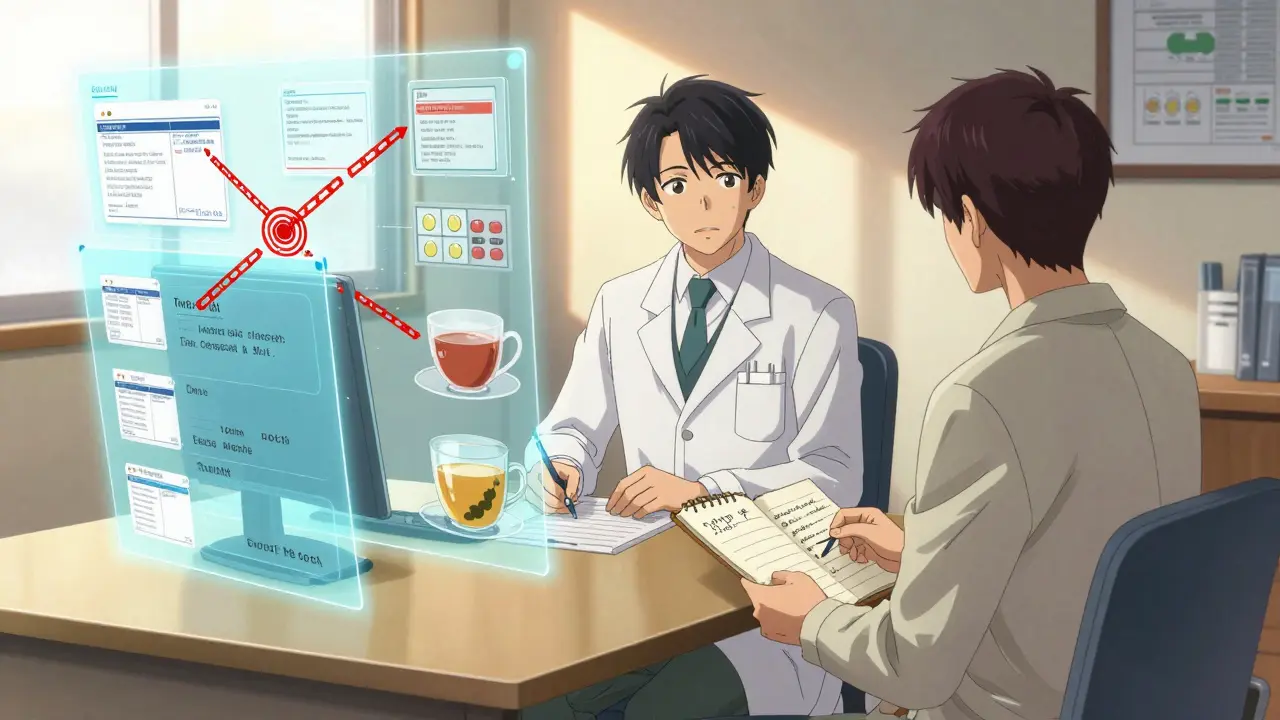
Most people take 3-5 different prescriptions. That’s a lot to track. Ask: “Can you do a full medication review?” Many pharmacies now offer free Medication Therapy Management (MTM) sessions-especially if you’re on Medicare. During a 20-30 minute appointment, your pharmacist will look at every pill, supplement, and OTC drug you take. They’ll check for duplicates, gaps, and risks. One patient in Leeds was taking two different acid reducers-both with the same active ingredient. The pharmacist caught it before it damaged his kidneys.
What If I Have More Questions Later?
Don’t wait until your next refill. Pharmacists are more available than your doctor. Call, message, or stop by. Many community pharmacies have private consultation rooms. You don’t need an appointment. Just say: “I have a question about my meds.” That’s what they’re there for. And if you’re in a rural area where access is limited, telepharmacy services are now available in 62% of rural hospitals. You can talk to a pharmacist via video chat from home.
Why This Matters More Than You Think
Pharmacists prevent 1.5 medication errors per hospital admission. They reduce ER visits by 33% and hospital readmissions by 27%. That’s not magic-it’s attention to detail. You’re not being difficult by asking questions. You’re being smart. The average pharmacy visit lasts just 2.7 minutes. If you don’t prepare, you’ll walk out with half the answers you need. Bring your list. Write down your questions. Say them out loud. You’re not just protecting your health-you’re saving money, time, and possibly your life.
What to Bring to Your Pharmacy Visit
- A complete list of all medications (prescription, OTC, vitamins, supplements)
- Any new prescriptions you just picked up
- Your pharmacy’s app or refill number
- A notebook or phone to write down answers
- Any symptoms you’ve noticed since starting the med
The FDA offers a free My Medicine Record form you can print or fill out online. It asks for 17 key details-dosage, reason, doctor’s name, start date. Use it. It makes the conversation faster and more accurate.
How to Get the Most Out of Your Pharmacist
- Ask at least three questions every time you pick up a new med.
- Use the “teach-back” method: “So, just to make sure I got this right…”
- Don’t assume the pharmacist knows everything you’re taking-tell them.
- If you feel rushed, say: “I have a few more questions-can we take a minute?”
- Ask about free services: medication reviews, disposal programs, flu shots.
Pharmacists are trained to answer your questions. They just need you to ask.
Can my pharmacist change my prescription?
No, pharmacists can’t change your prescription without approval from your doctor. But they can flag issues-like a wrong dose, a dangerous interaction, or a duplicate drug-and contact your doctor on your behalf. In 45 states, pharmacists can also prescribe certain medications like naloxone or nicotine patches without a doctor’s script, but only under specific rules. They’re not replacing your doctor-they’re making sure your treatment is safe.
Do I have to pay for a pharmacist consultation?
No. Medication Therapy Management (MTM) services are free for Medicare Part D beneficiaries. Many community pharmacies offer free consultations to all patients, regardless of insurance. Even if you’re paying out-of-pocket, the cost of a missed dose or a bad interaction is far higher. Don’t assume it’s an extra fee-ask if it’s included.
What if I don’t trust my pharmacist?
You have the right to switch pharmacies. If you feel dismissed, rushed, or judged, find another one. Look for a pharmacy with private consultation rooms and staff who take time to talk. Chain stores like CVS or Walgreens often have dedicated MTM pharmacists. Independent pharmacies may offer even more personalized care. Your health matters too much to settle for poor communication.
Can I ask about my medication’s side effects even if I’m not having them?
Absolutely. Prevention is part of the job. Even if you feel fine, your pharmacist can warn you about risks you might not know. For example, some blood pressure meds cause swelling in the ankles. Others can make you dizzy when standing up. Knowing these ahead of time lets you adjust your routine-like getting up slowly or wearing compression socks. It’s not about fear-it’s about being prepared.
Is it okay to ask if I can stop a medication?
Yes-and you should. Many people stop meds because they think they’re cured. But conditions like high blood pressure, diabetes, or depression often need lifelong management. Asking “Can I stop this?” opens a conversation about whether your condition has improved, if a lower dose is possible, or if lifestyle changes could reduce your need for the drug. Never quit cold turkey-your pharmacist can help you taper safely.
Mandy Kowitz
January 4, 2026 AT 23:03Also, why does every single sentence in this article sound like a PSA from a Medicare commercial? I’m not a geriatric patient with 12 prescriptions-I’m 28 and take one vitamin and a Z-pack when I’m sick.
Roshan Aryal
January 5, 2026 AT 03:34Also, ‘St. John’s Wort’? That’s just herbal nonsense. If your depression needs a supplement, you’re weak. Take your medicine and shut up.
en Max
January 6, 2026 AT 04:01Pharmacists, while credentialed in pharmacokinetics and therapeutic drug monitoring, are routinely overburdened with dispensing logistics, insurance adjudication, and regulatory compliance-leaving approximately 2.3 minutes per patient for clinical consultation, as cited.
Therefore, the onus for medication safety cannot be placed solely on the pharmacist’s capacity to perform non-reimbursed, cognitive services. A systems-level intervention-such as mandatory pre-dispense counseling protocols, EHR-integrated patient question templates, and federal funding for MTM expansion-is required to operationalize these recommendations at scale.
Angie Rehe
January 8, 2026 AT 01:48And why are you acting like pharmacists are saints? My last one told me my blood pressure med was ‘probably fine’ even though I told her I was seeing double. That’s not ‘helpful,’ that’s negligence. You’re telling me to ask questions, but no one’s listening.
Also, I don’t have time to make a list. I’m a single mom. I’m lucky I remember my own name.
Jacob Milano
January 8, 2026 AT 16:31AND THEY LOOKED AT ME LIKE I WAS CRAZY.
Like I’m the one who’s supposed to know? I didn’t go to med school. I just want to live.
THIS IS WHY PEOPLE DIE.
THEY DON’T ASK.
THEY DON’T CARE.
AND NOW I’M SCARED TO TAKE MY OWN MEDS.
John Wilmerding
January 9, 2026 AT 19:18One additional point: many patients are unaware that pharmacists can perform point-of-care testing (e.g., INR, HbA1c, glucose) in 47 states under collaborative practice agreements. This enables real-time therapeutic adjustments without requiring a physician visit.
Also, consider requesting a medication therapy review (MTM) even if you’re not on Medicare-many independent pharmacies offer them as a community service. Documenting your regimen in a standardized format (e.g., MyMedList) reduces error rates by up to 52% according to a 2022 JAMA study.
Enrique González
January 10, 2026 AT 17:00Now I write down my questions before I go. I say ‘Can you explain this like I’m 12?’ I bring my list. I don’t leave until I can repeat it back.
It’s not about being difficult. It’s about being alive.
Peyton Feuer
January 12, 2026 AT 11:04she remembered my name. she remembered my meds. she didn’t make me feel stupid.
we need more of these people. not less.
Aaron Mercado
January 13, 2026 AT 17:54Why do we have to turn every pill into a performance? Why does everything have to be a checklist?
You’re making people paranoid.
Just take your medicine. Stop overthinking.
It’s not rocket science.