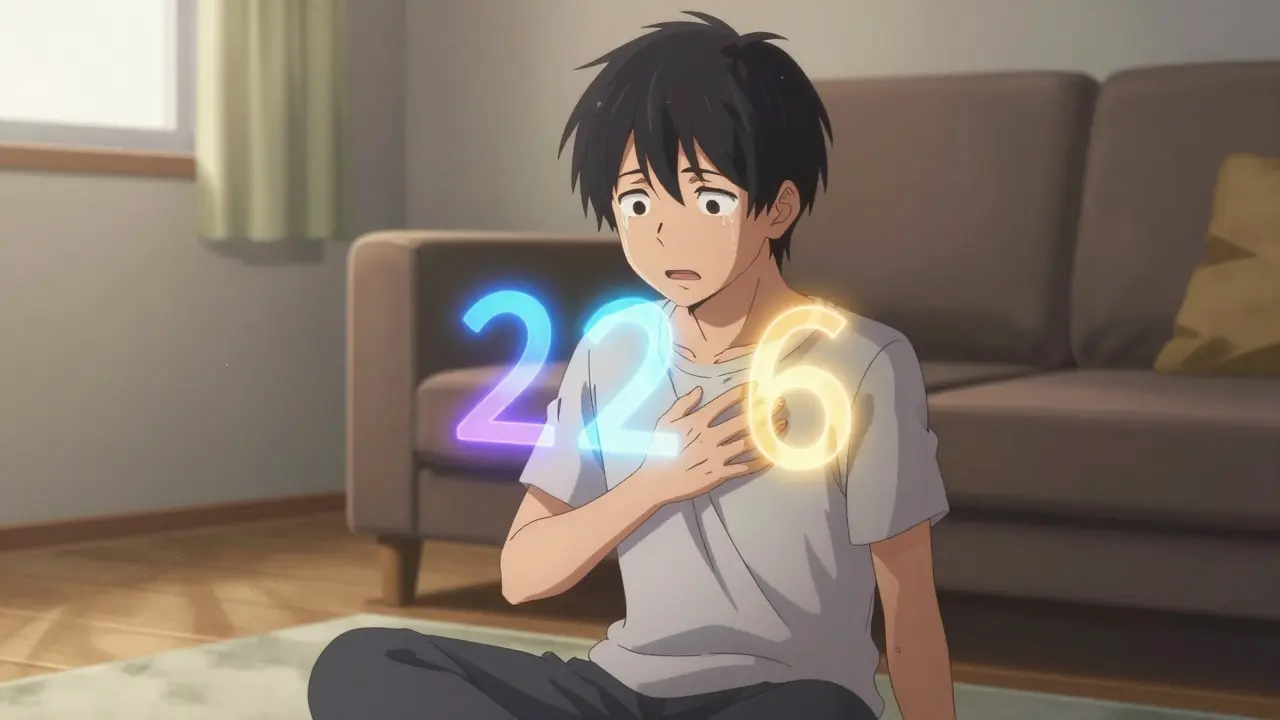
When a panic attack hits, time doesn’t slow down-it disappears. Your heart slams against your ribs. Your breath turns shallow. Your mind screams that something awful is happening, even though nothing is. You’re not dying. You’re not losing control. But in that moment, it feels real. That’s why a clear, simple panic attack action plan isn’t just helpful-it’s lifesaving.
Why an Action Plan Works
Panic attacks aren’t random. They’re your body’s alarm system going off when there’s no fire. The fight-or-flight response kicks in, flooding your system with adrenaline. Your muscles tense. Your vision blurs. Your thoughts spiral. The more you fight it, the worse it gets. That’s where an action plan changes everything. Instead of reacting, you respond. You use tools that have been tested in labs, clinics, and real lives. Research from the National Institute of Mental Health shows that about 4.7% of U.S. adults experience panic attacks at some point. But here’s the good news: studies from Harvard Health Publishing and the Centre for Clinical Interventions prove that combining breathing, grounding, and medication reduces attack frequency by up to 70%. The key? Consistency. Not perfection. Just practice, even when you’re calm.Breathing: Reset Your Nervous System
Hyperventilation is the silent engine of panic. When you breathe too fast, you blow off too much carbon dioxide. Your blood becomes too alkaline. Your fingers go numb. Your chest tightens. Your brain thinks you’re suffocating. That’s the feedback loop that turns anxiety into a full-blown attack. The fix? Slow, controlled breathing. Not deep gasps. Not forced breaths. Just rhythm. Try the 2-2-6 method:- Inhale through your nose for 2 seconds
- Hold for 2 seconds
- Exhale slowly through your nose for 6 seconds
- Pause briefly before the next inhale
Grounding: Bring Yourself Back to Now
During a panic attack, your mind is trapped in a loop of catastrophes: “I’m having a heart attack. I’m going to pass out. Everyone will notice.” Grounding breaks that loop by forcing your attention outward. One of the most effective methods is the 5-4-3-2-1 technique:- Look around and name 5 things you can see
- Touch 4 things you can feel-the fabric of your shirt, your phone, the chair, your own arm
- Listen and identify 3 sounds-the hum of the fridge, distant traffic, your breath
- Smell 2 scents-coffee, soap, rain outside
- Taste 1 thing-your toothpaste, a mint, water
- “I’m safe. There’s no danger.”
- “This will pass. I’ve done this before.”
- “I’m not falling apart-I’m having a panic attack.”

Medication: When to Use It
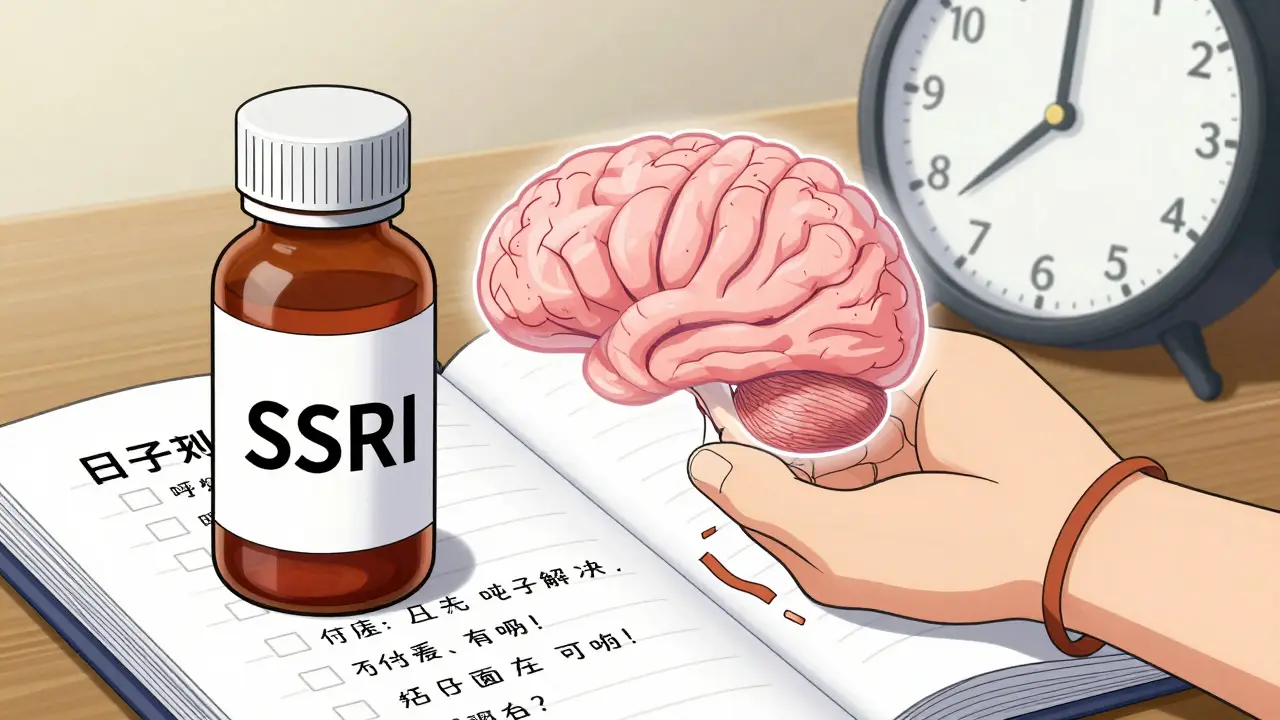
Medication isn’t a crutch. It’s a bridge. For many people, panic attacks are so intense that learning breathing or grounding feels impossible. That’s where medication helps. But not all meds are the same. SSRIs like sertraline (Zoloft) or paroxetine (Paxil) are the first-line treatment. They don’t work fast. It takes 8 to 12 weeks. But they reduce panic attack frequency by 60-70%. They’re not addictive. They’re meant for daily use, not just during attacks. Side effects like nausea or sleep trouble usually fade after a few weeks. A 2022 NIMH study found that 79% of people stuck with SSRIs because the long-term payoff was worth it. Benzodiazepines like alprazolam (Xanax) or clonazepam (Klonopin) work fast. In 15-30 minutes, they can slash symptoms by 75%. But they come with risks. The FDA reports that 23% of daily users develop tolerance within 4-6 weeks. That means you need more to get the same effect. Dependence is real. That’s why experts say these should only be used as rescue meds-never daily, never long-term. The best outcome? Combining medication with therapy. Kaiser Permanente’s data shows 68% of people who used both SSRIs and CBT reached remission. Only 42% did with medication alone.Putting It All Together
Your action plan doesn’t need to be fancy. Here’s what works:- Start small. Practice breathing for 5 minutes a day. Build up to 15.
- Write your grounding phrases. Keep them visible.
- If you’re on medication, take it as prescribed. Don’t skip doses because you feel fine.
- Track your attacks. Note the time, what you were doing, what triggered it. Patterns emerge after 10-15 entries.
- Use a reminder. A rubber band on your wrist. A phone alert. A sticky note. Something that says, “Breathe. Ground. Pause.”
What to Avoid
Don’t wait until you’re in crisis to learn this stuff. Most people (82%, according to HealthUnlocked forums) say they forget their techniques during an attack. That’s why practice matters. You can’t find your keys in the dark if you never looked where you put them. Avoid over-relying on benzodiazepines. They silence symptoms but don’t teach your brain how to calm down. Dr. Paul Holtzheimer from Dartmouth warns that this can block the learning CBT needs to work. Don’t think you’re failing if it takes time. A 2021 study in the Journal of Clinical Psychology found most people need 8-12 weeks of daily practice to reliably use these tools during an attack. That’s not slow. That’s normal.Tools and Support
You’re not alone. Digital tools are making this easier:- The Panic Relief app by UC San Francisco guides you through breathing and grounding exercises. It has 4.3 stars from over 1,800 reviews.
- The Anxiety and Depression Association of America offers free webinars. 42% of users called them “highly effective.”
- Wearable heart rate monitors are now used by 41% of panic disorder patients in Mayo Clinic surveys. They help catch early signs before the full attack hits.
Final Thought
A panic attack feels like a storm. But storms pass. You don’t have to ride them out blindly. With breathing, grounding, and smart medication use, you’re not just surviving-you’re learning how to be calm in the chaos.Can I stop a panic attack just by breathing?
Breathing alone won’t always stop a panic attack, but it’s the fastest way to reduce its intensity. Studies show that slow, controlled breathing lowers heart rate and resets your nervous system within minutes. When combined with grounding techniques, it can shorten an attack from 20+ minutes to under 10. It’s not a magic fix, but it’s the most reliable tool you have.
Is medication necessary for panic attacks?
No, medication isn’t necessary for everyone. Many people manage panic attacks successfully with breathing and grounding alone. But if attacks happen more than twice a week, interfere with work or relationships, or feel unbearable, medication can be a crucial part of recovery. SSRIs are often recommended first. Benzodiazepines should only be used short-term and under a doctor’s supervision.
How long does it take to see results from breathing and grounding?
You’ll feel calmer after one session, but real change takes time. Most people notice fewer and less intense attacks after 2-3 weeks of daily practice. To reliably use these tools during an actual panic attack, you typically need 8-12 weeks of consistent effort. Think of it like building muscle-you wouldn’t expect to bench press 100 pounds after one workout.
What if I forget what to do during an attack?
This is the #1 problem people report. The solution? Make reminders physical. Keep a small card in your wallet with your grounding phrases. Wear a rubber band and snap it while saying, “Stop. Breathe.” Set a daily phone alert: “Practice breathing now.” Your brain learns best through repetition and cues-not willpower.
Can grounding techniques make panic worse?
Rarely. Grounding works by redirecting attention away from internal panic symptoms to external reality. If you feel overwhelmed trying to name objects or sounds, simplify it. Just close your eyes and focus on your breath for 30 seconds. Or hold a cold object, like a water bottle, and notice the temperature. The goal isn’t perfection-it’s connection. Any small step toward the present helps.
Nandini Wagh
February 22, 2026 AT 14:09Holley T
February 23, 2026 AT 16:21Ashley Johnson
February 25, 2026 AT 11:48tia novialiswati
February 25, 2026 AT 17:46Lillian Knezek
February 27, 2026 AT 08:00Maranda Najar
March 1, 2026 AT 01:19Sanjaykumar Rabari
March 1, 2026 AT 03:04Valerie Letourneau
March 2, 2026 AT 12:57Lou Suito
March 4, 2026 AT 06:14Joseph Cantu
March 4, 2026 AT 12:22Lisandra Lautert
March 5, 2026 AT 20:18William James
March 7, 2026 AT 14:25David McKie
March 8, 2026 AT 01:09Haley Gumm
March 8, 2026 AT 11:33Gabrielle Conroy
March 10, 2026 AT 11:02Holley T
March 12, 2026 AT 06:38