
Dry Mouth Product Comparison Tool
Find the Right Product for You
Compare dry mouth products based on ingredients, price, and duration of relief. Select features that matter most to you.
Product Comparison
| Biotène Oralbalance Gel | Biotène Dry Mouth Rinse | ACT Dry Mouth Lozenges | XyliMelts Discs | TheraBreath Products | |
|---|---|---|---|---|---|
| Price | $8.29 | $12.99 | $6.79 | $11.49 | Varies |
| Duration of Relief | Up to 4 hours | 2-4 hours | 15-20 minutes | Several hours | Varies |
| Key Ingredients | Xylitol Carboxymethylcellulose | Xylitol Carboxymethylcellulose | Xylitol | Xylitol | Moisturizers Odor-neutralizers |
| Best For | Nighttime use | Twice daily brushing | Daytime use | People with dentures | Bad breath concerns |
When your mouth feels like cotton wool all day, even drinking water doesn’t help-you’re not just thirsty. You have dry mouth, or xerostomia. It’s not just uncomfortable. It’s a silent threat to your teeth, gums, and overall health. Over 500 common medications, from blood pressure pills to antidepressants, cause it. About 1 in 10 adults deal with it regularly, and for those over 65, it’s closer to 3 in 10. The good news? You can manage it. Not with magic, but with the right products and habits backed by dentists and the Mayo Clinic.
Why Dry Mouth Is More Than Just Discomfort
Your saliva isn’t just there to help you swallow. It’s your mouth’s natural defense system. It washes away food particles, neutralizes acids, and fights bacteria that cause cavities and gum disease. When saliva flow drops, your mouth becomes a breeding ground for problems. You might notice bad breath that won’t go away, trouble tasting food, or a burning sensation on your tongue. Worst of all? Your risk of cavities skyrockets. People with dry mouth develop decay up to five times faster than those with normal saliva flow.
Medications are the biggest culprit. If you take anything for high blood pressure, allergies, depression, or pain, there’s a good chance it’s drying you out. Aging also plays a role-salivary glands just don’t work as well over time. Radiation therapy for head and neck cancer can permanently damage saliva glands. Even breathing through your mouth at night, thanks to allergies or sleep apnea, can make things worse.
What Makes a Dry Mouth Product Work?
Not all mouthwashes, gels, and sprays are created equal. The best ones don’t just add moisture-they mimic what saliva does naturally. Look for these key ingredients:
- Xylitol: A natural sweetener that doesn’t feed cavity-causing bacteria. In fact, it helps reduce them. The Mayo Clinic specifically recommends xylitol products for dry mouth because they help prevent tooth decay.
- Carboxymethylcellulose or hydroxyethyl cellulose: These thickening agents form a protective film over your mouth tissues, giving you longer-lasting relief. They’re the backbone of most effective saliva substitutes.
- No alcohol: Alcohol evaporates quickly and dries out your mouth even more. Avoid anything that lists alcohol as a top ingredient.
- No sodium lauryl sulfate (SLS): This foaming agent in many toothpastes can irritate dry, sensitive tissues. Choose SLS-free options.
Products that meet these criteria are the ones dentists and pharmacists actually recommend. And one brand leads the pack: Biotène is a line of oral care products specifically designed for dry mouth, formulated to match the pH and viscosity of natural saliva, and is the #1 dentist, pharmacist, and hygienist recommended brand for dry mouth management.
Top Products for Dry Mouth Relief
Here’s what works best, broken down by use case:
Biotène Oralbalance Moisturizing Gel
This thick gel is your best friend at night. Apply a pea-sized amount to your tongue and inside your cheeks before bed. It clings to your mouth tissues and lasts up to 4 hours-long enough to get you through the night without waking up with a parched throat. It’s not sticky, doesn’t taste artificial, and doesn’t interfere with sleep. At $8.29 for 1.5 oz, it’s pricier than regular toothpaste, but it’s the only product that gives you true overnight relief.
Biotène Dry Mouth Oral Rinse
Use this twice daily, after brushing. It’s alcohol-free, contains xylitol, and has carboxymethylcellulose to coat your mouth. Unlike regular mouthwash, it doesn’t burn. It leaves your mouth feeling clean and moist, not just minty. Many users report fewer episodes of bad breath after switching to this rinse. The 33.8 fl oz bottle costs $12.99, which lasts about 2 months with twice-daily use.
ACT Dry Mouth Moisturizing Lozenges
These sugar-free lozenges dissolve slowly, releasing xylitol and moisturizing agents as you suck on them. They’re perfect for daytime use-whether you’re at work, driving, or running errands. Each lozenge lasts about 15-20 minutes. At $6.79 for 36 pieces, they’re one of the most affordable options. Just don’t overdo it. Too much xylitol can cause gas or diarrhea.
XyliMelts Dry Mouth Relief Discs
These are small, adhesive discs that stick to your gums or the roof of your mouth. They release xylitol and moisture slowly over several hours. They’re great for people who can’t chew gum or suck on lozenges, like those with dentures. The mint flavor is mild and not overpowering. At $11.49 for 40 discs, they’re a bit more expensive per use, but they’re discreet and long-lasting.
TheraBreath Dry Mouth Products
If bad breath is your biggest concern, TheraBreath offers a line with clinically proven formulas. Their oral rinse and lozenges combine moisture agents with odor-neutralizing ingredients. They come in flavors like Mandarin Mint and Tart Berry, which some users find more pleasant than the traditional mint taste of other brands.
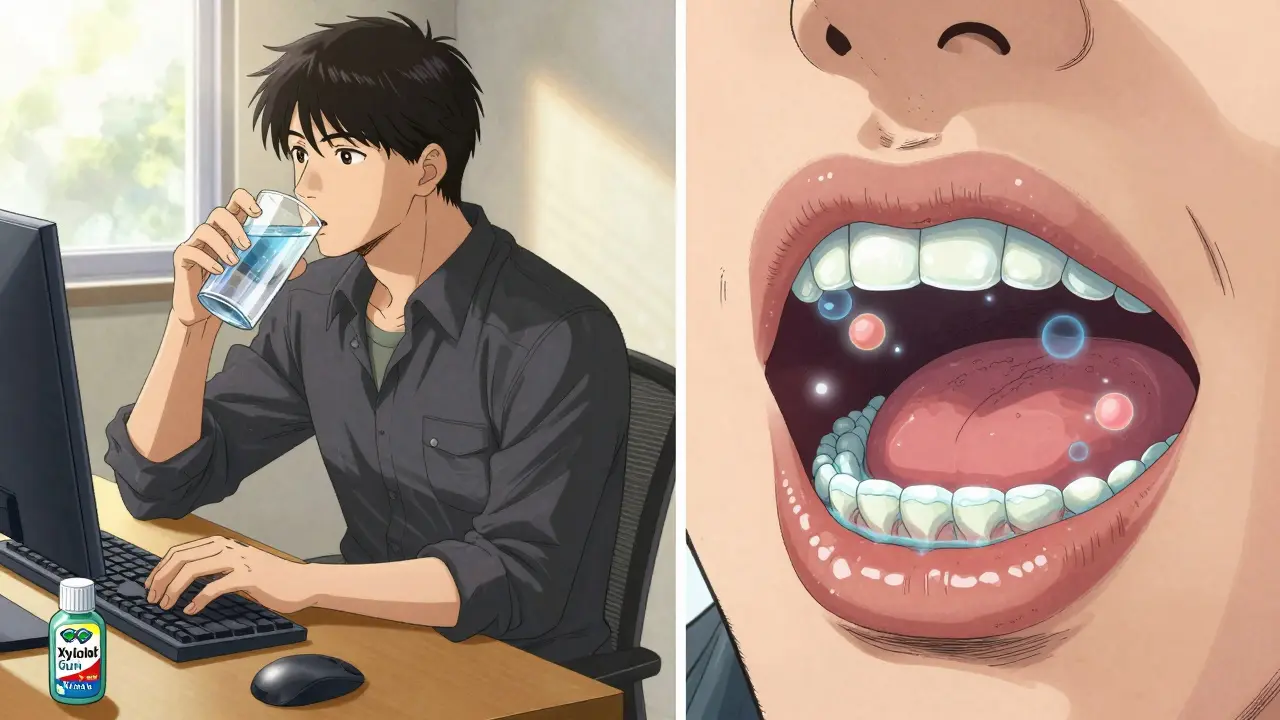
Essential Daily Habits That Make a Difference
Products help-but habits fix the root problem. You can’t rely on gels and sprays alone. Here’s what dentists tell patients to do every day:
- Sip water constantly. Keep a bottle nearby. Don’t wait until you’re thirsty. Small sips throughout the day keep your mouth moist better than chugging a glass all at once.
- Suck on ice chips. They’re better than sugary drinks. Ice melts slowly, providing steady moisture without spiking your blood sugar.
- Chew sugar-free gum or suck on xylitol hard candies. The act of chewing stimulates saliva production. Look for gum with xylitol as the first sweetener. Avoid anything with sugar-it feeds bacteria and wrecks your teeth.
- Breathe through your nose. If you’re a mouth breather, especially at night, your mouth dries out fast. Try nasal strips or treat allergies. If you have sleep apnea, talk to your doctor-it’s a major cause of dry mouth.
- Use a humidifier. Especially in winter, indoor air is bone-dry. A cool-mist humidifier in your bedroom adds moisture back into the air, helping your mouth stay hydrated while you sleep.
- Avoid alcohol, caffeine, and sugary drinks. Coffee, soda, and wine all make dry mouth worse. Even sugar-free soda is acidic and erodes enamel over time.
- Steer clear of salty, spicy, or acidic foods. These irritate dry tissues and can cause pain or burning.
Fluoride Is Non-Negotiable
With less saliva, your teeth lose their natural protection. That’s why fluoride is critical. Use a toothpaste made for dry mouth-like Colgate’s Total SF or Sensodyne Pronamel. These contain higher levels of fluoride and are SLS-free. Brush twice a day, and once a day, use a fluoride rinse or brush-on gel before bed. Your dentist can even make you a custom fluoride tray that fits your teeth perfectly. It’s a small investment that prevents expensive fillings down the road.
When to See Your Dentist
If you’ve tried the products and habits above and still feel like your mouth is stuffed with sand, it’s time to talk to your dentist. They can check for underlying causes like Sjögren’s syndrome, an autoimmune condition that attacks saliva glands. They can also assess your risk for cavities and recommend more aggressive treatments, like prescription saliva stimulants or specialized fluoride applications.
Don’t wait until you have a toothache. People with dry mouth should see their dentist at least once a year-and often every 6 months. Early detection of decay saves you pain, money, and time.
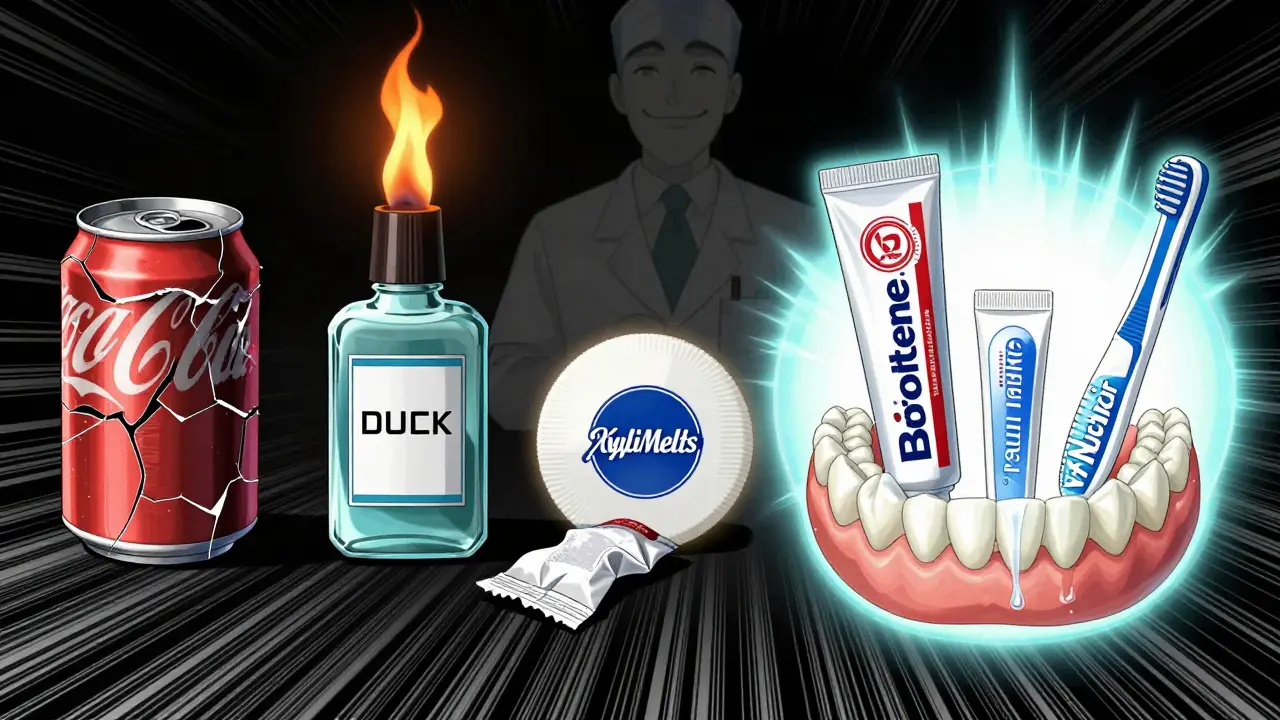
What Doesn’t Work (And Why)
Some common fixes make things worse:
- Drinking soda or juice to “moisten” your mouth? Sugar and acid = cavity fuel. Even diet soda is acidic and harmful.
- Using regular mouthwash with alcohol? It dries you out further.
- Chewing gum with sugar? It feeds bacteria and increases decay risk.
- Waiting until you’re thirsty? By then, your mouth is already damaged.
There’s no quick fix. But with consistency, you can go from miserable to manageable.
Putting It All Together: A Simple Daily Routine
Here’s what a successful day looks like:
- Morning: Brush with fluoride toothpaste (SLS-free). Rinse with Biotène or ACT dry mouth rinse. Sip water.
- Midday: Chew a xylitol gum or suck on a lozenge. Sip water. Avoid coffee.
- Evening: Brush again. Apply Biotène gel to your gums and tongue. Use a humidifier in your room.
- Before bed: Use fluoride rinse or brush-on gel. Avoid eating or drinking anything except water after this.
It takes less than 10 minutes a day. But over time, it protects your teeth, reduces discomfort, and helps you feel like yourself again.
Can dry mouth go away on its own?
Sometimes, yes-if it’s caused by temporary dehydration or a short-term medication. But if it’s due to long-term drug use, aging, or an autoimmune condition, it won’t go away without active management. The goal isn’t to cure it, but to control it so it doesn’t damage your oral health.
Is Biotène the only brand that works?
No, but it’s the most recommended by dental professionals. ACT, TheraBreath, and XyliMelts are also effective and backed by research. The key is choosing products with xylitol and cellulose-based moisturizers, not just any “dry mouth” label. If one brand doesn’t work for you, try another.
Can I use regular toothpaste if I have dry mouth?
You can, but it’s not ideal. Many regular toothpastes contain sodium lauryl sulfate (SLS), which can irritate dry tissues. They also often lack the extra fluoride needed to protect against decay. Switching to a dry mouth-specific toothpaste is a simple change with big benefits.
How long do dry mouth products last?
Most last 2 to 4 hours. That’s why you need to reapply throughout the day. Gels like Biotène Oralbalance last the longest-up to 4 hours-making them best for bedtime. Sprays and lozenges give you quick relief but wear off faster. Plan your routine around reapplication.
Is xylitol safe for daily use?
Yes, in moderate amounts. The Mayo Clinic confirms xylitol is safe and effective for dry mouth. But consuming more than 30-40 grams per day can cause bloating, gas, or diarrhea. Most lozenges and rinses contain less than 1 gram per serving, so you’d need to use a lot to reach that level. Stick to the recommended dose.
Can dry mouth cause permanent damage?
Yes-if left untreated. Without saliva, plaque builds up faster, leading to rapid tooth decay, gum disease, and even tooth loss. It can also cause fungal infections like oral thrush. The longer you wait to manage it, the harder and more expensive it becomes to fix.
Final Thought: It’s Not Just About Comfort
Dry mouth isn’t a minor annoyance. It’s a warning sign your mouth is under stress. The products and habits we’ve talked about aren’t luxury items-they’re essential tools, like brushing your teeth or wearing a seatbelt. You don’t have to live with a dry, burning mouth. With the right approach, you can protect your teeth, feel better, and eat without pain. Start today. Pick one product. Pick one habit. Do it every day. Your future self will thank you.
Nancy Kou
December 20, 2025 AT 17:52Just started using Biotène rinse last week and my tongue stopped burning like it was on fire. I didn’t realize how much I was avoiding coffee and spicy food until I could actually taste them again. This isn’t a luxury-it’s a necessity if you’re on meds long-term.
Hussien SLeiman
December 22, 2025 AT 12:33Let’s be real-Biotène is overpriced corporate hype. I’ve used generic xylitol sprays from the pharmacy for a third the cost and they work just fine. The real issue? Pharma companies push these products because they know people with dry mouth are desperate. You don’t need a branded gel to survive. Just sip water, avoid alcohol, and stop believing marketing claims wrapped in ‘dentist recommended’ stickers.
And before you say ‘but my dentist said…’-your dentist gets kickbacks from these brands. Ask them if they use it themselves. I bet they don’t.
Guillaume VanderEst
December 22, 2025 AT 17:37I tried everything. Biotène, ACT, XyliMelts, even that weird TheraBreath Mandarin Mint (which tasted like a dentist’s office exploded). Nothing worked until I started chewing sugar-free gum with xylitol every 90 minutes. I keep a pack in my car, my desk, my jacket. It’s weird, but it’s the only thing that makes my mouth feel human again. Also, humidifier. Don’t sleep without one. Your tongue will thank you.
Alisa Silvia Bila
December 23, 2025 AT 19:28My mom has this and she swears by it. She’s 72 and on six different meds. She went from barely eating to enjoying her meals again. Just one product and one habit changed her life. No drama. Just results.
Janelle Moore
December 23, 2025 AT 19:49Wait-so you’re telling me Big Pharma doesn’t want us to have saliva? That’s why they make all these dry mouth meds in the first place! They know if your mouth works right, you won’t need as many pills. That’s why they push fluoride gels and Biotène-they want you hooked on products while keeping you on the meds that caused the problem. It’s a trap. They’re poisoning your saliva glands so you’ll keep buying their solutions. Wake up!
Henry Marcus
December 24, 2025 AT 17:33Carolyn Benson
December 25, 2025 AT 09:29People treat dry mouth like a nuisance. It’s not. It’s your body screaming that your autonomic nervous system is collapsing. Saliva isn’t just moisture-it’s a biomarker of systemic imbalance. You think a gel fixes it? No. You need to address cortisol dysregulation, vagal tone, and gut microbiome disruption. I’ve seen patients reverse this with intermittent fasting, magnesium glycinate, and breathwork. Biotène is a Band-Aid on a severed artery.
And yes, I’m a former ER nurse. I’ve watched people lose teeth because they listened to ‘tips’ instead of real physiology.
Chris porto
December 27, 2025 AT 08:16I used to think this was just something you had to live with. I’m 68, on blood pressure meds, and my mouth felt like sandpaper for years. Then I started using the gel at night and sipping water before bed. It’s not magic, but it’s simple. I don’t need a PhD to know that if something makes you feel better and doesn’t hurt you, you do it. No drama. Just consistency.
William Liu
December 28, 2025 AT 20:48This post saved my life. Seriously. I thought I was just getting old. Turns out, I was just ignoring the signs. Started the routine last month. No more bad breath. No more waking up with a throat like glue. I even told my coworkers about it. One of them bought Biotène the next day. Small changes, big difference.
Aadil Munshi
December 29, 2025 AT 02:20Oh, so now we’re recommending Biotène because dentists ‘recommend’ it? How quaint. You know what dentists recommend? Flossing. And yet, 90% of people don’t. Same logic applies here. The real problem isn’t saliva-it’s that people want a product to fix a lifestyle issue. You don’t need a gel. You need to stop drinking coffee at 3 PM, quit breathing through your mouth, and maybe-just maybe-stop taking that antidepressant your doctor prescribed without explaining the side effects.
Also, xylitol is fine. But if you’re eating 30 lozenges a day, you’re not solving the problem-you’re masking it with sugar alcohol.
Erica Vest
December 30, 2025 AT 06:37Correcting a minor error in the post: TheraBreath’s oral rinse contains zinc chloride, not just odor-neutralizing agents, which actively inhibits volatile sulfur compound production. This is clinically proven to reduce halitosis in xerostomia patients by up to 78% in 14 days. Also, the fluoride gel should be applied after the Biotène gel-not before-since the cellulose film may inhibit fluoride absorption. Timing matters.
Kinnaird Lynsey
December 31, 2025 AT 11:13I appreciate the detail, but I’m curious-why no mention of pilocarpine or cevimeline? Those are prescription saliva stimulants. If someone’s been dealing with this for years and OTC products aren’t cutting it, those are the next step. Not every case is solved with gel and gum. Some of us need real medicine, not just advice.
Glen Arreglo
January 1, 2026 AT 09:11As someone who grew up in a family that never brushed teeth properly, I can tell you this: dry mouth isn’t just about products. It’s about culture. In my community, we didn’t have dental insurance. We didn’t know about xylitol. We just suffered. This post is important because it’s not just for the middle class. It’s for everyone who’s ever felt too ashamed to say, ‘My mouth hurts.’ Thank you for saying it out loud.
shivam seo
January 2, 2026 AT 06:52Look, I’ve been to the States. You people overcomplicate everything. In Australia, we just drink water, chew gum, and get on with it. You don’t need five different gels and lozenges. You need one habit: stop breathing through your mouth. Simple. Done. No $12 rinses. No ‘oral balance.’ Just breathe. And stop buying American marketing.
benchidelle rivera
January 3, 2026 AT 02:50To anyone reading this who’s been told ‘it’s just aging’-you deserve better. Dry mouth isn’t normal. It’s a symptom. And if your doctor brushes you off, find a new one. You’re not being dramatic. You’re being proactive. I’ve coached dozens of patients through this. The first step isn’t buying a product. It’s believing you’re worth the effort. You are. Start today. One sip. One gel. One breath. You’ve got this.