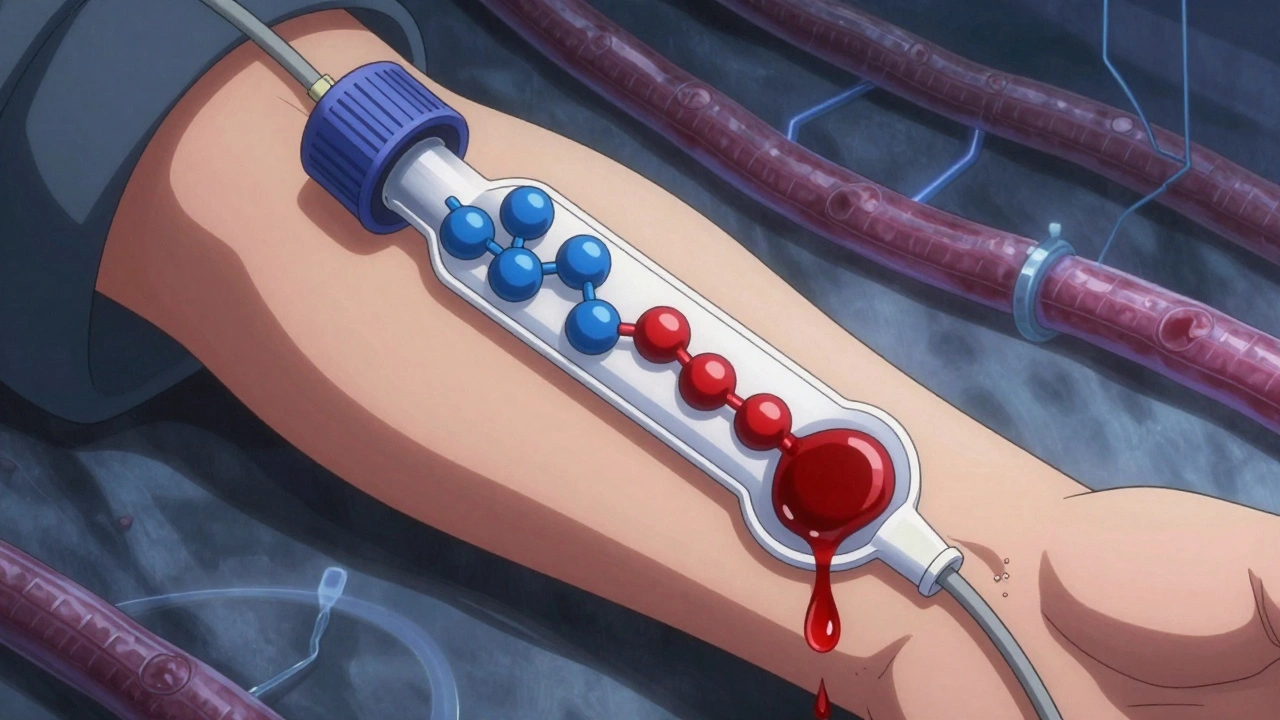
Methotrexate-NSAID Risk Calculator
When you're managing rheumatoid arthritis with methotrexate, adding an NSAID like ibuprofen or naproxen for joint pain might seem harmless. But this common combo can quietly push your kidneys to the edge-and raise methotrexate levels by up to 50%. It’s not just a theoretical risk. Real patients end up in the hospital because no one checked their kidney function before prescribing the painkiller.
How Methotrexate Works and Why Kidneys Matter
Methotrexate isn’t just one drug. At low doses (5-25 mg weekly), it’s a cornerstone for treating autoimmune diseases like rheumatoid arthritis. At high doses (over 150 mg), it’s used in cancer treatment. Either way, your kidneys are the main route out. About 80-90% of methotrexate leaves your body through urine. If your kidneys slow down, the drug builds up. And that’s when trouble starts.
At normal levels, methotrexate is safe. But when serum concentrations climb, it can crash your bone marrow, cause severe mouth sores, or trigger acute kidney injury. The problem isn’t just methotrexate-it’s what happens when NSAIDs interfere.
How NSAIDs Disrupt Methotrexate Clearance
NSAIDs like ibuprofen, naproxen, and diclofenac work by blocking prostaglandins, which help keep blood flowing to your kidneys. Less blood flow means less filtering. Studies show NSAIDs can reduce kidney blood flow by 15-20%. That’s enough to cut methotrexate clearance by 25-40%.
But it’s worse than that. NSAIDs also compete with methotrexate for the same transporters in the kidney tubules. Think of it like two cars trying to exit the same narrow highway ramp. One gets stuck. Methotrexate backs up in your bloodstream. In vitro studies show this competition can increase free (active) methotrexate levels by up to 30% because NSAIDs push it off protein-binding sites in the blood.
The result? Higher drug levels. A 2020 study of 127 RA patients found that those taking NSAIDs had methotrexate levels 25-50% higher than those who didn’t. That’s not a small bump-it’s the difference between safe and dangerous.
High-Dose vs. Low-Dose: Big Differences in Risk
Not all methotrexate use is the same. The risk from NSAIDs depends heavily on the dose.
For high-dose methotrexate (used in cancer), NSAIDs are a red flag. A 2022 meta-analysis found that combining them increases the risk of life-threatening toxicity-like bone marrow failure or kidney shutdown-by 4.7 times. The FDA and EMA both warn that NSAIDs should be avoided entirely in high-dose therapy unless absolutely necessary. Even then, methotrexate levels must be checked at 24, 48, and 72 hours after dosing.
For low-dose methotrexate (used for arthritis), the picture is murkier. One large 2019 study of over 4,000 RA patients found no significant increase in adverse events when NSAIDs were used in people with normal kidney function. But that’s only part of the story. Another study of 786 patients with pre-existing kidney impairment (eGFR 45-59) showed a 3.5-fold spike in hospitalizations for acute kidney injury when NSAIDs were added.
The difference? Kidney health. If your kidneys are already working at 70% capacity, adding an NSAID is like closing one of two lanes on a busy road. Traffic backs up fast.
Not All NSAIDs Are Equal
If you must use an NSAID with methotrexate, not all are created equal. Some are riskier than others.
- Ketorolac is the worst offender. It’s a potent kidney blood flow reducer and can spike methotrexate levels by up to 50%. It’s rarely prescribed long-term, but even a single dose can be dangerous.
- Ibuprofen and naproxen increase levels by 25-30%. Common, over-the-counter, and often assumed safe-until they’re not.
- Diclofenac carries similar risk to ibuprofen, with added liver concerns.
- Celecoxib, a COX-2 inhibitor, shows the lowest interaction potential, raising methotrexate levels by only 10-15%. It’s not risk-free, but it’s the safest option among NSAIDs if you need one.
That’s why experts now say: if you’re on low-dose methotrexate and need pain relief, celecoxib is the least bad choice-assuming your kidneys are healthy.
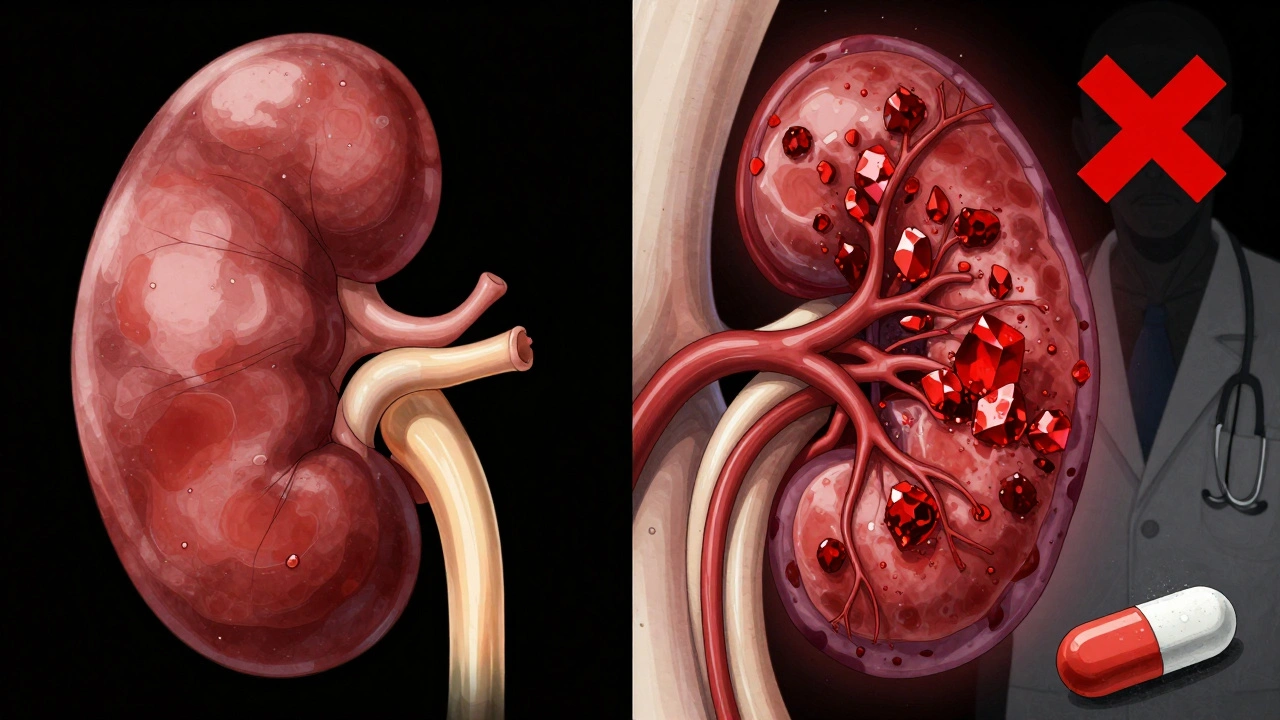
Who’s Most at Risk?
Some patients are walking into danger without knowing it.
- People over 65: Kidney function naturally declines with age. A 2021 EULAR study found a 2.8-fold higher death risk in older adults on methotrexate plus NSAIDs.
- Those with eGFR below 60: Even mild kidney impairment triples the risk of serious side effects.
- People with dehydration or heart failure: Reduced blood volume makes kidney protection even harder.
- Patients with the SLC19A1 80G>A gene variant: About 15% of Caucasians carry this genetic quirk. It makes their cells absorb methotrexate more aggressively-and clear it less efficiently. Add an NSAID? Levels can jump 40% higher than normal.
And here’s the scary part: many of these risks are silent. A 2020 review found that 63% of kidney problems from this interaction showed no symptoms until blood tests revealed elevated creatinine. Patients felt fine-until they didn’t.
What Real Patients Are Experiencing
Online forums tell a story that clinical studies sometimes miss.
On CreakyJoints, 62% of 1,437 RA patients said they were never warned about the NSAID-methotrexate risk. Nearly 30% reported side effects: extreme fatigue, mouth ulcers, low white blood cell counts. One Reddit user described his white blood cell count crashing to 1.8 after taking naproxen without a kidney check. He needed leucovorin-a rescue drug-to survive.
But not everyone has bad outcomes. Another user reported 8 years of safely using ibuprofen with methotrexate-because her doctor checked her creatinine and blood counts every four weeks. Monitoring made all the difference.
The pattern is clear: it’s not the combination that kills-it’s the lack of monitoring.
How to Stay Safe: Clinical Guidelines
Here’s what the experts say you should do if you’re on methotrexate and need pain relief:
- Avoid NSAIDs if your eGFR is below 60. Period. No exceptions.
- If you must use one, pick celecoxib. It’s the least likely to interfere.
- Use the lowest dose for the shortest time. Don’t take it daily unless absolutely necessary.
- Space out doses. Take methotrexate and NSAIDs at least 12 hours apart to avoid peak concentration overlap.
- Test your blood. Get a creatinine and complete blood count 48-72 hours after starting an NSAID. This isn’t optional-it’s critical.
- For high-dose methotrexate, never skip level checks. The NCCN guidelines require methotrexate blood tests at 24, 48, and 72 hours if NSAIDs are used.
Pharmacists are key here. A 2023 study showed that pharmacist-led screening reduced dangerous interactions by 63% in Medicare patients. They catch what busy doctors miss.
What to Use Instead
If NSAIDs are too risky, what can you take?
- Acetaminophen (Tylenol): Up to 3 grams per day is generally safe with methotrexate. It doesn’t affect kidney blood flow or methotrexate clearance.
- Low-dose opioids: For short-term flare-ups, options like tramadol can be used cautiously-but avoid long-term use due to addiction risk.
- Optimize your DMARDs: If your RA isn’t controlled, adding or adjusting disease-modifying drugs like sulfasalazine or hydroxychloroquine can reduce pain and inflammation without touching the kidneys.
The goal isn’t just pain relief-it’s pain relief without putting your kidneys or bone marrow at risk.
The Bigger Picture: Why This Interaction Still Kills
Despite decades of warnings, this interaction remains on the Institute for Safe Medication Practices’ list of the Top 10 High-Alert Medication Combinations. Why? Because it’s invisible until it’s too late.
The FDA updated methotrexate labels in 2023 to include stronger warnings. The EMA did the same in 2022. But guidelines don’t change practice unless someone checks the numbers.
Patients aren’t always warned. Doctors are rushed. Blood tests get skipped. And then-suddenly-a patient is in the ICU with kidney failure and low white blood cells.
It’s preventable. But only if we treat this interaction like the danger it is-not a footnote, but a red line.
What’s Coming Next
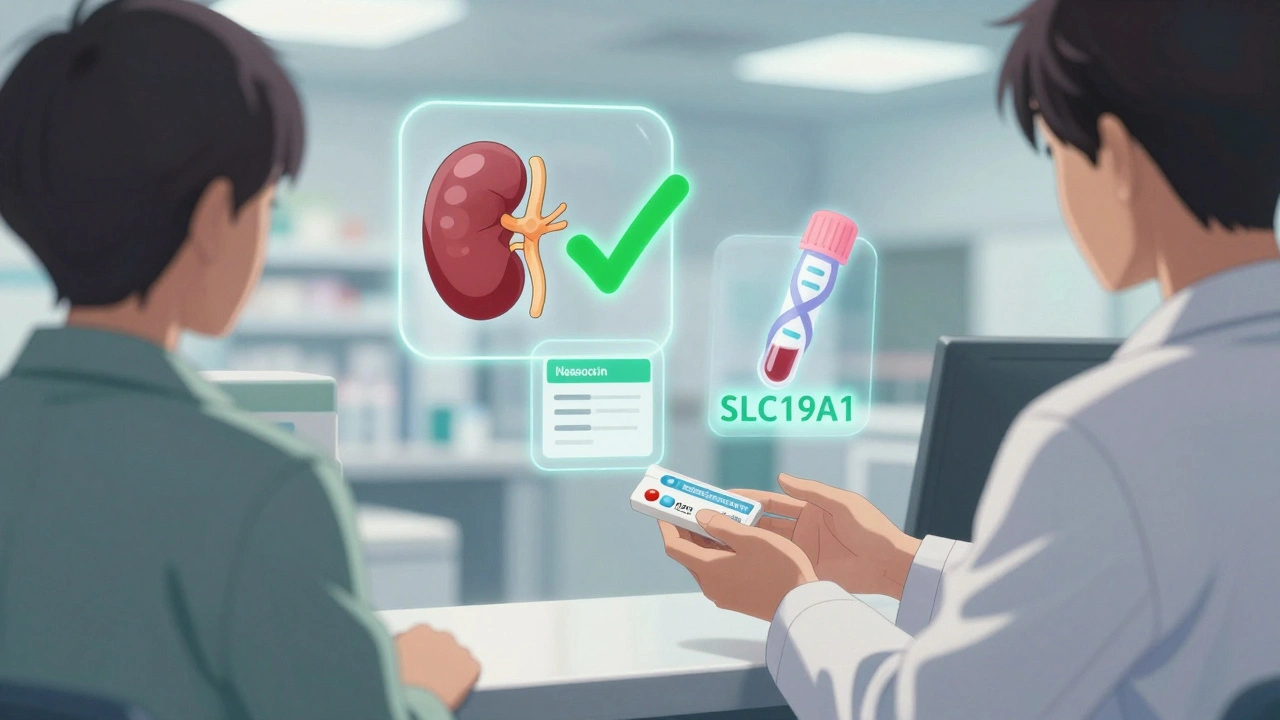
There’s hope on the horizon. Researchers are testing point-of-care devices that can measure methotrexate levels in minutes-like a glucose meter for methotrexate. Phase 3 trials are underway (NCT05123456). If successful, patients on NSAIDs could get real-time feedback: “Your methotrexate level is rising. Hold the ibuprofen.”
Genetic testing for the SLC19A1 variant may also become routine for high-risk patients. Knowing your genes could tell you whether you’re more vulnerable to this interaction.
But until then, the rules are simple: Know your kidney function. Know your drugs. And never assume a common painkiller is safe just because it’s over the counter.
Tyrone Marshall
December 14, 2025 AT 02:52It’s wild how something as simple as ibuprofen can quietly wreck your kidneys when you’re on methotrexate. I’ve seen it firsthand-my uncle thought he was being smart by popping Advil for his arthritis, didn’t get his labs done, and ended up in the ER with a creatinine of 4.2. No symptoms. Just felt ‘a little tired.’ That’s the scary part-it doesn’t scream. It whispers until it’s too late.
Doctors need to stop treating NSAIDs like harmless candy. They’re not. And patients? We’ve got to stop assuming ‘over-the-counter’ means ‘safe.’ This isn’t just a drug interaction-it’s a systemic failure in patient education.
Pharmacists should be the first line of defense. If I walk in for a prescription refill and they don’t ask if I’m taking NSAIDs, I’m leaving and going somewhere that cares.
Also, the genetic angle with SLC19A1? That’s the future. We’re moving into personalized medicine, but we’re still treating everyone the same. That’s like giving everyone the same size shoe regardless of foot shape.
Someone needs to make a poster for every pharmacy counter: ‘NSAID + Methotrexate = Risk. Check Your Kidneys.’ Simple. Bold. Necessary.
kevin moranga
December 15, 2025 AT 09:40Man, I’m so glad someone finally laid this out like it is. I’ve been on methotrexate for 7 years now for RA, and my doc never mentioned NSAIDs until I brought it up after reading a Reddit thread. I was using naproxen daily like it was vitamin C. My kidneys were fine, I thought-turns out my eGFR was creeping down to 58, and I didn’t even know it.
Switched to celecoxib, started getting blood work every 6 weeks, and boom-my numbers stabilized. No more weird fatigue, no mouth sores. It’s not that the drugs are evil-it’s that we treat them like they’re harmless because they’re common.
And honestly? Acetaminophen works fine for me. I used to think it was ‘weaker,’ but now I get it-it’s not about strength, it’s about safety. Why risk your organs for a little extra pain relief? I’d rather feel a 7/10 pain than end up in the ICU.
Also, shoutout to pharmacists. My local one flagged this before my doctor even did. They’re the real MVPs.
And yeah, the genetic thing? I got tested. No SLC19A1 variant, but I still check my labs. Better safe than sorry. My kidneys are my forever friends.
Bruno Janssen
December 17, 2025 AT 08:18Everyone’s so worried about methotrexate and NSAIDs… but what about the fact that your doctor doesn’t even care? I’ve had 3 rheumatologists in 5 years. None of them ever mentioned this. None. They just write the script and move on. Like it’s nothing.
And now I’m supposed to trust them? When they don’t even know the basics?
Meanwhile, I’m reading studies on Reddit while my blood counts drop.
It’s not the drugs. It’s the system.
Scott Butler
December 18, 2025 AT 23:54USA is soft. People think ‘natural’ or ‘OTC’ means safe. That’s why we’re falling behind. In my day, you didn’t take pills unless you had a prescription and a doctor’s nod. Now everyone’s popping Advil like candy and expecting the system to catch their mistakes.
Stop blaming the doctors. Blame the people who think they’re smarter than science. If you don’t want to get your kidneys checked, don’t take the drugs. Simple.
This isn’t rocket science. It’s basic responsibility. But now we’ve got a nation of people who think their ‘gut feeling’ trumps lab results.
And now we pay the price in ICU beds.
Emma Sbarge
December 19, 2025 AT 19:42My mom took naproxen for 3 years with methotrexate. Never got tested. Never told. She had a stroke last year. Not from the NSAID directly-but her kidneys were failing. The doctors said it was a cascade. One thing led to another.
I didn’t know until it was too late.
Now I check my own labs every 8 weeks. I use Tylenol. I avoid NSAIDs entirely. I don’t care what ‘studies’ say. I’ve seen what happens when you assume.
Don’t wait for a crisis to learn this.
Get tested. Stay alive.
Deborah Andrich
December 20, 2025 AT 04:38I’m a nurse. I’ve seen this exact scenario play out 12 times in the last 18 months. Patient comes in with fatigue, nausea, mouth ulcers. Blood work shows methotrexate toxicity. They say they’ve been taking ibuprofen for ‘a little back pain.’ No one warned them. No one asked.
It’s not the drug. It’s the silence.
Every time I see this, I want to scream. Not at the patient. At the system.
Doctors are overworked. Pharmacists are understaffed. Patients are told to ‘just take it’ because it’s ‘common.’
But here’s what I tell my patients: If you’re on methotrexate, NSAIDs aren’t ‘fine if you feel okay.’ They’re a time bomb. And the timer starts the second you swallow the pill.
Get your labs. Use Tylenol. Talk to your pharmacist. Your kidneys will thank you.
And if your doctor doesn’t know this? Find a new one.
Tommy Watson
December 21, 2025 AT 03:37bro why is everyone making this so complicated??
just dont take ibuprofen if ur on methotrexate. its that simple. i took it for 2 weeks and my gums started bleeding and i felt like i was gonna pass out. turned out my wbc was 2.1. leucovorin saved me.
so now? tylenol. always. no drama. no labs. no stress.
why risk it? u dont need to be a genius to figure this out.
also celecoxib? lol who even uses that? its expensive and my doc says its still risky.
just dont do it. period.
Donna Hammond
December 21, 2025 AT 13:43Let me clarify something: the danger isn’t just NSAIDs. It’s the lack of monitoring. One of my patients took celecoxib daily for 5 years with methotrexate and never had an issue-because she got her creatinine and CBC every 4 weeks. That’s the real key.
It’s not about avoiding NSAIDs entirely-it’s about knowing your body and being proactive. If you’re young, healthy, and have normal kidney function, you can likely manage the risk with monitoring.
But if you’re over 65, have eGFR under 60, or are on high-dose methotrexate? Don’t even flirt with NSAIDs. Tylenol is your friend. Period.
And yes, pharmacists are the unsung heroes here. They’re the ones who catch the interactions before the ER does. If your pharmacy doesn’t offer medication reviews, find one that does.
This isn’t fearmongering. It’s medicine. And medicine requires vigilance, not assumptions.
Willie Onst
December 22, 2025 AT 17:49I’m from the Midwest. We don’t do fancy blood tests unless we’re forced to. But I’ll tell you this-my cousin in India told me they check methotrexate levels like clockwork there. No joke. Every dose. Every week. No exceptions.
Here? We wait until someone’s in the hospital.
Why? Because we think ‘it won’t happen to me.’
It happens to everyone. Eventually.
Maybe we need to start treating our bodies like they matter. Not like they’re disposable.
Also, the genetic test thing? I got mine done. Turned out I’m one of those 15% with the SLC19A1 variant. Now I don’t even touch NSAIDs. I just live with the pain. And honestly? Better than dying.
nithin Kuntumadugu
December 24, 2025 AT 15:16LOL this is all fake. NSAIDs don’t do that. Big Pharma made this up to sell you more expensive drugs. Celecoxib? That’s just a branded version of ibuprofen with a higher price tag. They want you to pay more. The FDA is corrupted. The WHO is controlled. Your kidneys are fine. Stop listening to these fearmongering blogs.
Just take your Advil. You’re not a baby. 🤡
Also, why are you even reading this? Go outside. Touch grass. Your body is fine. Trust me. I’m on the internet. I know things.
PS: I took naproxen with methotrexate for 10 years. I’m 78. Still alive. So there. 😎