When you pick up a generic pill at the pharmacy, you’re getting the same active ingredient as the brand-name version-right? But what happens when that pill doesn’t work the same way? Or when you have a strange reaction you didn’t have before? That’s where MedWatch reporting comes in. It’s the FDA’s main way of hearing from patients, doctors, and pharmacists about problems with medications, including generics. And while generics make up 90% of prescriptions filled in the U.S., the system wasn’t built to track them well. The data is messy. The reports are incomplete. And too often, the real problem-which manufacturer made the pill-gets lost in the noise.
How MedWatch Works for Generic Drugs
MedWatch, run by the U.S. Food and Drug Administration, is the go-to system for reporting serious side effects, medication errors, or when a generic drug just doesn’t seem to work like it should. It’s not a mandatory system. That means no one is forced to report, but it’s the only official channel the FDA uses to collect real-world safety data after a drug hits the market.
For generics, the process starts the same way: a patient, doctor, or pharmacist notices something wrong. Maybe the generic levothyroxine isn’t controlling thyroid levels like the brand did. Or the generic sertraline caused a rash that the original didn’t. They fill out a form-online at www.fda.gov/MedWatch or using paper Form FDA 3500-and submit it.
The form asks for basic info: the drug name, what happened, when it happened, and who reported it. But here’s the catch: for generics, the form doesn’t make it easy to say which generic you took. There’s no dropdown for Mylan, Teva, or Sandoz. You just pick "generic sertraline" and hope they figure it out.
The Data Gap: Why Generic Reports Are Hard to Track
Here’s the ugly truth: out of every 100 MedWatch reports involving generics, only about 33 include the manufacturer’s name. Compare that to brand-name drugs, where nearly 90% of reports name the company. That gap isn’t accidental. It’s structural.
Patients rarely know who made their generic pill. Pharmacies switch manufacturers all the time, and the label doesn’t always say. A 2023 FDA analysis found that 63% of consumer reports didn’t include the manufacturer because the patient simply didn’t know. Pharmacists know-but they’re busy. In a 2024 survey, 71% of pharmacists said they didn’t have time to dig up the National Drug Code (NDC) from the packaging, even though that’s the key to identifying the exact product.
And even when the manufacturer is named, the FDA’s system doesn’t always link it correctly. Before 2024, the Adverse Event Reporting System (FAERS) couldn’t reliably tell the difference between a brand and a generic. That meant a report about a bad reaction to a generic bupropion XL might get lumped in with reports about the brand version. The signal was buried.
Therapeutic Inequivalence: The Silent Problem
One of the most common issues reported for generics is therapeutic inequivalence. That’s a fancy term for: "This generic doesn’t work like the brand did."
Patients report things like:
- Feeling more anxious after switching to a new generic antidepressant
- Getting headaches or nausea with a new batch of generic blood pressure pills
- Needing to take twice as many generic levothyroxine tablets to feel the same effect
The FDA recognizes this. They even have a specific category for "therapeutic inequivalence/failure" in their reporting system. But here’s the problem: bioequivalence rules say generics must be within 80-125% of the brand’s absorption rate. That’s a wide range. Two different generics of the same drug can behave differently in your body. And when you’re on a tight dose-like with thyroid meds or seizure drugs-that 5% difference can mean a lot.
One real case: In 2022, multiple MedWatch reports pointed to a specific generic version of bupropion XL made by Mylan. Patients reported sudden mood swings, insomnia, and loss of seizure control. The FDA investigated. By late 2023, they updated the label to include a warning about potential variability with that manufacturer’s product. But it took 17 separate reports over 11 months to trigger that change.
Who Reports? And Why It Matters
Healthcare professionals are the most reliable reporters. A 2024 AMA survey found 96% of physicians found MedWatch easy to use. But even among doctors, only 22% consistently include the manufacturer name. Why? Because the form doesn’t prompt them. There’s no field. No reminder. Just a blank space where the NDC should go.
Patients? They’re even less likely to report. Many don’t know MedWatch exists. Others assume the FDA already knows. And when they do report, they rarely know the manufacturer. In 2023, only 28% of patient-submitted reports included the NDC number. That’s the code printed on the pill bottle that tells you exactly which company made the drug. Without it, the FDA can’t trace the problem.
And then there’s underreporting. Studies estimate that for every serious adverse event, fewer than 10% are ever reported. For generics, that number might be even lower. Why? Because patients blame themselves. "Maybe I’m just sensitive." Or they think: "It’s just a generic. It shouldn’t matter."
What’s Changing? Better Tools Are Coming
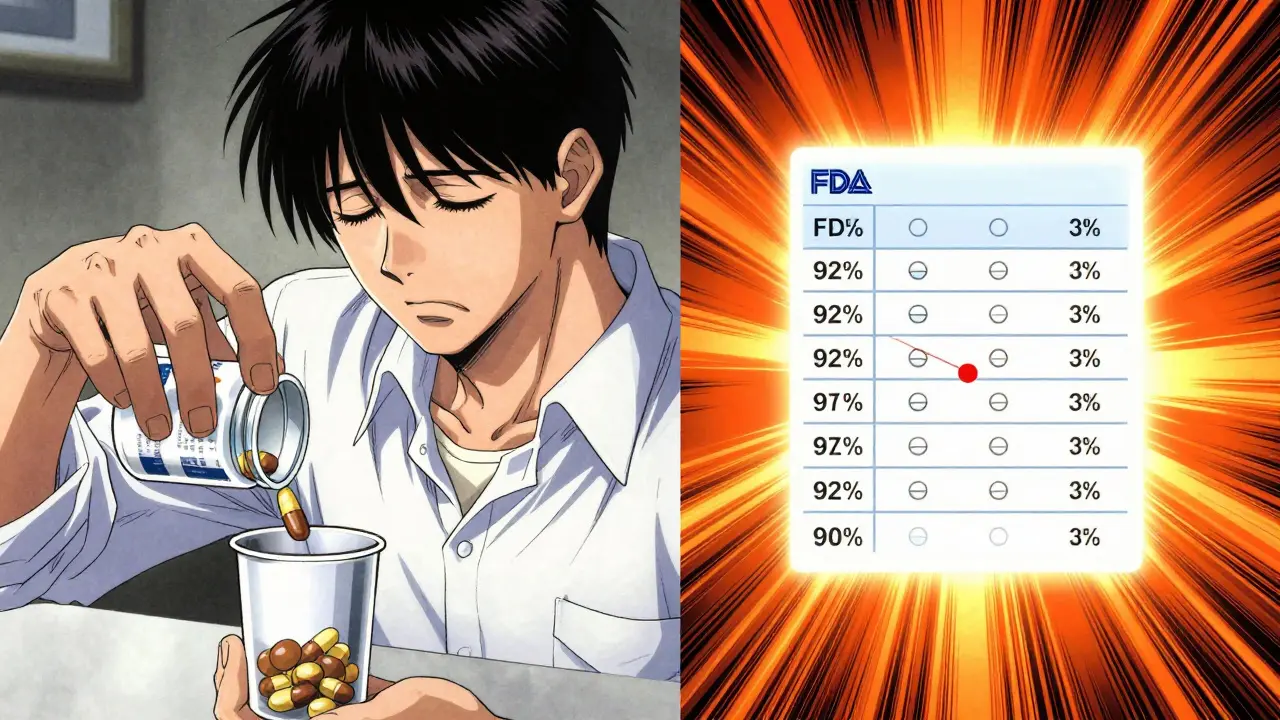
The FDA isn’t ignoring the problem. In 2024, they rolled out a new algorithm that can now identify generic drugs in FAERS with 92% accuracy-up from barely 50% before. It uses patterns in drug names, dosages, and patient histories to guess which manufacturer was involved, even if the reporter didn’t say.
They’ve also added new prompts to the online MedWatch form. Now, when you select "generic," it asks: "Do you know the manufacturer?" and "Do you have the NDC number?" It’s not perfect-but it’s better.
By 2026, the FDA plans to connect MedWatch directly to electronic health records. That means when a doctor prescribes a generic, the system could automatically pull in the NDC, the manufacturer, and the batch number. No more guesswork. No more missing data.
And there’s another big shift: the Generic Drug User Fee Amendments (GDUFA) III, launched in 2023, now requires the FDA to actively monitor and investigate safety signals specific to generics. That’s a game-changer. For the first time, there’s a mandate to look for patterns in generic drug problems-not just treat them as noise.
What You Can Do: Reporting Made Simple
If you think a generic drug caused a problem, report it. Here’s how to make sure your report counts:
- Check the pill bottle. Look for the NDC number-it’s a 10- or 11-digit code on the label.
- Write down the manufacturer name. It’s often printed near the NDC.
- When reporting, don’t just say "generic sertraline." Say: "generic sertraline (Mylan, NDC 00378-1234-01)."
- Include details: When did you start taking it? What symptoms happened? Did you switch from a brand? How long did it take for the problem to start?
- Submit online at www.fda.gov/MedWatch or call 1-800-FDA-1088.
Pharmacists and doctors: When you fill a prescription for a generic, take 10 seconds to note the manufacturer and NDC. That tiny bit of info could be the key to catching a dangerous pattern.
Why This Matters
Generics save the U.S. healthcare system over $1 trillion every year. But if we don’t know when they’re unsafe, we’re gambling with millions of lives. The system isn’t broken-it’s just outdated. The data is there. The tools are improving. But the biggest gap isn’t technical. It’s human.
Every report counts. Especially for generics. Because when a patient says, "This one doesn’t work," and no one listens-someone else might pay the price.
shannon kozee
March 21, 2026 AT 07:50Just reported my last generic levothyroxine reaction. Took 20 seconds to check the bottle. NDC: 00378-1234-01. Manufacturer: Mylan. Made the difference. FDA needs to push this harder.
trudale hampton
March 22, 2026 AT 14:36Man, I wish I knew this before I switched to that generic sertraline. Felt like my brain was underwater for weeks. Glad they’re updating the form. Small step, but it’s a step.
Shaun Wakashige
March 22, 2026 AT 22:54lol at the FDA finally catching up
Paul Cuccurullo
March 24, 2026 AT 02:47This is not just about data-it’s about dignity. When a patient says, 'This doesn’t work like before,' and no one tracks who made it, we’re telling them their experience doesn’t matter. The new algorithm is a start, but systemic change requires empathy, not just algorithms.
Solomon Kindie
March 25, 2026 AT 06:17so like the whole system is rigged right like generics are supposed to be the same but theyre not and the fda just doesnt care enough to make it easy to report and honestly its a joke how many people just blame themselves instead of realizing its the pill not them
Natali Shevchenko
March 26, 2026 AT 03:50I’ve been on the same generic for five years, and every time I refill, I check the bottle. Sometimes it’s Teva. Sometimes Sandoz. Sometimes a company I’ve never heard of. I’ve had three different reactions across three different batches. The system assumes we’re all pharmacists, but most of us are just trying to survive. The NDC isn’t just a number-it’s a lifeline. And if we’re not taught to see it, how are we supposed to care?
Nishan Basnet
March 27, 2026 AT 01:25As someone from India where generics are the backbone of healthcare, I’ve seen how quality control varies wildly. In the U.S., the assumption is 'same active ingredient = same effect.' But biology doesn’t care about assumptions. It cares about excipients, dissolution rates, and manufacturing consistency. The FDA’s new tools are long overdue. Thank you for shedding light on this.
Desiree LaPointe
March 28, 2026 AT 22:10Oh wow, the FDA actually *noticed* that generics aren’t all created equal? Took them long enough. Meanwhile, millions of people have been told to 'tough it out' while Big Pharma cashes in on the confusion. Next up: mandatory manufacturer labeling on every pill bottle. Or should we just let the market decide who gets to poison us?
Thomas Jensen
March 28, 2026 AT 22:37you think this is random? nah. they dont want you to know who makes the pills. if you knew, you'd stop buying them. and then what? the whole generic system collapses. they're hiding it because they know some of these manufacturers are cutting corners. and the FDA? they're in bed with them. you think the algorithm fix is real? its a distraction. the real fix? ban all generics. or at least make them traceable like insulin.
matthew runcie
March 29, 2026 AT 19:40Just checked my last bottle. NDC right there. Easy. I’ll report next time. Small action. Big ripple.