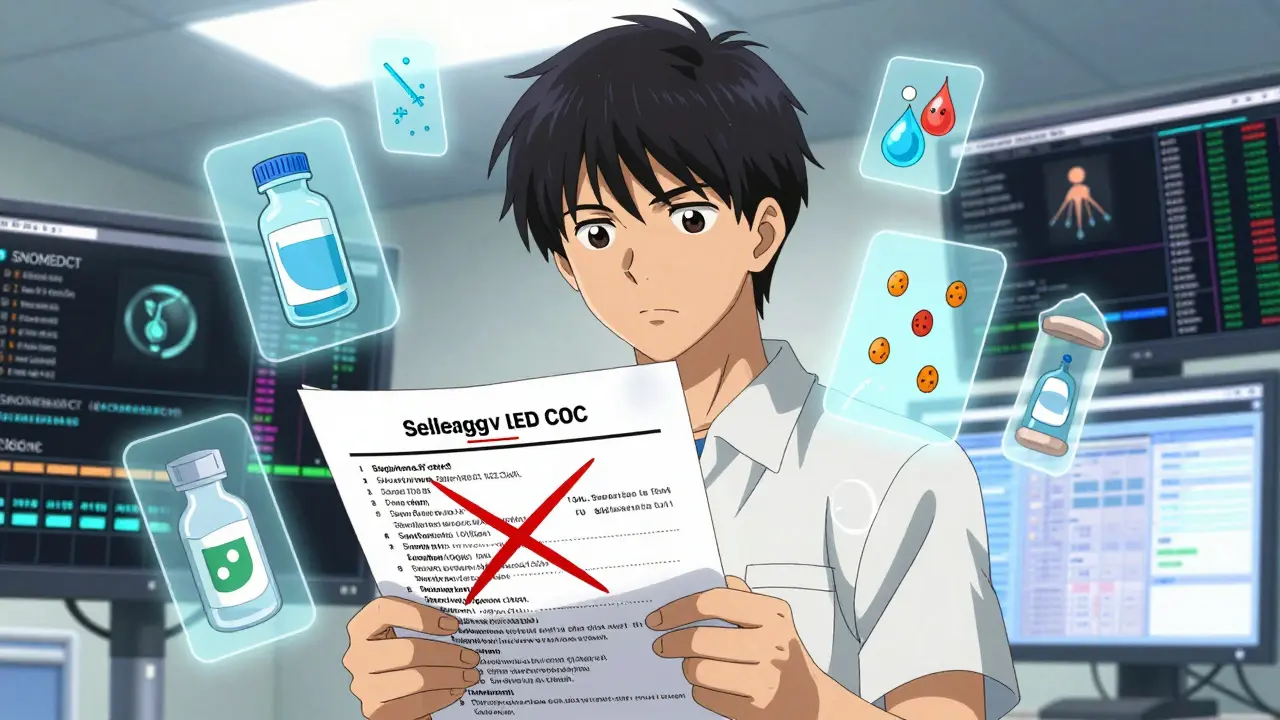
Every time you walk into a new doctor’s office, clinic, or emergency room, your allergy list should be accurate. But too often, it’s not. You might think you told them you’re allergic to penicillin, but the chart says something different. Or worse - it says you’re allergic to something you’ve taken safely for years. This isn’t just a paperwork error. Inaccurate allergy records lead to drug reactions that send 5% of hospitalized patients into preventable danger. And in severe cases, like anaphylaxis, the death rate can hit 10%.
Why Your Allergy List Is Probably Wrong
Most people don’t realize their allergy list is outdated. You might have outgrown a childhood peanut allergy. Maybe a rash from amoxicillin ten years ago wasn’t a true allergy at all - just a side effect. But if no one ever checked, that label stays on your record forever. Studies show that between 7% and 12.9% of allergies listed in electronic health records (EHRs) don’t match what patients actually react to. That’s more than 1 in 10 people carrying a false alarm. Even worse, different providers use different systems. Your primary care doctor uses Epic. The specialist you saw last month uses Cerner. The urgent care center you visited in January? They use a totally different platform. Without a system to talk to each other, your allergy info gets lost in translation. Epic’s Care Everywhere shares your list, but doesn’t check if it’s right. It just copies what’s there. That’s like handing someone a faded photocopy of a map and expecting them to find the right street.What’s Changed in 2025 - The New Rules
As of January 1, 2025, every certified EHR system in the U.S. must follow the United States Core Data for Interoperability (USCDI) v3 standards. This isn’t a suggestion. It’s law. And it changes everything. Now, your allergy entry must include:- Verification status - Is this confirmed by testing? Patient-reported? Or just guessed?
- SNOMED CT code - A precise medical code that says exactly what you’re allergic to (e.g., “Penicillin G” not just “antibiotic”)
- Reaction details - Not just “rash.” Was it hives? Swollen throat? Low blood pressure? When did it start? How bad was it?
How to Fix Your Allergy List - Step by Step
You don’t need to wait for your doctor to fix this. You can take control right now. Here’s how:- Get your current list - Log into your patient portal (MyChart, Epic, Cerner, etc.) and download your allergy list. If you can’t find it, call your primary care office and ask for a printed copy. Don’t assume it’s right.
- Write down what you really know - Make a list of every reaction you’ve ever had. Include the drug name, what happened, when, and how bad it was. If you’re unsure, write “unsure - thought it was an allergy.”
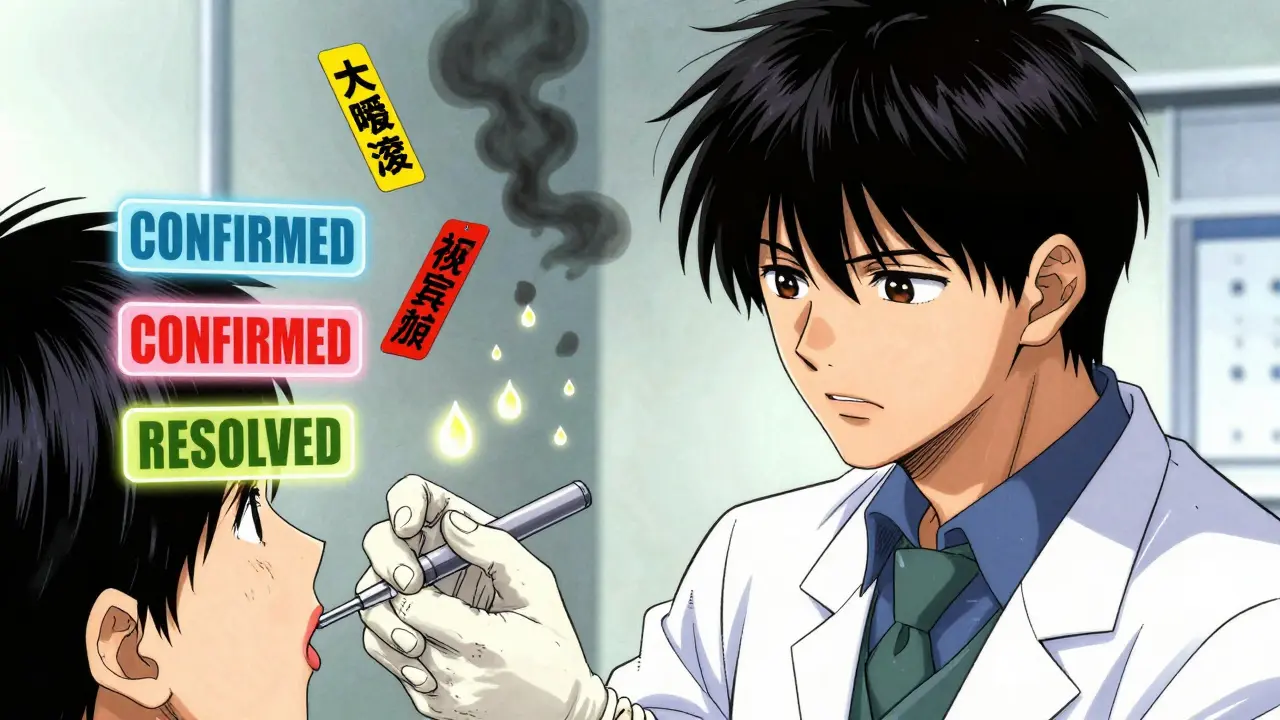
- Check for false positives - Many people think they’re allergic to penicillin because they got a rash as a kid. But 90% of those people aren’t truly allergic. Ask your doctor about an allergy challenge test. It’s simple - a tiny dose under supervision. No needles. No hospital stay.
- Update your portal - Most patient portals let you request changes to your allergy list. Use that feature. Don’t wait for your next appointment. Submit the update now.
- Bring your list to every visit - Even if you updated your portal, bring a printed copy or screenshot to every doctor, pharmacist, or ER visit. Say: “This is my current, verified allergy list. Please confirm it matches your system.”
What Your Doctor Should Be Doing (But Might Not Be)
Hospitals with advanced systems - like Mass General Brigham and UCHealth - now use AI tools that scan your entire medical record. They read old notes, lab results, and even discharge summaries to find clues your allergy might be wrong. One system found 37 patients who had negative penicillin challenges but still had active allergy flags. Without that tool, those patients would’ve been stuck with expensive, less effective antibiotics for life. But not every clinic has this tech. Only about 40% of U.S. hospitals use advanced reconciliation tools. Most still rely on manual checks. That means you’re the most important person in the loop. Ask your provider:- “Is my allergy verified by testing or just reported?”
- “Can you check if this allergy matches what’s in your system from other providers?”
- “Do you use SNOMED CT codes for allergies?”
The Cost of Getting It Wrong
A false penicillin allergy isn’t just inconvenient. It’s expensive. Doctors can’t prescribe the best, cheapest, most effective antibiotic - penicillin - because they think you’re allergic. So they give you something like vancomycin or clindamycin. Those drugs cost 3 to 10 times more. They’re harder on your gut. They increase your risk of C. diff infections. And they’re less effective for many common infections. According to Dr. Kimberly Blomkalns at Stanford, false penicillin labels alone drive over $1.2 billion in unnecessary healthcare costs every year in the U.S. That’s not just money. It’s more hospital stays, longer recoveries, and more side effects for patients who don’t even need them.What’s Coming Next - And How to Stay Ahead
By 2026, Medicare will start tying 2.3% of hospital reimbursements to how accurately they document allergies. That means hospitals are rushing to fix this. You’ll start seeing more automated alerts, AI flags, and pop-ups asking, “Is this allergy still valid?” The next big shift? MyHealthEData. Starting in 2025, you’ll be able to update your allergy list once - and it will automatically sync across all participating providers. No more calling five offices. Just update your portal, and your data moves. But here’s the catch: Only 22.3% of patients currently use their portals to update allergies. That’s the biggest barrier. Technology can’t help if you don’t use it.
Your Action Plan for 2025
Don’t wait for the system to fix itself. Take these steps now:- Today - Log into your patient portal. Download your allergy list.
- This week - Compare it to your personal notes. Remove anything you’re unsure about or haven’t reacted to in 5+ years.
- Next appointment - Ask your doctor: “Can we verify this?” If you think you might have outgrown a penicillin allergy, ask about a challenge test.
- Every visit - Bring your updated list. Say it out loud. “This is my current allergy list. Please confirm it’s in your system.”
- Every 6 months - Revisit your portal. Add new reactions. Remove old ones.
What If You Don’t Know What You’re Allergic To?
Many people say they’re allergic to “antibiotics” or “painkillers.” That’s too vague. An allergy to ibuprofen is not the same as an allergy to aspirin. An allergy to amoxicillin is not the same as an allergy to cephalexin. If you’re unsure:- Start with penicillin. It’s the most common false label. Ask your doctor for a skin test or oral challenge.
- For NSAIDs (like ibuprofen), keep a symptom diary. Did you get hives? Swelling? Trouble breathing? Or just an upset stomach? Those are different things.
- Don’t guess. Get tested. It’s safe, quick, and can save you years of unnecessary medication restrictions.
Final Thought: You’re the Keeper of Your Health
No EHR system, no AI tool, no doctor can fix your allergy list if you don’t know what’s on it - or if you don’t speak up. The technology is here. The standards are set. The data can move. But you’re the only one who knows your body. Update your list. Question outdated labels. Push for verification. Your next doctor’s visit might depend on it.How often should I update my allergy list?
You should review your allergy list at least once a year - and every time you see a new provider. If you’ve had a new reaction, stopped a medication, or think you outgrew an allergy, update it immediately. Don’t wait for your annual checkup.
Can I remove an allergy from my record without testing?
No - not officially. Only a verified test (like a skin prick or oral challenge) can remove a true allergy label. But if you’ve taken the drug safely multiple times since the original reaction, you can ask your provider to change the status from “verified” to “patient-reported” or “resolved.” This still helps doctors make better decisions.
Do food allergies count on my drug allergy list?
Yes - but most EHR systems handle them poorly. While drug allergies are required to have SNOMED CT codes and verification status, food and environmental allergies often get entered as free-text notes. That means they’re harder to track and may not show up in alerts. Always mention food allergies separately and ask your provider to document them clearly.
What if my doctor says my allergy isn’t real?
Ask for a referral to an allergist. Many primary care providers aren’t trained to interpret allergy tests or manage challenges. An allergist can perform a controlled test to confirm or rule out the allergy. Don’t accept a dismissive answer - your safety matters.
Is my allergy information shared between hospitals?
It depends. If both providers use Epic or Cerner, basic sharing happens through Care Everywhere. But that only copies the list - it doesn’t check if it’s correct. Only advanced systems with NLP tools can detect discrepancies. Always confirm your list is accurate at each new facility.
Can I update my allergies through my phone?
Yes - if your provider uses a patient portal with mobile access (like MyChart or Epic’s app). Most allow you to submit updates directly. Look for “Update My Allergies” under “My Health Record.” If you can’t find it, call the portal help line. You’re entitled to correct your medical data.
Why do some providers still use “allergy” for side effects?
Because many providers aren’t trained to distinguish between true allergies (immune system reaction) and side effects (like nausea or dizziness). This causes confusion. Always specify: “This was a side effect, not an allergy,” and ask them to document it correctly. True allergies can be life-threatening. Side effects are uncomfortable - but not dangerous in the same way.
What happens if I don’t update my allergy list?
You risk being given a drug you’re actually allergic to - or being denied the best, safest, cheapest treatment because of a false label. In emergencies, doctors may avoid effective medications out of caution. That can delay recovery, increase complications, and even cost you your life. Updating your list isn’t paperwork - it’s protection.
Kitty Price
December 15, 2025 AT 20:14OMG I had no idea my penicillin label was probably fake 😅 I’ve been avoiding it since I was 8 and got a rash. Just got my doctor to schedule a challenge test next month. So relieved I won’t be stuck with $800 antibiotics anymore.
Randolph Rickman
December 17, 2025 AT 12:25This is one of those posts that should be mandatory reading before you even get your first prescription. I’m a pharmacist and I see this every single day - patients denied amoxicillin because of a childhood rash they had at age 5. The system is broken, but you’re right - the fix is in your hands. Download your record today. Don’t wait for your doctor to do it for you. Your life might literally depend on it.
sue spark
December 19, 2025 AT 00:08I updated my list last week after reading this and realized I’d been listing "allergy to painkillers" for 12 years. Turns out I just hate ibuprofen’s stomach burn. Not an allergy. Just a very loud gut. Changed it to "intolerance" and now my doctor actually listens to me about migraines. Small win but I feel like a warrior now
Kayleigh Campbell
December 20, 2025 AT 05:22So let me get this straight - we’ve got AI that can predict if you’ll like a Netflix show but can’t tell if your allergy is real? 🤦♀️ I’m not mad, I’m just disappointed. Also, why do hospitals still use the word "allergy" for nausea? That’s like calling a sneeze a heart attack.
Billy Poling
December 20, 2025 AT 11:02It is imperative that individuals take proactive responsibility for the integrity of their medical documentation, as the consequences of inaccurate data within electronic health records may result in catastrophic clinical outcomes. The United States Core Data for Interoperability v3 mandates granular structural annotation of allergic reactions, including SNOMED CT codes, verification status, and temporal descriptors of clinical manifestations - all of which are essential for reducing iatrogenic harm. Failure to comply with these standards constitutes a dereliction of personal health stewardship.
Andrew Sychev
December 21, 2025 AT 19:31Of course the system is broken. People don’t read the fine print. They don’t even open their portals. I bet 90% of you still think "allergy" means "I felt weird after taking something." You’re not patients - you’re walking medical disasters waiting to happen. And now they’re going to pay hospitals for getting it right? Too late. You should’ve fixed this 10 years ago.
Josias Ariel Mahlangu
December 22, 2025 AT 11:03It is morally irresponsible to allow false allergy labels to persist. The fact that people are still using "I think I’m allergic" as a medical diagnosis is a national disgrace. We are not children. We are not toddlers scribbling on charts. If you don’t know what you’re allergic to, get tested. Or stop pretending you’re a victim of the system. You are the system.
Dave Alponvyr
December 22, 2025 AT 19:45Just updated mine. Took 3 minutes. Now I can actually get penicillin if I need it. You’re welcome, future me.
Arun ana
December 22, 2025 AT 23:28Love this! I just shared it with my mom - she’s 72 and still thinks "allergy" means "I felt dizzy." Now she’s going to her doctor next week to check her penicillin label. Small steps, right? 🙌
James Rayner
December 24, 2025 AT 18:30It’s strange… we trust algorithms to recommend our music, our movies, our dating matches - but when it comes to our bodies, we hand over the keys to a 1990s database that still thinks "antibiotic" is a valid allergy term. We’ve built AI that can write sonnets… but can’t tell if a rash from 1997 is still relevant. Maybe we’re not broken. Maybe we’re just… lazy. Or afraid. Or both.
Kim Hines
December 25, 2025 AT 17:58I’ve had my list updated since January. Still no one at urgent care checks it. I bring a printed copy every time. They still write "penicillin allergy" in the chart like I’m just being dramatic. I’m tired.
Aditya Kumar
December 27, 2025 AT 17:01Yeah sure, update your list. But who’s gonna fix the 200 other systems that don’t talk to each other? I’m not doing all the work just so some hospital can finally see I’m not allergic to cephalexin. It’s not my job to fix their software.