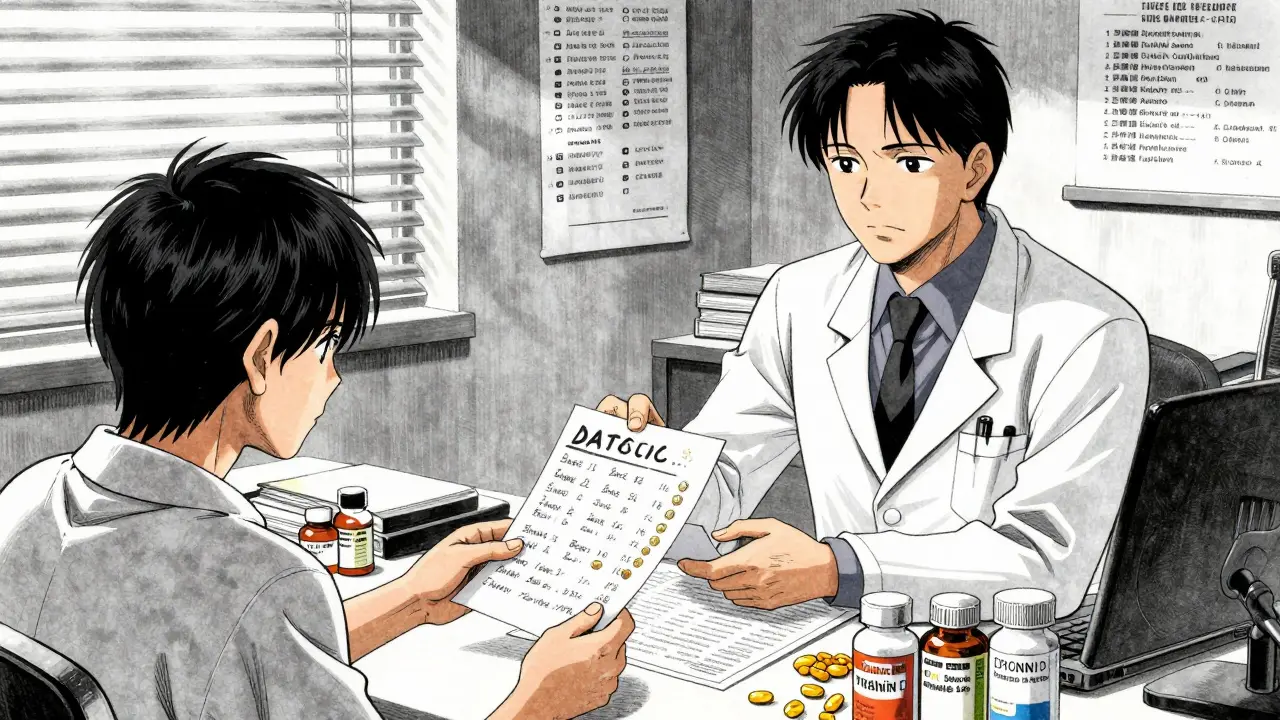
Every year, thousands of people end up in the hospital not because of their prescription meds, but because of what they took on top of them. A daily fish oil pill. A vitamin D capsule. A herbal sleep aid. These aren’t just harmless extras-they’re active substances that can interfere with your heart medication, your blood thinner, your antidepressant. And yet, only 36% of people tell their doctor about their supplements.
Why? Because most providers don’t ask. And most patients don’t think it matters. But here’s the truth: if you’re taking anything beyond your prescription, your provider needs to know. Not because they’re judging you, but because your safety depends on it.
Why OTC and Supplements Are Different From Prescriptions
Prescription drugs go through years of testing before they hit the shelf. The FDA reviews them for safety, dosage, and interactions. Over-the-counter (OTC) medicines like ibuprofen or allergy pills? They’re regulated too-but under a different system. They have a Drug Facts label that tells you exactly how much active ingredient is in each dose.
Dietary supplements? That’s a whole different story. They don’t need FDA approval before sale. They’re sold under the Dietary Supplement Health and Education Act (DSHEA) of 1994, which treats them more like food than medicine. That means manufacturers don’t have to prove they’re safe before selling them. They only have to prove they’re unsafe after people get hurt.
That’s why labels can be misleading. You might see “1000mg of Vitamin C” on a bottle and assume it’s safe. But what if that same bottle also contains hidden ingredients like green tea extract or stimulants? Or what if it’s made by a company that doesn’t follow quality standards? A 2022 Government Accountability Office report found that 23% of supplement labels had inaccurate ingredient lists.
And here’s the kicker: supplements can interact with your prescriptions in dangerous ways. St. John’s Wort can make birth control, antidepressants, and blood thinners stop working. Kava can damage your liver when taken with antipsychotics. Fish oil in high doses can increase bleeding risk if you’re on warfarin. These aren’t rare cases. In 2022, the FDA recorded 1,034 adverse events linked to supplements, including 52 deaths.
The Big Problem: Nobody’s Asking
You might think your doctor knows what you’re taking. But studies show they often don’t. In one 2022 study, 52.7% of patients who didn’t disclose supplement use said their provider never asked. Another 28% thought their provider didn’t need to know. And 19% feared being judged or discouraged.
That’s a communication gap-and it’s deadly. A 2021 study in JAMA Internal Medicine found that 23% of hospital patients had potential drug-supplement interactions. Nearly 8% of those were severe enough to cause serious harm.
Pharmacists are better at catching these. In fact, they identify 3.2 times more interactions than physicians during medication reviews. Why? Because they’re trained to ask. They don’t assume. They don’t skip the “what else are you taking?” question.
But most doctors don’t have the time-or the system-to dig into supplement use. That’s why the burden falls on you.
How to Get It Right: The Exact Steps
Here’s how to make sure your provider knows exactly what you’re taking-no guesswork, no confusion.
- Make a written list-not a mental one. Write down every pill, capsule, powder, tincture, or tea you take daily or weekly. Include OTC pain relievers, cold meds, and even herbal teas you drink for “relaxation.”
- Use the NIH ODS form. The National Institutes of Health Office of Dietary Supplements created a free, simple form called “My Dietary Supplement and Medicine Record.” It asks for:
- Product name (exact brand and version-e.g., “Nature Made Fish Oil 1200mg”)
- Dosage (e.g., “1,000 mg twice daily”)
- Frequency (e.g., “every morning and night”)
- Purpose (e.g., “for joint pain,” “for sleep,” “for immune support”)
- Check the Supplement Facts label. Don’t just say “I take vitamin D.” Say “I take 5,000 IU of vitamin D3 from Garden of Life, once a day.” The label tells you the exact amount. Write it down.
- Bring the bottles. If you’re seeing a new provider or going into the hospital, bring your supplement bottles with you. Labels change. Ingredients change. Seeing the bottle eliminates confusion.
- Ask your provider to review it. Don’t just hand them the list. Say: “Can you check this list for possible interactions with my prescriptions?”
Studies show that patients who use a written list reduce documentation errors by 64% compared to those who just talk about it. That’s not a small difference. That’s the difference between a safe visit and a preventable emergency.
What to Say When Your Provider Doesn’t Ask
What if your doctor never brings it up? That’s normal. Most don’t. So you have to.
Try this script: “I’ve been taking a few supplements lately, and I want to make sure they’re safe with everything else I’m on. Can we go over them quickly?”
Or even simpler: “I take fish oil, vitamin D, and turmeric. Do any of these interfere with my blood pressure med?”
Don’t wait for them to ask. Don’t assume they know. Don’t feel guilty. This isn’t about being “extra.” It’s about being smart.
And if your provider brushes you off? That’s a red flag. Providers who take supplement use seriously have higher patient satisfaction scores. One analysis of over 14,000 reviews found that doctors who routinely ask about supplements get 4.7 out of 5 stars. Those who don’t? 3.2 out of 5.
Common Mistakes People Make
Even when people try to be honest, they still get it wrong. Here are the top three mistakes:
- “It’s just a vitamin.” 64% of patients don’t consider vitamins and minerals as “supplements” worth mentioning. But taking 2,000 IU of vitamin D daily with a blood thinner? That’s a risk. So is taking high-dose vitamin K if you’re on warfarin.
- “It’s natural, so it’s safe.” “Natural” doesn’t mean harmless. Comfrey, kava, and green tea extract have all caused liver failure in people taking other medications. Just because something comes from a plant doesn’t mean it’s safe to mix.
- “I only take it once in a while.” Even occasional use matters. A single dose of St. John’s Wort can reduce the effectiveness of some antidepressants for up to two weeks.
Also, don’t rely on the bottle to tell the whole story. Some supplements contain hidden stimulants, steroids, or prescription drugs not listed on the label. The FDA has found counterfeit supplements with unapproved pharmaceuticals in them. That’s why your provider needs to know-even if you think it’s “just a multivitamin.”

What’s Changing (And Why It Matters)
There’s progress. In 2023, the Office of the National Coordinator for Health Information Technology launched a project to standardize supplement data in electronic health records. By 2025, all certified EHR systems (like Epic and Cerner) will have dedicated fields for supplement tracking.
Epic Systems already added AI-powered interaction screening in their 2024 update. It now cross-checks over 14,700 supplement products against prescription databases. That means, in the future, your doctor’s system might flag a dangerous mix before you even walk in the door.
But until then? You’re still the most important link in the chain.
And here’s the best part: telling your provider about your supplements doesn’t mean they’ll tell you to stop. Many providers will say, “That’s fine, just keep taking it-but let’s monitor your liver enzymes.” Or, “You don’t need that. Here’s a better option.”
One patient in a 2021 Journal of Patient Safety case study avoided life-threatening bleeding after her doctor learned she was taking 1,000mg of fish oil daily. Her warfarin dose was adjusted. She stayed safe.
Another patient died in 2019 from liver failure after taking kava with antipsychotics. Her providers never knew she was using it.
That’s the difference one conversation makes.
Final Checklist: Before Your Next Appointment
Take five minutes before your visit. Do this:
- Grab every supplement, OTC medicine, and herbal product you use.
- Write down the exact name, dose, frequency, and reason for each.
- Bring the bottles or photos of the labels.
- Ask: “Can you check this list for any interactions with my prescriptions?”
- Write down their answer. If they say “It’s fine,” ask: “Is there anything I should watch for?”
This isn’t about being perfect. It’s about being prepared. You wouldn’t skip telling your doctor about your heart condition. Don’t skip telling them about your supplement bottle.
Connie Zehner
December 19, 2025 AT 00:23Monte Pareek
December 20, 2025 AT 08:48Kelly Mulder
December 20, 2025 AT 11:25Tim Goodfellow
December 20, 2025 AT 16:26mark shortus
December 21, 2025 AT 06:06Vicki Belcher
December 21, 2025 AT 06:08Aboobakar Muhammedali
December 21, 2025 AT 13:51anthony funes gomez
December 23, 2025 AT 08:42pascal pantel
December 24, 2025 AT 18:13Sahil jassy
December 26, 2025 AT 13:42Kathryn Featherstone
December 26, 2025 AT 22:18Janelle Moore
December 27, 2025 AT 09:22Henry Marcus
December 29, 2025 AT 00:14