Medication Safety & Fall Risk Checker
Patient Profile
Safety Assessment
Analysis pending...
Metabolic Speed
Fall Risk Increase
Blood-Brain Barrier
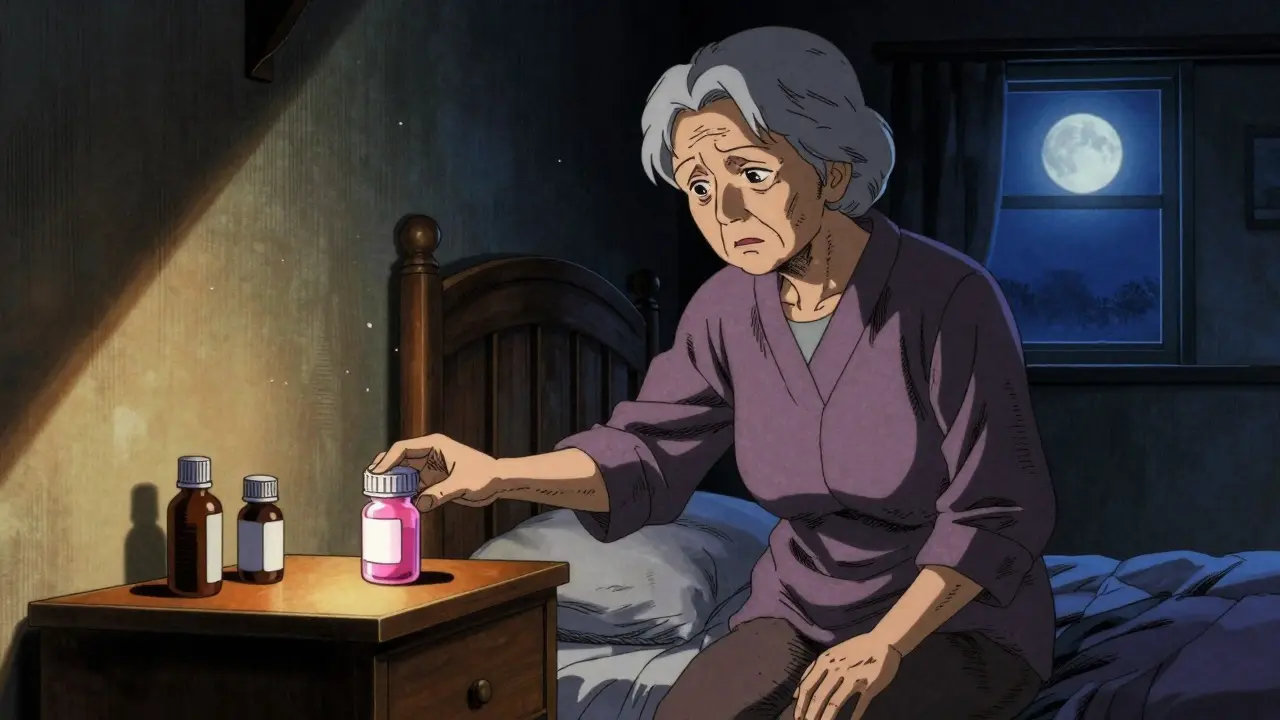
Imagine your grandmother reaching for that pink bottle on the nightstand. She calls it her "sleep aid." It’s actually diphenhydramine, better known as Benadryl. What looks like harmless over-the-counter relief can quietly set off a chain reaction. In the U.S., more than 36 million older adults hit the floor every year. When you add certain allergy or cold medicines to the mix, the danger spikes significantly. It turns out those classic antihistamines we grew up with carry hidden dangers for anyone past their sixties.
The issue isn’t just drowsiness. These drugs affect how your body handles balance and coordination while you try to walk to the bathroom at 2 A.M. With metabolic changes coming naturally with age, the medicine lingers longer and hits harder than it does younger bodies. This creates a perfect storm for injury.
The Science Behind the Slip-Up
To understand why a simple pill causes trouble, you have to look at how it travels through the system. First-generation antihistamines are older allergy medications developed in the 1940s that easily cross the blood-brain barrier. Unlike newer formulas, these older drugs don’t stay locked outside the central nervous system. They slip right in.
Once inside the brain, they dampen signals meant to keep you steady. A healthy adult metabolizes diphenhydramine in about 8.5 hours. For an older adult, that clock ticks much slower, extending to 13.5 hours. Peak sedative effects hit within three hours of taking a dose, but the feeling of grogginess can drag on for most of the day. This prolongs the window where walking requires extra caution.
Research published recently highlights the gravity of this timing mismatch. A 2025 analysis of health insurance claims looked at nearly 190,000 adults over 65 seeking care for dizziness. The data showed a stark reality: among those who filled prescriptions for vestibular suppressants-which include these antihistamines-8% experienced a fall requiring medical care within two months. That’s not just stumbling; that’s hospital visits and recovery time.
How Much Does Your Risk Increase?
We often treat allergies as minor inconveniences, but ignoring the side effects can be costly. The math regarding bone injuries is sobering. A systematic review found that using first-generation antihistamines links to a 54% higher chance of suffering an injurious fall. Fracture risk jumps by 43%. Think about that number for a moment. One broken hip can change independence forever.
| Attribute | First-Generation (e.g., Benadryl) | Second-Generation (e.g., Claritin) |
|---|---|---|
| Crosses Blood-Brain Barrier | Yes (High) | No (Minimal) |
| Drowsiness Rate | 15-20% | 6-14% |
| Average Half-Life (Elderly) | 13.5 Hours | Varies, Generally Lower Impact |
| Anticholinergic Burden | High (Score 3-4) | Low (Score 0-1) |
These medications sit high on the Anticholinergic Cognitive Burden Scale. Scores of 3 or 4 indicate strong activity that confuses the mind. Older patients might notice trouble focusing, dry mouth, or blurred vision alongside the dizziness. If someone already has shaky legs or uses a walker, adding this chemical fog makes moving unsafe.

Safer Options for Allergy Relief
You don’t have to suffer through a sneezy season to avoid the hazards. Safer alternatives exist that target symptoms without messing with balance. Second-generation antihistamines are newer formulations designed to block histamine receptors without entering the brain. Brands like loratadine (Claritin) and fexofenadine (Allegra) work differently.
Fexofenadine, for example, shows almost no increase in fall risk compared to non-users. Another option is cetirizine (Zyrtec), though it does show mild sedative effects in roughly 14% of older users. Still, it remains far safer than the original generation. The American Geriatrics Society explicitly recommends switching to these newer options when antihistamine therapy is absolutely necessary.
If your goal is simply sleep rather than allergy relief, consider that diphenhydramine shouldn’t be the primary tool anymore. Sleep hygiene strategies often yield better results without the chemical hangover. Consistent bedtimes, limiting caffeine after noon, and creating a restful environment help reset natural rhythms. Doctors now suggest non-pharmacological sleep interventions as the first line of defense before reaching for the OTC shelf.
Practical Prevention Steps You Can Take Today
Knowing the risk helps, but acting on it saves lives. Here is a realistic plan to protect yourself or a loved one starting right now:
- Conduct a Brown Bag Review: Bring every single bottle, prescription, and supplement to a pharmacist. Have them sit down and sort through everything. Studies show pharmacist-led reviews cut fall risk by 26% because they catch interactions you miss at home.
- Check the Label: Look for active ingredients containing "-phen" or "-amine" suffixes like chlorpheniramine or brompheniramine. These flag potential issues.
- Reduce the Dose: If a switch isn’t immediately possible, doctors suggest lowering the dose. Instead of 25mg of diphenhydramine, trying 12.5mg might lower impairment.
- Time Your Meds: Taking medication in the evening minimizes daytime impact, even though it won’t fully eliminate the risk.
- Upgrade the Home: Medications aren't the only factor. Installing grab bars reduces fall risk by 28%, and better lighting cuts falls by 32%.
Environmental tweaks work hand-in-hand with medication management. Removing rugs, securing cords, and ensuring nightlights are on creates a safety net. When combined with stopping high-risk drugs, you build layers of protection around the senior.

Managing the Conversation with Doctors
Many patients hesitate to challenge their doctor's prescriptions. It feels like arguing or doubting expertise. However, advocacy is part of health ownership. The CDC’s STEADI initiative encourages providers to screen for fall risk specifically by asking about sedating medications.
Start the conversation by mentioning the Beers Criteria. This guideline, published by the American Geriatrics Society, classifies first-generation antihistamines as potentially inappropriate for older patients. Bringing this terminology up signals you’ve done homework without being aggressive. You might say, "I read about the Beers Criteria regarding antihistamines and my balance. Is there a safer alternative?" Most physicians appreciate informed patients ready to collaborate on safer plans.
Even if the doctor hesitates, ask about deprescribing. Gradual tapering prevents withdrawal symptoms or symptom rebounds. Documentation matters too. Ask them to note the specific reason for changing medication in your chart so future providers see the decision clearly.
The Bigger Picture of Medication Safety
This problem persists partly because these drugs remain widely available without strict warnings. Sales data indicates diphenhydramine is still the third most purchased over-the-counter sleep aid for Americans over 65. Despite FDA updates mandating stronger labels in 2020, consumer awareness hasn't caught up yet.
New guidance is slowly shifting the landscape. Medicare Annual Wellness Visits now require documenting high-risk medication reviews starting in 2024. This mandates that doctors look at what patients take for allergies or sleep during routine checks. Future developments include Phase II trials for antihistamines formulated specifically for older adults that minimize central nervous system penetration entirely. Two candidates currently in testing show an 89% reduction in drowsiness compared to traditional dips. CDC STEADI is A Centers for Disease Control program aimed at preventing falls in older adults through evidence-based assessment and intervention. Their toolkit offers checklists for both clinicians and families. Using these resources ensures you’re not navigating complex drug interactions alone.
Can I stop taking my antihistamine suddenly?
No, abrupt cessation can cause rebound symptoms. Work with a healthcare provider to create a tapering schedule that gradually reduces dependence or switches to a safer alternative.
Are Zyrtec or Claritin completely safe for seniors?
They are much safer than first-generation drugs, but individual reactions vary. Cetirizine (Zyrtec) may cause mild drowsiness in some older adults. Fexofenadine (Allegra) generally has the least sedative effect.
What is the best non-drug way to handle allergies?
Nasal saline irrigation is highly effective, reducing allergy symptoms by 35-40%. Additionally, using allergen-proof bedding and HEPA air filters can remove triggers before they bother you.
Why do doctors prescribe Benadryl if it increases fall risk?
Often it comes down to habit or cost. First-generation options are generic and cheap. However, updated guidelines now strongly advise against them for older populations due to clear fall and cognitive risks.
How do I know if my parent is confused from their meds?
Look for signs of delirium like disorientation, memory loss, or sudden personality changes. If these occur, request a medication review immediately, as anticholinergic burden often worsens confusion.
Sophie Hallam
March 28, 2026 AT 14:45It really shows how much we rely on things that might actually be hurting us without realizing it.
The idea of Benadryl being a sleep aid feels harmless until you read about the fall risk stats.
My grandmother always used it and we never connected it to her wobbliness.
Switching to newer formulas seems like the obvious choice but habits are hard to break.
Pharmacies need to warn people more clearly when handing these bottles over.
gina macabuhay
March 29, 2026 AT 15:49People act like OTC medicine is candy rather than powerful chemical agents.
You can literally buy poison at the checkout counter next to the gum without a license.
If everyone followed basic health advice we would not have millions of fractures every year.
It is incredibly frustrating to see families enable this dangerous behavior daily.
They call it help but it is often just negligence disguised as care.
Monique Louise Hill
March 30, 2026 AT 21:23We need to stop normalizing the foggy feeling after taking meds! 😡🛑
Safety is the top priority for elders but nobody thinks about the crash afterwards. 💭
I know people who refused to change their routine even after warnings came in. 📉
We have to be the voice that speaks up before someone ends up in the hospital bed. 🏥💔
Sarah Klingenberg
April 1, 2026 AT 00:48I just think it is wild that these drugs from the 40s are still on the shelves freely.
Talking to my parents about switching their allergy meds felt weird but necessary though.
We ended up using Allegra and they feel way more stable in the mornings.
Small changes really do make a difference for peace of mind at home too.
Glad to see the conversation happening about medication reviews with doctors.
walker texaxsranger
April 2, 2026 AT 15:09the FDA pushed these guidelines because they need to hide the side effects of new generational drugs which cost three times as much
old school chemistry was safer back then but pharma owns the narrative now
they want you dependent on the system and scared of simple solutions
dont trust the marketing about second generation being pure and clean
investigate your own intake before they decide whats best for you
Jordan Marx
April 4, 2026 AT 10:33While the skepticism regarding pharmaceutical evolution is common, the pharmacokinetics data supports the metabolic differences outlined here clearly.
The first-generation antagonists cross the BBB with significantly higher affinity compared to fexofenadine derivatives.
We must distinguish between market motives and clinical evidence regarding adverse event profiles.
Implementing deprescribing protocols reduces polypharmacy risks substantially in geriatric populations.
Clinicians should prioritize non-sedating options whenever feasible to mitigate fall hazards effectively.
Aaron Olney
April 5, 2026 AT 07:32its so sad when you realize the medicine cabinet is actually a danger zone sometimes!!! :(
My aunt tried stopping suddenly and threw up all night because she dident taper off slowly.
Doctors are supposed to help but they just scribble away and leave patients confused.
I wish there was a bigger sign on the bottle warning us about the dizziness risk.
Please please check your moms meds before she falls down the stairs ok?
Shawn Sauve
April 5, 2026 AT 10:56Diphenhydramine is definitely a big red flag for seniors.
Philip Wynkoop
April 6, 2026 AT 04:23Just realized my dad takes Zyrtec and he is fine but Benadryl makes him nap for two days straight.
Age changes how our bodies handle chemicals completely.
Debra Brigman
April 7, 2026 AT 22:48Aging is merely a negotiation between memory and momentum where chemicals disrupt the dance.
We seek solace in a pill but find only gravity waiting to claim us unexpectedly.
The modern world offers cures that become shackles in their silent application.
Balance is an illusion constructed by the brain while the body betrays its limits.
True wisdom lies in listening to the slow whisper of the blood flowing through old veins.
Medication becomes a partner in crime rather than a savior when timing is ignored.
Falls are not accidents but inevitable consequences of ignoring biological rhythms.
We forget that youth fades faster than the ink on a prescription pad written today.
Vulnerability is the price of longevity and we pay it quietly every night.
Sabrina Herciu
April 9, 2026 AT 19:01Regarding the specific mechanisms involved, the anticholinergic burden scale is quite predictive of confusion events; therefore, clinicians should assess cognitive status during therapy.
In addition, the half-life extension observed in hepatic impairment means dosage adjustments are critical for patient safety.
Multidisciplinary reviews including pharmacists often reveal interactions missed by general practitioners alone.
Documentation of deprescribing efforts must be thorough to ensure continuity of care across facilities.
Monique Ball
April 10, 2026 AT 04:19I am so happy to read all of these amazing insights about keeping our loved ones safe from harm!
It gives me such hope that we can make small changes to prevent big injuries in the future!!
Imagine the relief of knowing grandma can sleep soundly without worrying about falling out of bed!
We just have to be brave enough to talk to the doctors about the scary stuff like anticholinergics!
Every step we take towards reviewing our medicines is a victory for healthy aging everywhere!!
Let us remember that knowledge is power and sharing it helps save lives in our communities!!
I believe in a brighter future where seniors live independently and joyfully without medication mishaps!!
Together we can fight these hidden dangers with love and education instead of fear and silence!!
Keep spreading the word because information truly is the best medicine we have in our arsenal today!!
Stay strong friends and remember that advocating for yourself is always the right thing to do!!
Austin Oguche
April 11, 2026 AT 15:34In many cultures we pass down home remedies that interact strangely with prescribed medications unknowingly.
There is value in blending traditional wisdom with modern medical science for comprehensive care.
Respecting the elder does not mean ignoring the potential risks posed by outdated treatments.
Communication bridges the gap between generations when discussing sensitive health topics openly.
gina macabuhay
April 12, 2026 AT 00:17I see too many people ignore this advice until their parent is already in a wheelchair.
Stop being lazy with your healthcare responsibilities.
This could happen to anyone reading this right now.