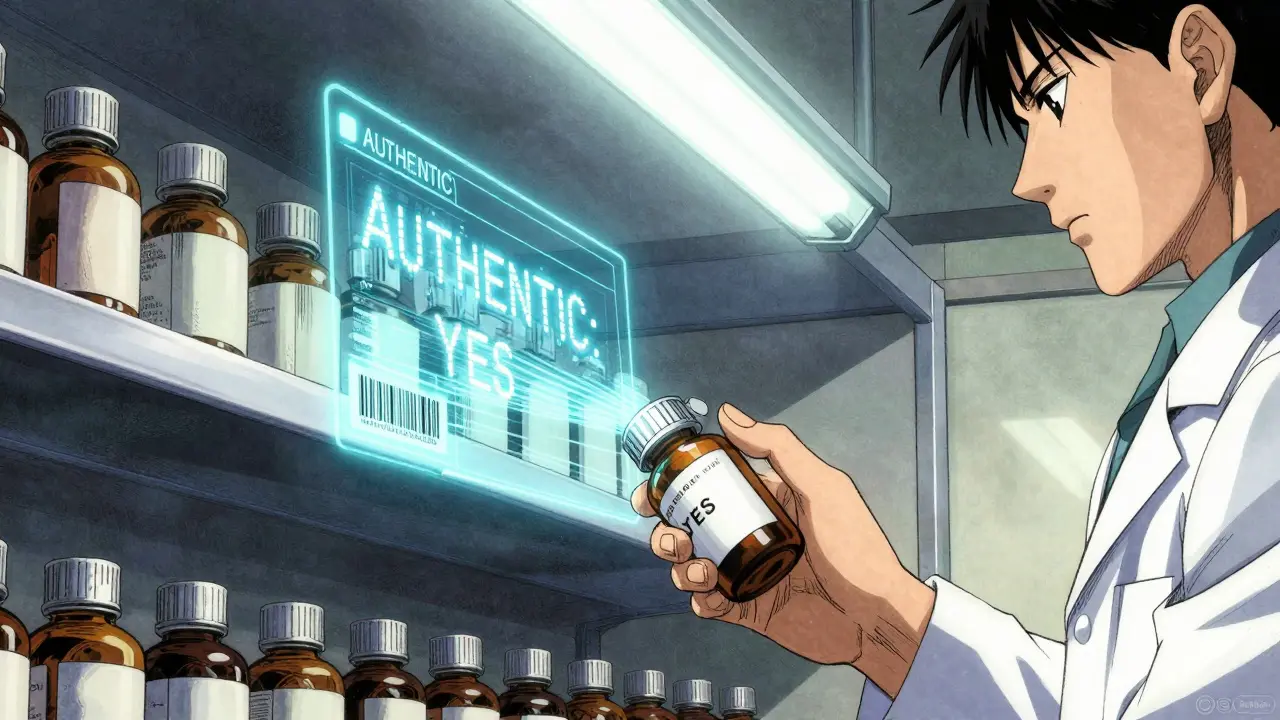
Every year, millions of prescription drugs move through a complex web of manufacturers, wholesalers, and pharmacies before ending up in your medicine cabinet. But what if one of those pills wasn’t real? What if it was a fake - made in an unregulated lab, packed with the wrong ingredients, or worse, toxic chemicals? That’s not a hypothetical. It’s a real threat. And since 2013, the U.S. has been building a system to stop it: the DSCSA track-and-trace system.
What Exactly Is the DSCSA?
The Drug Supply Chain Security Act, or DSCSA, is a federal law passed in 2013 to make sure every prescription drug sold in the U.S. can be traced from the factory to the pharmacy. Before DSCSA, there was no national standard. Each state had its own rules - if any at all. That meant a drug could travel across state lines with no one knowing its full history. Counterfeiters took advantage of that gap. The DSCSA changed that. It requires every package of prescription medicine to have a unique serial number, along with the lot number, expiration date, and National Drug Code (NDC). These details are printed in both human-readable text and a machine-readable barcode. Think of it like a license plate for every pill bottle, box, or vial. And every time that package changes hands - from manufacturer to distributor to pharmacy - that information is shared electronically. By November 27, 2024, every player in the supply chain must be able to verify a drug’s authenticity within 24 hours using electronic systems. No more paper logs. No more guesswork. If something looks off, you can check it instantly.How DSCSA Stops Counterfeit Drugs
Counterfeit drugs don’t just look fake - they can kill. In 2021, the FDA found fake versions of popular diabetes and blood pressure medications containing no active ingredient at all. Others had too much of a drug, or toxic substances like lead or rat poison. DSCSA makes it nearly impossible for these drugs to slip through. Here’s how:- Unique serial numbers mean no two packages are the same. A fake can’t just copy a barcode - it has to generate millions of valid, unissued numbers, which is impossible.
- Electronic verification lets pharmacies check a drug’s serial number against the manufacturer’s database in seconds. If it’s not in the system, it’s flagged as suspect.
- Transaction data (TI, TH, TS) creates a digital paper trail. If a package shows up at a pharmacy without proper documentation, it’s blocked.
- Aggregation allows tracing from a single pill to a full pallet. If a recall is needed, only the affected batches are pulled - not every bottle of the same drug nationwide.
Who Has to Follow the Rules?
It’s not just drugmakers. Everyone who handles prescription drugs must comply:- Manufacturers: Must serialize every package and share transaction data.
- Repackagers: Like pharmacies that repackage bulk meds into blister packs - they now need to serialize those too.
- Wholesale distributors: Must verify every package they receive and pass along full transaction history.
- Dispensers: That’s pharmacies - including hospitals and clinics. They’re the last line of defense.
The Tech Behind the System
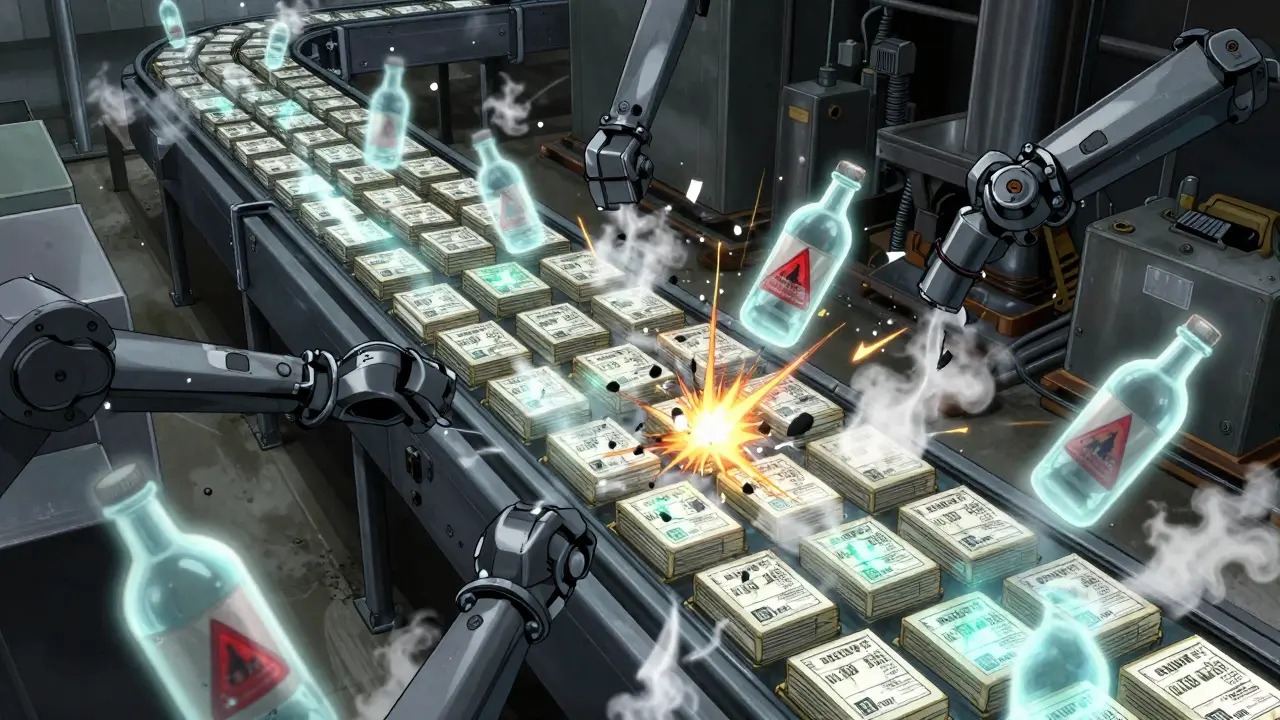
DSCSA doesn’t rely on a single government database. Instead, it uses a decentralized network of systems that talk to each other using a standard called EPCIS (Electronic Product Code Information Services). Think of it like a universal language for drug tracking. Each package gets a 20-character alphanumeric serial number following GS1 standards. That’s the same system used by Walmart and Amazon to track products. The serial number, combined with the NDC, lot, and expiration date, forms a unique digital fingerprint. When a pharmacy receives a shipment, their system scans the barcodes and sends a request to the manufacturer’s verification service. The manufacturer responds with a yes or no: “Is this package real?” If the answer is no, the pharmacy must quarantine the product and report it to the FDA within 24 hours. The biggest tech headaches? Data mismatches. Sometimes, a distributor’s system records a serial number differently than the manufacturer’s. A typo. A formatting error. A system glitch. These small errors can delay shipments for days. In Reddit’s r/pharmacy community, users report 2-3 day delays in verification just because of mismatched serial numbers.How It Compares to Other Countries
The European Union has a similar system called the Falsified Medicines Directive (FMD). But there’s a key difference: the EU uses a central repository - one database that every country connects to. The U.S. doesn’t. That’s intentional. The FDA wanted to avoid a single point of failure. If one system goes down, the whole network doesn’t collapse. Instead, the U.S. relies on direct connections between trading partners. It’s more complex, but also more resilient. And it’s scalable. The EU system took years to roll out across 27 countries. The U.S. system was built over a decade, giving companies time to adapt. The U.S. also doesn’t require anti-tamper seals on every package - though many manufacturers add them anyway. The focus is on data, not physical seals.Real-World Impact: Wins and Failures
The results are clear. McKesson, one of the largest distributors, processed over 1.2 billion serialized transactions in 2023 with 99.98% accuracy. That’s nearly flawless. But there are failures too. In 2022, the FDA issued a warning letter to a regional distributor for failing to investigate suspect products. That distributor had received a shipment with mismatched serial numbers but didn’t report it. That’s a violation of DSCSA Section 582(c)(2). It’s not just about tech - it’s about accountability. Walgreens spent $120 million on DSCSA upgrades between 2021 and 2022. That’s a lot. But they say it paid off. Their automated verification systems now flag issues before they reach customers. For smaller pharmacies, the cost is still a burden. Some have turned to third-party vendors like TraceLink, SAP, or Oracle to handle the heavy lifting. These companies offer cloud-based DSCSA software that integrates with existing pharmacy systems. It’s not cheap, but it’s cheaper than building your own.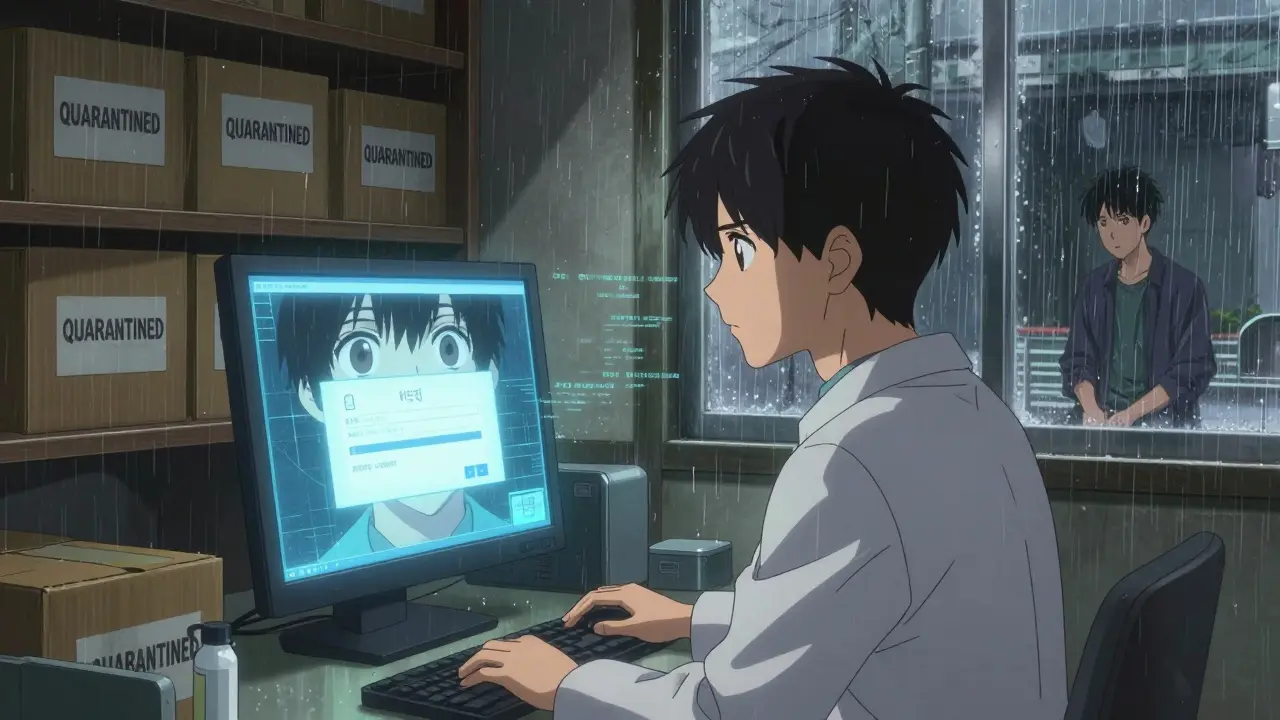
What Happens After November 2024?
The November 27, 2024 deadline is the end of the implementation phase - not the end of the story. The FDA will shift from helping companies comply to enforcing it. That means fines. Shutdowns. Legal action. But the real work begins after that. The FDA is already looking at expanding DSCSA to over-the-counter (OTC) drugs - especially high-risk ones like insulin, erectile dysfunction meds, or weight-loss pills. These are often targeted by counterfeiters because they’re sold online without prescriptions. Long-term, experts predict DSCSA will save $2.3 billion a year by reducing recalls, cutting drug diversion, and preventing counterfeit sales. PwC estimates counterfeit drug incidents will drop by 90% by 2027. The system isn’t perfect. Interoperability issues remain. Small pharmacies still struggle. But the goal - protecting patients from fake drugs - is working.What You Can Do
As a patient, you don’t need to understand EPCIS or GS1 codes. But you can stay alert:- If your pill looks different - color, shape, imprint - ask your pharmacist. It could be a legitimate change, or it could be a red flag.
- Don’t buy prescription drugs from websites that don’t require a valid prescription. The FDA warns that 96% of online pharmacies are illegal.
- Report suspicious products. If you think a drug is fake, tell your pharmacist. They’re trained to report it.
Final Thoughts
The DSCSA track-and-trace system isn’t flashy. It doesn’t make headlines. But it’s quietly saving lives. Every time a pharmacist verifies a drug and finds it’s fake - before it’s given to a patient - that’s a win. It’s the most ambitious drug safety project in U.S. history. It’s complex, expensive, and imperfect. But it works. And by the end of 2024, every prescription drug in America will have a digital identity. No more shadows. No more guesswork. Just clear, traceable, safe medicine.What is the main goal of the DSCSA?
The main goal of the DSCSA is to build an electronic, interoperable system that tracks prescription drugs from manufacturer to pharmacy to prevent counterfeit, stolen, or contaminated drugs from reaching patients. It ensures every package has a unique identifier and can be verified at any point in the supply chain.
Does DSCSA apply to over-the-counter (OTC) drugs?
As of 2026, DSCSA only applies to prescription drugs. However, the FDA is evaluating whether to extend the requirements to certain high-risk over-the-counter medications, like insulin, weight-loss pills, or erectile dysfunction drugs, which are commonly counterfeited online.
How do pharmacies verify drugs under DSCSA?
Pharmacies scan the barcode on each drug package and send the serial number, NDC, lot, and expiration date to the manufacturer’s verification system. The manufacturer responds within seconds - yes or no - whether the package is legitimate. If the response is no, the pharmacy must quarantine the product and report it to the FDA.
What happens if a pharmacy can’t verify a drug?
If a drug can’t be verified, the pharmacy must immediately quarantine it and begin an investigation. They must contact the previous trading partner to determine the source and report the issue to the FDA within 24 hours. The drug cannot be dispensed to patients until it’s confirmed as legitimate.
Why are small pharmacies struggling with DSCSA compliance?
Small pharmacies face high costs - averaging $185,000 for system upgrades - and lack the IT resources of large chains. Many don’t have dedicated compliance staff, and integrating new software with legacy systems is technically challenging. Some rely on third-party vendors, but even that can be expensive and complex.
Is DSCSA effective at stopping counterfeit drugs?
Yes. The FDA estimates DSCSA reduces counterfeit drug incidents by 95%. Companies like CVS Health report a 75% drop in suspect product investigations after full implementation. While challenges remain - like data mismatches between systems - the system has dramatically improved drug safety across the U.S. supply chain.
Gregory Clayton
January 9, 2026 AT 02:25This whole DSCSA thing is just another federal overreach. We’re spending billions so Big Pharma can keep their profits safe while small pharmacies go under. The real threat isn’t counterfeit drugs-it’s the government forcing mom-and-pop shops to bankrupt themselves on tech they don’t need.
Micheal Murdoch
January 9, 2026 AT 11:46It’s easy to get lost in the tech jargon, but at the core, this is about trust. Every time someone takes a pill, they’re trusting that it won’t kill them. That’s not a technical problem-it’s a moral one. The DSCSA doesn’t just track pills, it restores a basic human contract: that medicine should heal, not harm. And yeah, it’s messy. But so is healing.
Matthew Maxwell
January 10, 2026 AT 16:34It is patently irresponsible to suggest that the implementation of the DSCSA is anything less than a monumental achievement in public health infrastructure. The fact that 98% of manufacturers and 95% of distributors are compliant speaks to the rigor of regulatory oversight. To claim otherwise is not only inaccurate, it is dangerously misleading to the general public.
Jeffrey Hu
January 11, 2026 AT 09:51Everyone’s talking about costs, but nobody’s talking about the fact that 72% of pharmacies still can’t verify drugs? That’s not a glitch-that’s negligence. If your system can’t talk to the manufacturer’s, you’re not a pharmacy, you’re a lottery ticket seller. And don’t even get me started on the ‘data mismatches’ excuse. That’s just laziness dressed up as tech debt.
Catherine Scutt
January 11, 2026 AT 12:52My cousin works at a small pharmacy in Ohio. She cried last week because she had to delay 14 prescriptions for three days because the system kept rejecting serial numbers. No one’s talking about the people stuck in the middle. This isn’t a win-it’s a grind.
Jacob Paterson
January 11, 2026 AT 17:38Oh wow, so now we’re trusting algorithms to keep us alive? Next they’ll be using AI to decide if your insulin is ‘authentic enough.’ Meanwhile, people are still buying fake Adderall off Instagram. DSCSA? More like DSC-Don’t-Save-Anyone.
Johanna Baxter
January 12, 2026 AT 18:10They spent $120 million on this system and still can’t fix a barcode error? My grandma got the wrong meds last month because the label said ‘50mg’ but the bottle said ‘25mg’-and no one caught it. This isn’t safety. It’s theater.
Patty Walters
January 13, 2026 AT 18:28small pharmacies are gettin screwed. i know a guy who runs a shop in kentucky-he paid $150k for software that still crashes every time 2+ people use it at once. the real fix? federal grants. not more tech. just help the little guys before they shut down.
Phil Kemling
January 15, 2026 AT 15:59If we’re tracking every pill, are we not also tracking every person who takes it? The system was built to prevent counterfeits-but what happens when the same data is used to monitor who’s taking what, when, and why? Safety and surveillance aren’t the same thing. And we’re dancing dangerously close to the line.