When you pick up a prescription, you might see two options: the familiar brand-name pill or a cheaper generic version. Many people wonder-does switching to a generic change how your meds interact with other drugs? The short answer: no. For nearly every drug, the risk of interactions is the same whether it’s brand or generic. But the story behind that answer is more complex than it seems.
Why the confusion exists
People hear stories. A friend says their generic sleep pill made them groggy when they took it with their antidepressant. Someone else swears their brand-name blood thinner felt more reliable. These anecdotes stick. And when you’re managing multiple medications, it’s natural to worry. But here’s what the data says: the active ingredient-the part that actually works in your body-is identical in both versions. That’s not marketing. It’s law. The U.S. Food and Drug Administration (FDA) requires generics to match brand-name drugs in strength, dosage, route of administration, and, most importantly, bioequivalence. That means the generic must deliver the same amount of active ingredient into your bloodstream at the same rate. The acceptable range? Between 80% and 125% of the brand’s absorption. That sounds wide, but in practice, most generics fall within 5% of the original. For drugs with a narrow therapeutic index-like warfarin, lithium, or levothyroxine-the standard is even tighter: 90% to 111%.What actually causes drug interactions
Drug interactions happen because of the active ingredient’s chemistry. If you’re taking a statin and grapefruit juice, it’s the statin’s structure interacting with enzymes in your liver-not whether it’s called Lipitor or simvastatin. If you’re on an antibiotic and get dizzy when you take it with an antacid, it’s the antibiotic’s properties, not the brand label. The FDA’s Center for Drug Evaluation and Research confirms this: differences in inactive ingredients (like fillers, dyes, or preservatives) don’t change how the drug works or how it interacts with other medicines. That’s why the agency states that bioequivalent drugs can be expected to have equivalent interaction profiles.Where things get tricky
There are exceptions. Not because generics are less safe-but because of how they’re made. A generic drug doesn’t have to be tested against other generics. Only against the brand. So if Generic A is at the low end of the bioequivalence range (say, 82% absorption), and Generic B is at the high end (122%), and you switch between them, your body might get slightly different doses. For most people, this doesn’t matter. But for someone on a drug with a narrow therapeutic index-like epilepsy meds or blood thinners-those tiny shifts can add up. That’s why pharmacists at major hospitals like UCSF now check both active and inactive ingredients when a patient reports new side effects after switching. One real case: a patient on levothyroxine developed fatigue after switching generics. Turns out, the new version used lactose as a filler. The patient had undiagnosed lactose intolerance. The issue wasn’t the thyroid hormone-it was the filler. That’s not a drug interaction. It’s a food sensitivity triggered by an excipient.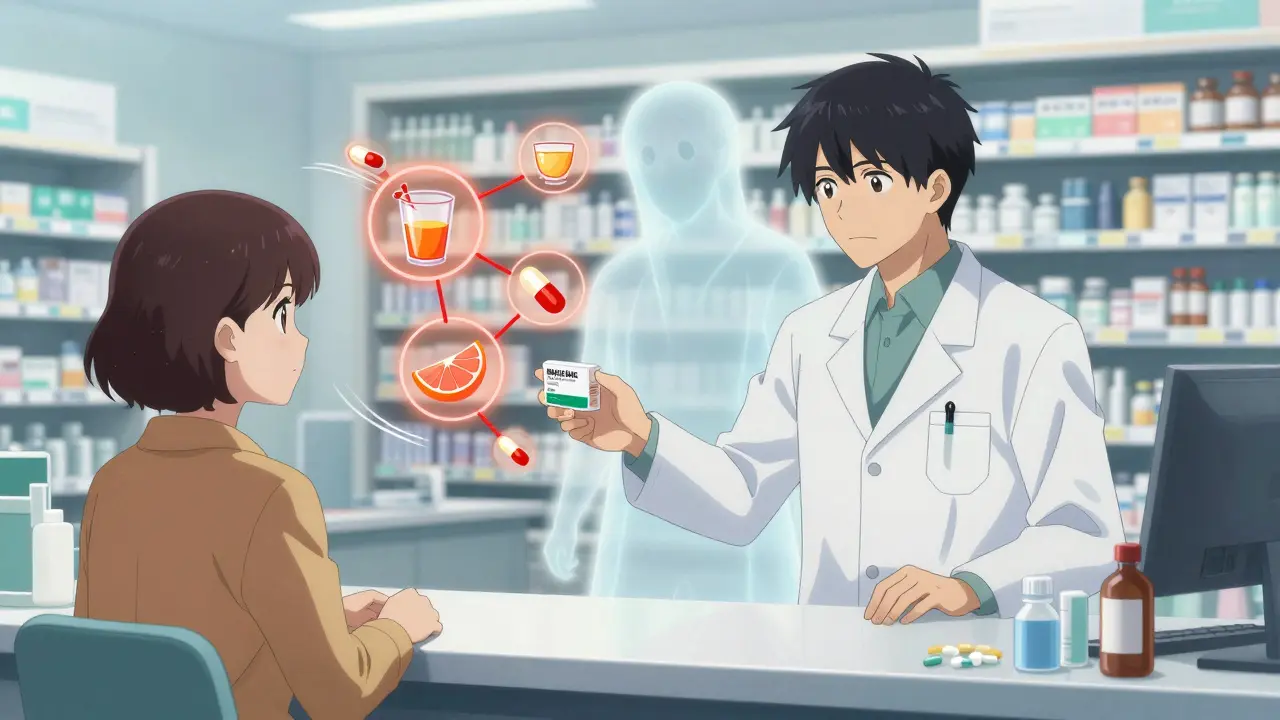
What the science says about safety
A major 2020 study in Scientific Reports tracked over 17,000 patients on generic versus brand cardiovascular drugs. The results? Generics were linked to fewer deaths and heart events. After adjusting for age, health status, and other factors, patients on generics had 11% fewer major cardiac events than those on brand-name versions. That’s not a fluke. It’s likely because generics are cheaper, so patients are more likely to take them consistently. The FDA’s own adverse event database (FAERS) from 2015 to 2020 found no meaningful difference in interaction-related reports: 0.78% for brand-name drugs, 0.82% for generics. The difference? Statistically insignificant. And a 2022 review in JAMA Internal Medicine concluded that the vast majority of evidence shows generics are therapeutically equivalent-including for drug interactions.Why some people still feel different
If the science says they’re the same, why do some people swear their generic feels different? Psychology plays a role. Studies show the nocebo effect-where expecting a negative outcome causes one-is strong with generics. A 2019-2022 analysis of WebMD forums found complaints about generic performance spiked 37% right after a new generic hit the market. But within six months, complaints dropped back to normal. People got used to it. Reddit threads on r/pharmacy show 68% of users report no difference in interactions. But 22% say they noticed changes. Most of those cases involve drugs with narrow therapeutic windows. One user described increased drowsiness after switching from brand Ambien to generic zolpidem while on sertraline. The active ingredient-zolpidem-didn’t change. But maybe the filler affected absorption speed. Or maybe the placebo effect kicked in. Either way, it’s rare.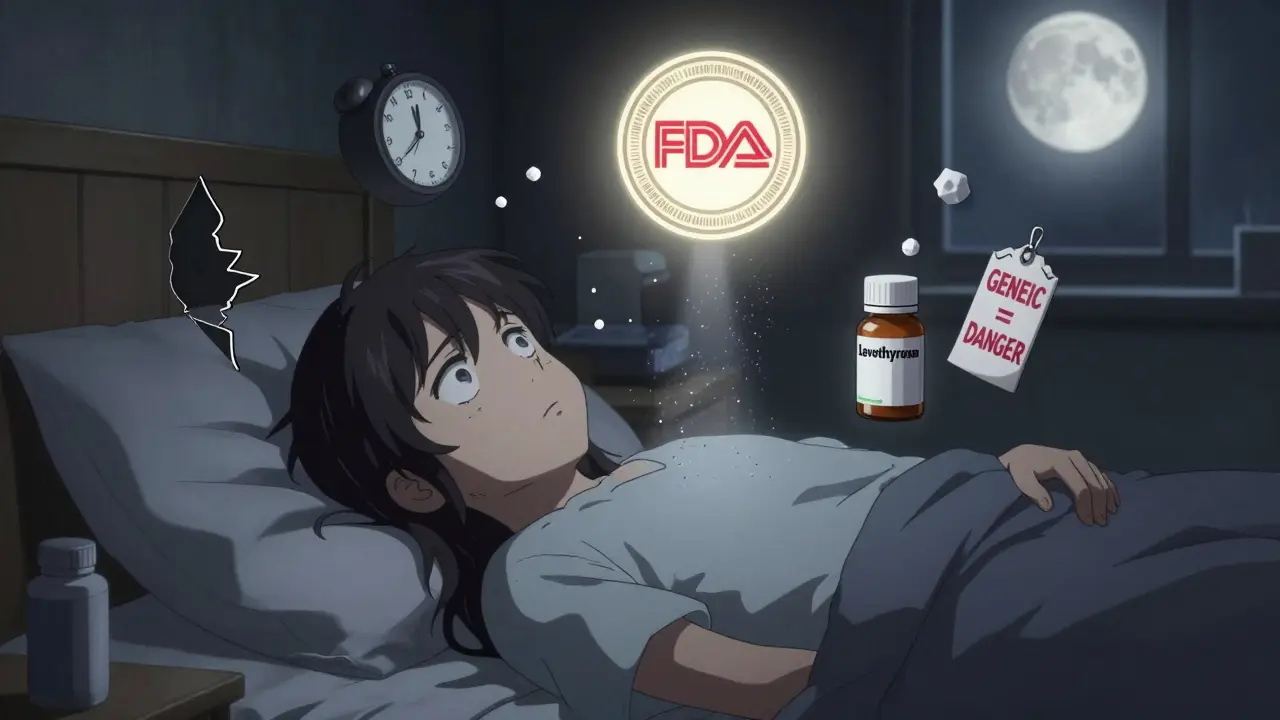
What you should do
If you’re on a stable medication and your doctor prescribes a generic, you can safely switch. But here’s how to stay smart:- Stick with the same generic brand if you’ve had no issues. Switching between different generic manufacturers can cause small fluctuations.
- If you’re on a narrow therapeutic index drug-like warfarin, digoxin, or phenytoin-ask your pharmacist to note which generic you’re on. Keep using the same one.
- Report any new side effects after switching. It’s not always the drug-it could be the filler, stress, diet, or another medication you started.
- Check the inactive ingredients if you have allergies. Some generics use dyes or lactose that others don’t.
- Don’t assume brand = better. The data shows generics are just as safe, and often more effective because people take them.
What’s changing in 2026
The FDA is now investing $24 million through 2026 to study interaction risks between multiple generic versions of the same drug. They’re using advanced in vitro testing and real-world data to track whether formulation differences matter more than we thought. So far, no major red flags. But the agency is being proactive. Meanwhile, the European Medicines Agency already uses tighter bioequivalence standards for sensitive drugs. The U.S. may follow. But for now, the rule remains: if it’s FDA-approved as bioequivalent, the interaction risk is the same.Bottom line
Your medication’s safety isn’t tied to its price tag or brand name. It’s tied to the active ingredient-and that’s identical in generics. Drug interactions depend on chemistry, not marketing. Generics are not a compromise. They’re a scientifically validated alternative that saves the U.S. healthcare system over $1.6 trillion a decade. For 90% of prescriptions, choosing a generic is the smart, safe, and responsible choice.If you’ve had a bad experience, it’s worth talking to your doctor. But don’t assume it’s because the drug is generic. More often than not, the issue lies elsewhere.
Priscilla Kraft
January 10, 2026 AT 14:51Just switched my levothyroxine to a generic last month and honestly? No difference. I even checked the filler-it was cornstarch, not lactose, so no issues for me. 🙌
Also, my pharmacist said generics have to meet the same standards as brand, so I trust it. Less money spent = more coffee bought. ☕
Jennifer Littler
January 11, 2026 AT 23:25From a pharmacokinetic standpoint, the bioequivalence window of 80–125% is statistically robust for most therapeutic classes, but for drugs with a narrow therapeutic index-say, warfarin or phenytoin-Cmax and AUC variability can accumulate across multiple switches, especially when compounded by polymorphic CYP450 metabolism. The FDA’s allowance for inter-batch variance is legally defensible but clinically nuanced. Real-world adherence data suggests cost-driven compliance offsets minor PK fluctuations, but individualized monitoring remains prudent in high-risk cohorts.
Sean Feng
January 13, 2026 AT 09:55Alex Smith
January 14, 2026 AT 15:19So let me get this straight-you’re telling me that after 20 years of being told generics are ‘just as good,’ the only time people notice a difference is when they’re on something like lithium or levothyroxine… and even then, it’s usually because the pill has lactose in it and someone’s secretly allergic to milk?
Meanwhile, Big Pharma is out here charging $500 for a 30-day supply of Lipitor while the generic costs $4 and does the exact same thing.
Someone’s making bank. And it ain’t you.
Adewumi Gbotemi
January 16, 2026 AT 14:44Here in Nigeria, we use mostly generics because brand drugs are too expensive. I never heard of anyone having bad reaction because of generic. The medicine is same. The problem is when people buy fake drugs from street sellers-not real generics. Always check the packaging and pharmacy license.
Roshan Joy
January 18, 2026 AT 06:43As someone who’s been on a combo of antiepileptics and antidepressants for over a decade, I’ve switched generics three times. Twice, zero issues. Once, I felt foggy for a week-switched back, and boom, back to normal.
Turns out the new generic had a different coating that slowed absorption. My neurologist said it’s rare but real. Bottom line: if you feel off after a switch, speak up. Your body knows.
Also, props to the FDA for keeping standards tight. 👏
Michael Patterson
January 18, 2026 AT 19:03Look i dont know why people are so scared of generics i mean sure there was that one time in 2018 when some generic version of metformin had a weird impurity but that was like one batch and they recalled it and the FDA did their thing so like why are we still talking about this its been 6 years and every study shows its fine and if you dont trust your pharmacist then maybe you shouldnt be taking meds at all? also i think brand names are just a scam to make people pay more for the same chemical and honestly if you think your brain is so sensitive that it can tell the difference between 82% and 122% absorption you probably need to stop reading reddit and go see a doctor
Matthew Miller
January 20, 2026 AT 13:02So let me get this right. You’re telling me that after all the billions spent on drug development, the only reason generics are ‘safe’ is because the FDA says so? And yet, you ignore the fact that generic manufacturers don’t have to do their own clinical trials-they just piggyback on the brand’s data. That’s not science. That’s corporate convenience. And don’t even get me started on the fact that some generics are made in factories with questionable hygiene standards. You think your $4 pill is safe? Maybe. But I’d rather pay the extra $15 and not risk my life on a gamble.
Madhav Malhotra
January 21, 2026 AT 20:54Back home in India, we’ve been using generics for decades-everyone does. My uncle takes his blood pressure meds as generic, and he’s 82 and still gardening every morning. The real issue isn’t the pill-it’s access. If you can’t afford the brand, you take the generic. And guess what? You live. The science is clear. The fear? That’s from marketing, not medicine.
Also, if you’re allergic to dyes, check the label. Simple as that. No need to panic. 😊