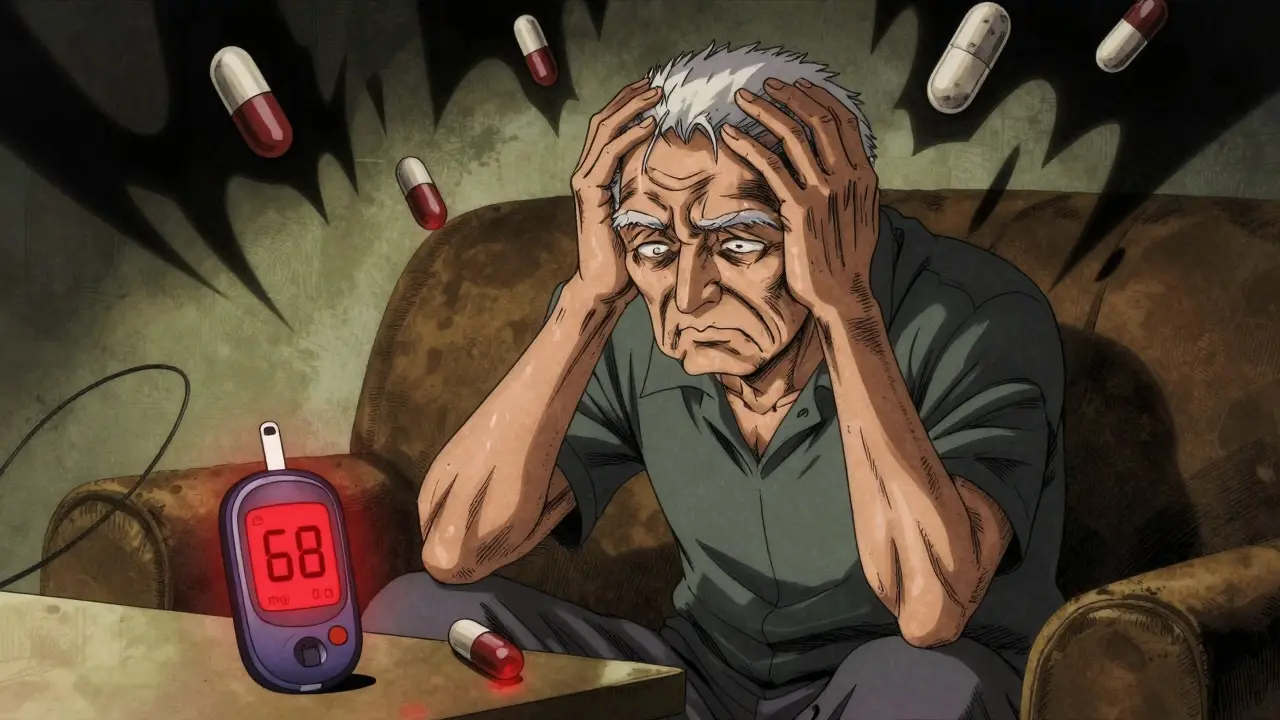
When you’re over 65 and living with diabetes, managing your blood sugar isn’t just about hitting a number. It’s about staying safe. One wrong medication choice can lead to a fall, a hospital trip, or worse. Hypoglycemia - when blood sugar drops below 70 mg/dL - is the silent threat behind many of the health crises in older adults with diabetes. And it’s not rare. In fact, seniors experience low blood sugar episodes 2 to 3 times more often than younger people with diabetes. For many, it’s not a one-time event. It’s a recurring danger, especially if they’re still on older, high-risk drugs.
Why Seniors Are at Higher Risk
Your body changes as you age. Kidneys don’t filter as well. The liver doesn’t release stored sugar as quickly. Hormones that normally kick in when blood sugar drops - like glucagon and epinephrine - become less responsive. That means when your sugar starts to fall, your body doesn’t fight back the way it used to. Add in medications for heart disease, high blood pressure, or arthritis, and you’ve got a perfect storm.Take glyburide, for example. It’s one of the most commonly prescribed sulfonylureas - a class of pills that force your pancreas to pump out more insulin. Sounds simple, right? But in seniors, glyburide sticks around in the body much longer than it should. It’s cleared by the kidneys, and as kidney function declines with age, the drug builds up. That’s why nearly 20% of elderly patients on glyburide have a severe hypoglycemia episode each year. That’s not a side effect. That’s a safety failure.
The Medications That Put Seniors at Risk
Not all diabetes drugs are created equal when it comes to safety in older adults. Some are downright dangerous. Others? They’re smart choices.- Glyburide (Glynase, Micronase) - The worst offender. It’s on the American Geriatrics Society’s Beers Criteria list of medications to avoid in seniors. Why? Long half-life. High risk of prolonged low blood sugar. Studies show it causes hypoglycemia in 30-40% of older patients.
- Other sulfonylureas (glipizide, glimepiride) - Glipizide is better than glyburide, but still risky. It’s shorter-acting, so it’s less likely to linger. But it still causes low blood sugar in 15-20% of seniors.
- Insulin - Even the most careful dosing can backfire. A single episode of insulin-induced low blood sugar increases fall risk by 30%. And falls in seniors often mean broken hips, long hospital stays, or death.
- Metformin - Often called the gold standard. But if kidney function drops below 30 mL/min, it’s not safe. Many seniors over 80 have reduced kidney clearance. Always check creatinine clearance before prescribing.
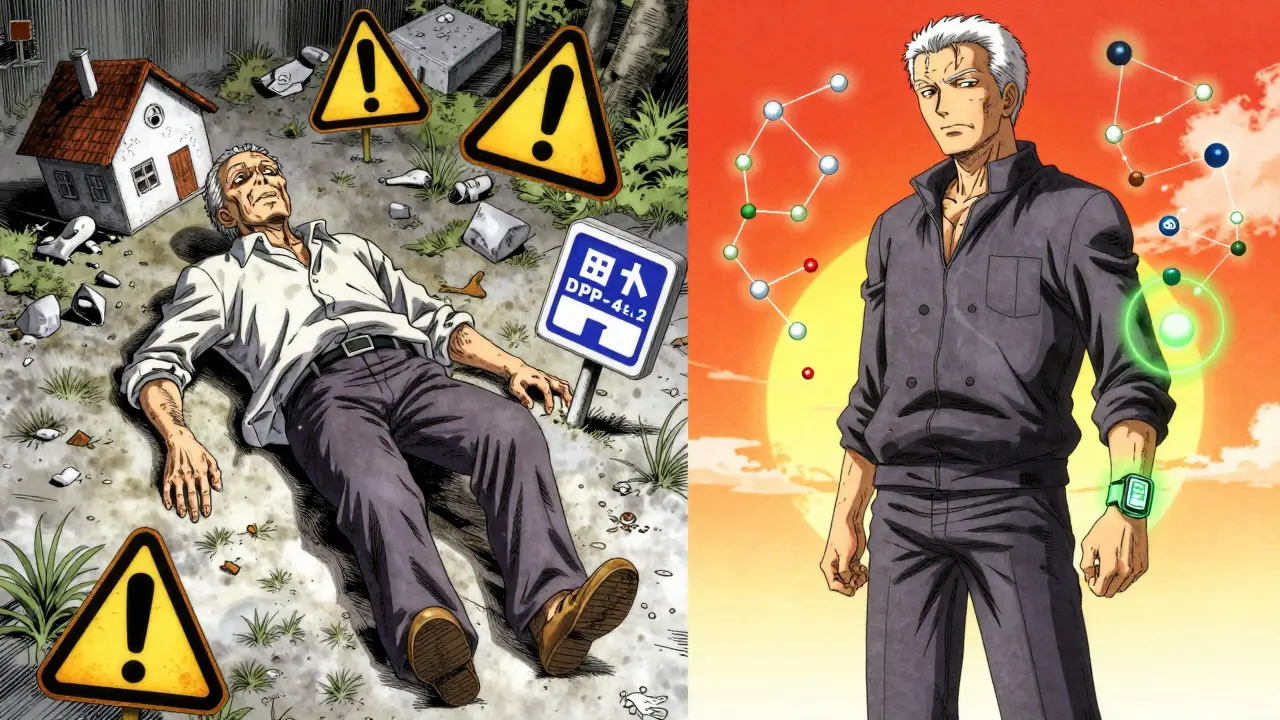
These aren’t just numbers. These are real stories. One 82-year-old man on glyburide had three falls in six months. Each time, he was confused, sweaty, and couldn’t stand up. His family didn’t realize it was low blood sugar - they thought he was dizzy from old age. He was switched to a different drug. Within weeks, the falls stopped.
The Safer Alternatives
There are better options. And they’re not experimental. They’re approved, widely used, and backed by solid data.- DPP-4 inhibitors - Sitagliptin (Januvia), linagliptin (Tradjenta), saxagliptin (Onglyza). These work by helping your body use its own insulin more wisely. They don’t force insulin out. So they rarely cause low blood sugar - unless you’re also on a sulfonylurea or insulin. When used alone, hypoglycemia rates are just 2-5%.
- SGLT2 inhibitors - Empagliflozin (Jardiance), dapagliflozin (Farxiga). These make your kidneys flush out extra sugar through urine. They don’t touch insulin levels. Hypoglycemia risk? Around 4.5% when used alone. Bonus: they help with heart failure and kidney protection.
- Tirzepatide (Mounjaro) - Approved in 2022, this newer injectable drug combines GLP-1 and GIP receptor agonism. In elderly trials, it caused hypoglycemia in only 1.8% of users - compared to 12.4% with insulin. It’s not first-line for everyone, but for frail seniors who need strong control without danger, it’s a game-changer.
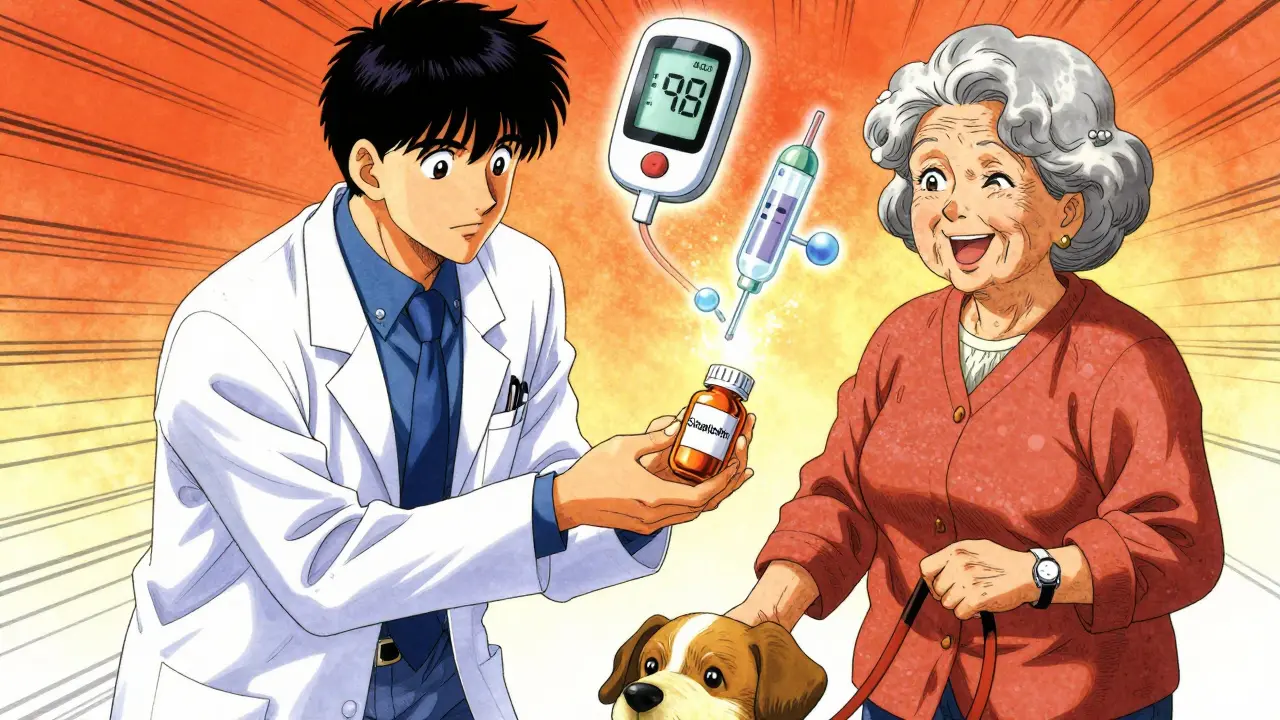
One woman, 78, had been on glipizide for 10 years. She had monthly episodes of shaking, sweating, and confusion. Her doctor switched her to sitagliptin. In six months, she had zero low blood sugar events. She started walking her dog again. She stopped fearing the night.
What You Need to Do Right Now
If you or a loved one is over 65 and on diabetes meds, here’s what to do:- Check the name of the drug. If it’s glyburide, ask for a switch. Glipizide is better, but even better are DPP-4 or SGLT2 inhibitors.
- Ask for a kidney test. Creatinine clearance matters more than age. If it’s below 45 mL/min, metformin may need to be stopped or lowered.
- Review all medications. The average senior with diabetes takes nearly 5 prescription drugs. Beta-blockers (like metoprolol) can hide symptoms like a fast heartbeat. NSAIDs (like ibuprofen) can boost sulfonylurea effects. A pharmacist review cuts hypoglycemia risk by nearly 30%.
- Test blood sugar more often. Not just before meals. Test at bedtime and if you feel dizzy. A simple fingerstick can prevent a fall.
- Consider a continuous glucose monitor (CGM). These devices, like Dexcom or Freestyle Libre, show real-time trends. Seniors using CGMs cut hypoglycemia events by 65% compared to those using fingersticks alone.
Recognizing the Signs - Don’t Wait for a Fall
Hypoglycemia doesn’t always look like shaking hands and sweating. In seniors, it often looks like confusion, drowsiness, or irritability. Some think they’re just “getting forgetful.” They’re not. They’re low on sugar.Watch for:
- Headache
- Dizziness or lightheadedness
- Weakness or fatigue
- Confusion or trouble speaking
- Irritability or unusual behavior
- Sweating or pale skin
- Fast heartbeat
Keep fast-acting sugar handy - glucose tablets, juice, or even regular soda. Teach family members what to do. If someone is confused and can’t swallow, don’t give them food or drink. Call 911. Glucagon injections are available by prescription and can be lifesaving.
It’s Not About the Number - It’s About Safety
The American Diabetes Association says this clearly: “For older adults, avoidance of hypoglycemia is a higher priority than achieving near-normal glycemia.”That means if your HbA1c is 8.0% - not perfect, but not dangerous - and you’re not having lows, you’re doing better than someone with an HbA1c of 6.8% who’s in and out of the ER.
Target HbA1c levels for seniors should be personalized:
- Healthy, active seniors: 7.0-7.5%
- Those with some health issues: 7.5-8.0%
- Frail, with multiple illnesses: up to 8.5%
Stricter targets don’t mean better outcomes. They mean more lows. More falls. More hospitalizations.
The Bigger Picture
Hypoglycemia isn’t just a medical issue. It’s a quality-of-life issue. It’s the reason seniors stop driving. Stop walking alone. Stop cooking. It’s the hidden reason many lose their independence.Changing medications isn’t about being “lazy” or “giving up.” It’s about choosing safety over numbers. It’s about letting someone live - not just survive.
Ask your doctor: “Is this drug safe for someone my age? Are there safer options?” If they say, “It’s always worked fine,” ask again. There are better choices now. And they’re not just theoretical - they’re used every day in clinics across the country.
What’s the safest diabetes medicine for seniors?
The safest options are DPP-4 inhibitors like sitagliptin (Januvia) or linagliptin (Tradjenta), and SGLT2 inhibitors like empagliflozin (Jardiance). These rarely cause low blood sugar when used alone. Metformin is also safe if kidney function is normal. Avoid glyburide - it’s one of the most dangerous drugs for seniors.
Can metformin cause low blood sugar in seniors?
Metformin alone doesn’t cause hypoglycemia. But if kidney function is poor - which is common in seniors over 80 - it can build up in the body and increase the risk of lactic acidosis. It’s not a hypoglycemia risk, but it’s still dangerous if not monitored. Always check creatinine clearance before starting or continuing metformin.
Why is glyburide so dangerous for older adults?
Glyburide is cleared by the kidneys, and kidney function declines with age. It also has a very long half-life - meaning it stays in the body for days. This causes insulin to be released long after meals, leading to delayed and prolonged low blood sugar. Studies show nearly 1 in 5 elderly patients on glyburide have a severe hypoglycemia episode each year. It’s on the American Geriatrics Society’s list of medications to avoid.
Should seniors use insulin for diabetes?
Insulin can be used safely in seniors, but only with careful dosing and close monitoring. It increases fall risk by 30% due to hypoglycemia. It’s usually reserved for those who can’t control blood sugar with pills, or who have very high HbA1c. Always pair insulin with a CGM and teach caregivers how to recognize and treat lows.
Can continuous glucose monitors (CGMs) help seniors avoid lows?
Yes. Seniors using CGMs have 65% fewer hypoglycemia events than those using fingerstick tests. CGMs show trends, not just single numbers. They alert users before blood sugar drops too low - even during sleep. This is especially helpful for seniors who don’t feel the warning signs of low blood sugar.
Noluthando Devour Mamabolo
March 12, 2026 AT 17:54Leah Dobbin
March 13, 2026 AT 14:11Ali Hughey
March 14, 2026 AT 01:44Amisha Patel
March 15, 2026 AT 14:22Elsa Rodriguez
March 15, 2026 AT 19:39Serena Petrie
March 17, 2026 AT 16:23Buddy Nataatmadja
March 19, 2026 AT 07:44mir yasir
March 19, 2026 AT 12:03Stephanie Paluch
March 19, 2026 AT 17:30