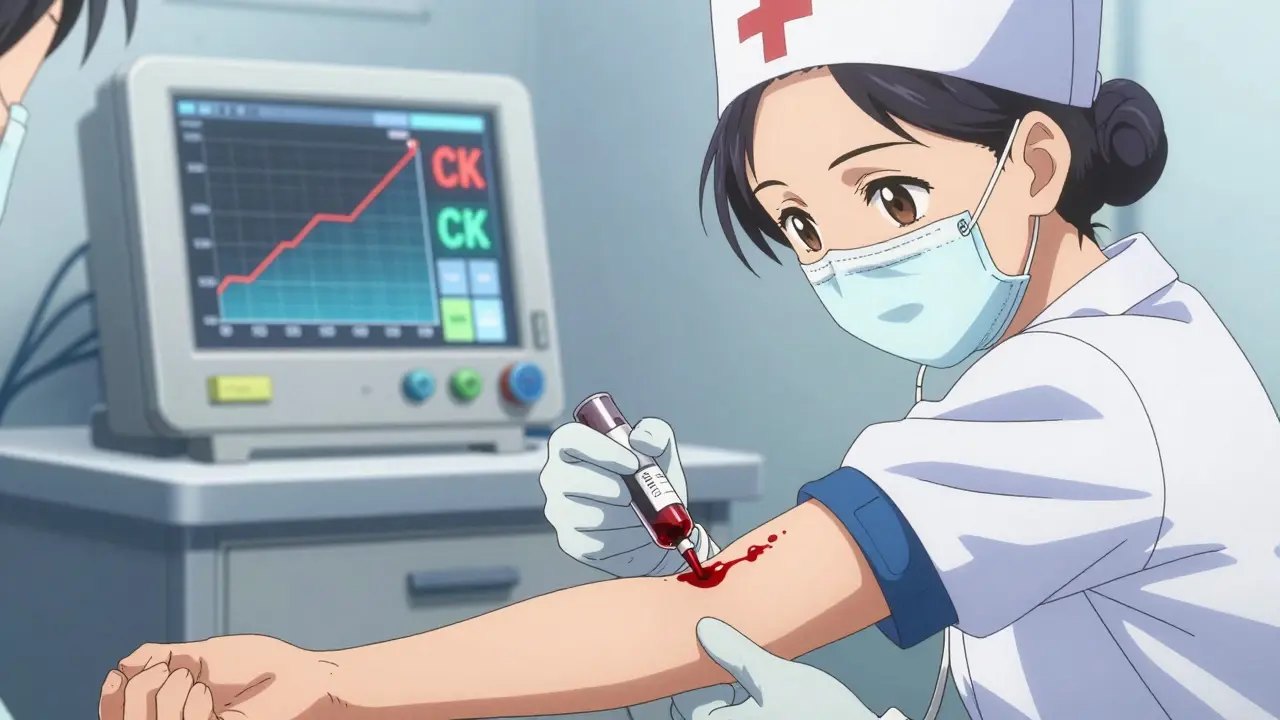
Daptomycin CK Risk Assessment Tool
This tool helps determine your risk level based on CK levels and symptoms. Follow guidelines from the University of Nebraska Medical Center.
Risk Thresholds
Normal range: 30-200 U/L
At 1,000 U/L or higher with symptoms: Stop daptomycin immediately
At 2,000 U/L even without symptoms: Discontinue treatment
Based on University of Nebraska Medical Center guidelines
Risk Assessment Results
Why Daptomycin Needs Close Monitoring
Daptomycin is a powerful antibiotic used for serious infections caused by drug-resistant bacteria like MRSA (methicillin-resistant Staphylococcus aureus). It works well against tough infections, but it can cause muscle damage. This is why doctors carefully check Creatine Phosphokinase (CK) levels during treatment.
How Daptomycin Harms Muscles
Daptomycin attacks bacterial cell walls, but it can also damage human muscle cells. Research shows it directly injures muscle membranes, especially when oxygen levels are low. A 2020 study found patients with poor circulation or heart disease face higher risks because their muscles get less oxygen. This makes the drug more toxic to muscle tissue.
Recognizing Muscle Toxicity Symptoms
Watch for these signs if you’re on daptomycin:
- Muscle pain or tenderness, especially in legs or back
- Unusual weakness or trouble moving
- Dark urine (a sign of muscle breakdown)
- Fever or flu-like symptoms without infection
These symptoms can appear within days or weeks of starting treatment. Never ignore them-early action prevents serious complications.

CK Monitoring Protocol
Your doctor will test your CK levels weekly during daptomycin therapy. Here’s what they look for:
- Normal CK range: 30-200 U/L for adults
- At 1,000 U/L or higher (5x normal) with symptoms: stop daptomycin immediately
- At 10x normal (2,000 U/L) even without symptoms: discontinue treatment
The University of Nebraska Medical Center guidelines stress these thresholds. Skipping tests risks rhabdomyolysis, a life-threatening muscle breakdown.
Who’s Most at Risk
Some patients need extra caution:
- Those on high doses (over 6 mg/kg daily) for bone infections
- People with heart disease or poor circulation
- Patients with hypoxia (low blood oxygen)
- Those taking statins (cholesterol drugs), though studies show the risk isn’t as high as once thought
Real-world data shows 5-10% of patients experience muscle issues-much higher than the 0.2% seen in clinical trials. This gap happens because real patients often have other health problems not present in controlled studies.

Daptomycin vs. Vancomycin: Cost and Monitoring
| Antibiotic | 14-Day Cost (70kg patient) | Monitoring Required |
|---|---|---|
| Daptomycin | $1,191.68 | Weekly CK tests ($7.52 each) |
| Vancomycin | $121.35 | Peak/trough blood tests ($80.00 total) |
While daptomycin is expensive, it’s often necessary for MRSA infections. Vancomycin costs less but requires more frequent blood draws. Both need careful monitoring, but daptomycin’s muscle risks demand CK checks.
What to Do If Symptoms Appear
If you notice muscle pain or weakness:
- Call your doctor immediately-don’t wait for your next appointment
- Stop taking daptomycin if advised
- Get a CK test right away
- Stay hydrated and avoid strenuous activity
Most muscle damage reverses quickly after stopping daptomycin. Delaying action can lead to kidney failure or permanent muscle loss.
Frequently Asked Questions
What are the early warning signs of daptomycin muscle toxicity?
Early signs include unexplained muscle aches, especially in the legs or back, and sudden weakness. You might feel like you’ve overworked yourself without activity. Dark urine is a red flag-this means muscle fibers are breaking down into your bloodstream. If you notice these, contact your doctor immediately.
How often should CK levels be checked during treatment?
Weekly tests are standard. For high-risk patients (like those with heart disease or on doses over 6 mg/kg), doctors may test twice a week. CK levels should be checked before starting daptomycin as a baseline. If levels rise steadily, even without symptoms, treatment may need adjustment.
Can I take statins while on daptomycin?
Yes, but with caution. Older studies suggested statins increased muscle risk, but recent data shows only a slight rise in CK levels-no statistically significant danger. Still, some doctors temporarily stop statins during daptomycin treatment as a safety measure. Always discuss this with your doctor before making changes.
Why does hypoxia make daptomycin more toxic?
Daptomycin damages muscle cells more severely when oxygen is low. A 2020 study found hypoxic conditions (like in heart failure or severe sepsis) multiply the drug’s toxic effects. This explains why patients with circulatory problems often have worse muscle damage. Doctors will monitor these patients extra closely.
Is daptomycin safe for long-term use in bone infections?
Yes, but only with strict monitoring. Bone infections often require 6-12 weeks of treatment at higher doses (8-12 mg/kg). Studies show muscle toxicity risks rise with longer use, but CK checks and dose adjustments keep most patients safe. Never skip tests-even if you feel fine-because symptoms can appear suddenly.
Joyce cuypers
February 5, 2026 AT 22:17Just wanted to share that daptomycin can be tricky.
My patient had muscle pain and dark urin.
CK was high.
Stopped the drug immedietly.
They recovered fine.
Always check CK weekly!
Carol Woulfe
February 5, 2026 AT 22:55It's alarming how pharmaceutical companies downplay daptomycin's risks.
The FDA should mandate more rigorous studies.
Real-world data shows 5-10% muscle issues, yet clinical trials claim 0.2%.
This discrepancy is suspicious.
Always question the motives behind drug approvals.
Kieran Griffiths
February 6, 2026 AT 00:07For patients on daptomycin, regular CK monitoring is essential.
I've seen cases where early detection prevented rhabdomyolysis.
Always communicate symptoms to your doctor-early intervention saves muscle tissue.
Stay vigilant!
Lisa Scott
February 6, 2026 AT 04:23Daptomycin is a ticking time bomb for muscle tissue.
The data is manipulated.
Real-world evidence shows 5-10% adverse events, but the trials are cherry-picked.
CK monitoring is a farce-doctors ignore it until it's too late.
Patients should demand alternatives.
Tehya Wilson
February 6, 2026 AT 23:33Daptomycin muscle toxicity is serious.
Monitoring CK levels critical.
Symptoms like muscle pain dark urine must be reported immediately.
Failure to monitor leads to kidney failure.
System failing patients.
jan civil
February 8, 2026 AT 20:40Daptomycin requires CK monitoring to prevent muscle damage.
Kate Gile
February 10, 2026 AT 06:44Regular CK monitoring is essential for daptomycin treatment.
Early detection of muscle pain can save lives.
Let's keep spreading awareness about these risks.
Johanna Pan
February 11, 2026 AT 17:27Daptomycin is a powerful antibiotic that saves lives when used correctly.
However, it's crucial to monitor CK levels regularly to prevent muscle damage.
I've worked with many patients on this drug and noticed that early detection of symptoms like muscle pain or dark urin makes a huge difference.
Always communicate with your healthcare provider if you feel unwell.
Staying hydrated and avoiding strenuous activity can help reduce risks.
The key is to be proactive-don't wait for symptoms to worsen.
Many people overlook the warning signs until it's too late.
Daptomycin's benefits outweigh the risks when monitored properly.
It's important to remember that every patient is different, so individualized care is essential.
Regular check-ins with your doctor ensure safety.
The medical community needs to emphasize this monitoring protocol more.
I've seen cases where skipping CK tests led to severe complications.
Prevention is always better than cure.
Let's all stay vigilant and informed to keep ourselves safe.
Proper monitoring protocols should be standard practice in all hospitals.
Jenna Elliott
February 12, 2026 AT 02:00US patients should avoid daptomycin.
It's unsafe and the FDA ignores the risks.
Other countries have safer alternatives.
We should stop using this dangerous drug.
Elliot Alejo
February 12, 2026 AT 17:02Proper CK monitoring is crucial for daptomycin treatment.
I've seen cases where catching elevated CK early prevented serious complications.
Always follow guidelines to keep patients safe.
The data supports this approach.