If you’ve had a rash that won’t go away-no matter how many creams you try, how many times you change your soap, or how carefully you avoid “harsh” products-you might not be dealing with dry skin. You could be reacting to something invisible: metals in your jewelry or fragrances in your lotion. These aren’t random flare-ups. They’re signs of allergic contact dermatitis, and the only reliable way to find out what’s causing it is through patch testing.
What Patch Testing Actually Does
Patch testing isn’t like a skin prick test for pollen or peanuts. It doesn’t give you an instant reaction. Instead, it catches delayed allergic responses-ones that take days to show up. This is because the immune system is being tricked into thinking a harmless chemical is a threat. Metals like nickel, cobalt, and chromium, and fragrance chemicals like balsam of Peru or cinnamic aldehyde, don’t burn your skin right away. They sneak in, trigger T-cells, and then, 48 to 96 hours later, your skin turns red, itches, or blisters.This isn’t guesswork. Patch testing is the gold standard. It’s been used since the 1930s, and today, dermatologists rely on standardized panels that have been refined over decades. In North America, the standard test includes 80 common allergens, chosen based on real-world data from thousands of patients. The goal? To find the one or two things you’re reacting to so you can finally avoid them.
How It Works: The 3-Visit Process
The process is simple, but it demands patience. You’ll need three visits over five to seven days.
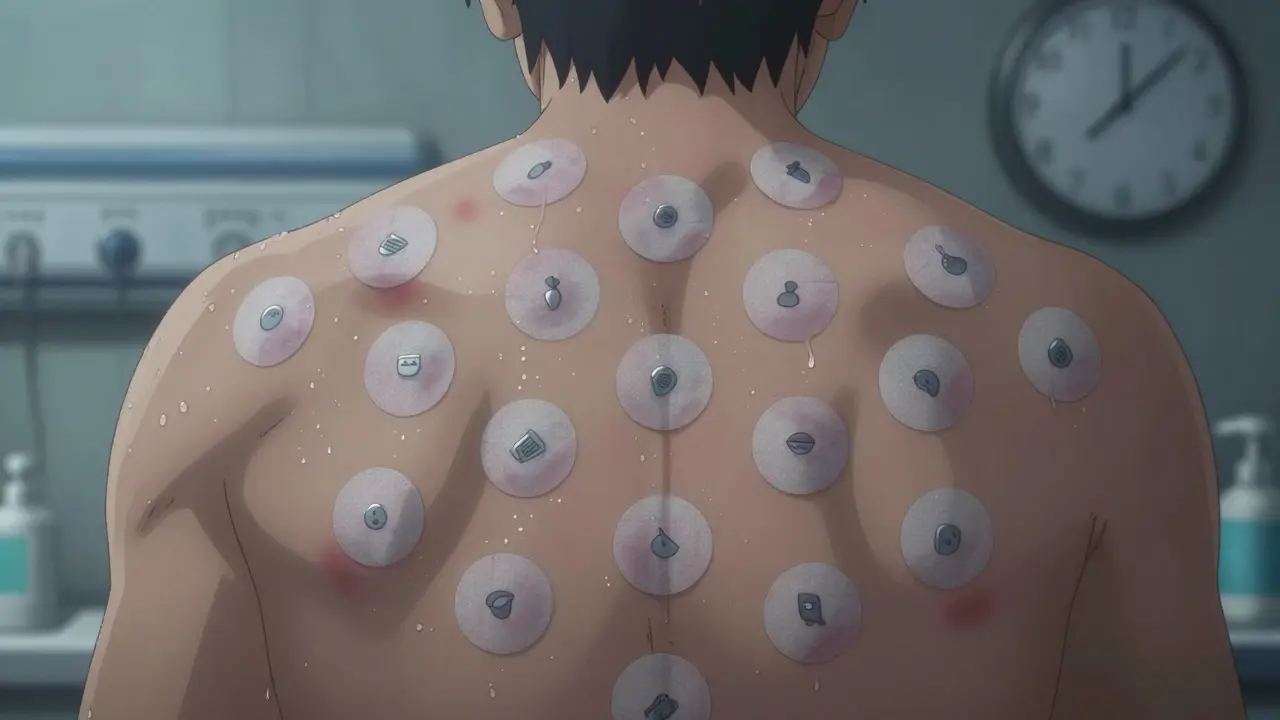
- Day 1 (Monday): Application - Small patches containing allergens are taped to your upper back. Each patch holds a tiny amount of a single substance-nickel sulfate, fragrance mix I, Myroxylon pereirae, and so on. The process takes about 30 to 45 minutes. You’ll leave with your back covered in little sticky dots.
- Day 3 (Wednesday): First Reading - The patches are removed. The dermatologist checks for redness, swelling, or blisters. A reaction here is a strong clue, but it’s not always final.
- Day 5 or 6 (Friday): Final Reading - Some reactions take longer. A second check at 72 to 96 hours catches what was missed earlier. In rare cases, even a reading at 7 days is needed.
During those 48 hours, you can’t get the test area wet. No showers, no swimming, no sweating hard. You’ll need to wear loose cotton shirts, avoid bending over too much, and resist the urge to scratch. If you accidentally pull off a patch, the test might be ruined. About 15% of patients do this-and end up with inconclusive results.
Why Fragrance Testing Is Tricky
Fragrances are the hidden enemy. You won’t find “fragrance” on a label-it’s listed as “parfum” or “fragrance mix.” But even that’s misleading. There are over 5,000 different fragrance chemicals used in consumer products. Testing them all isn’t possible. So dermatologists use a smart shortcut: a combination of fragrance mixes and individual chemicals.
The standard approach includes two mixes: Fragrance Mix I (FM I) and Fragrance Mix II (FM II). These cover about 70-80% of fragrance allergies. But here’s the catch: if you only test with the mixes, you’ll miss 10-15% of cases. Why? Because some allergens, like lyral and hydroxycitronellal, were removed from FM II in 2016 due to instability. They’re still common in lotions and detergents. So now, experts test for them individually.
The 2023 update from the North American Contact Dermatitis Group added eight new fragrance allergens to their panel, including citral and farnesol-chemicals showing up more often in modern products. If your dermatologist only runs the basic panel, you might walk away with a “negative” result… and still be reacting to your shampoo.
Metals: The Most Common Culprits
Nickel is the #1 metal allergen in the U.S. It’s in watchbands, belt buckles, zippers, earrings, and even some dental fillings. About 18.5% of people tested for contact dermatitis turn out to be allergic to nickel. Cobalt and chromium are next. Chromium is often found in leather, cement, and some paints.
One patient, a nurse in Sacramento, had chronic hand eczema for years. She changed soaps, wore gloves, tried everything. Only after patch testing did she learn the trigger: nickel in her surgical instruments. Once she switched to nickel-free tools, her skin cleared up completely. That’s the power of this test-it doesn’t just identify the problem. It gives you a solution.
What the Results Mean
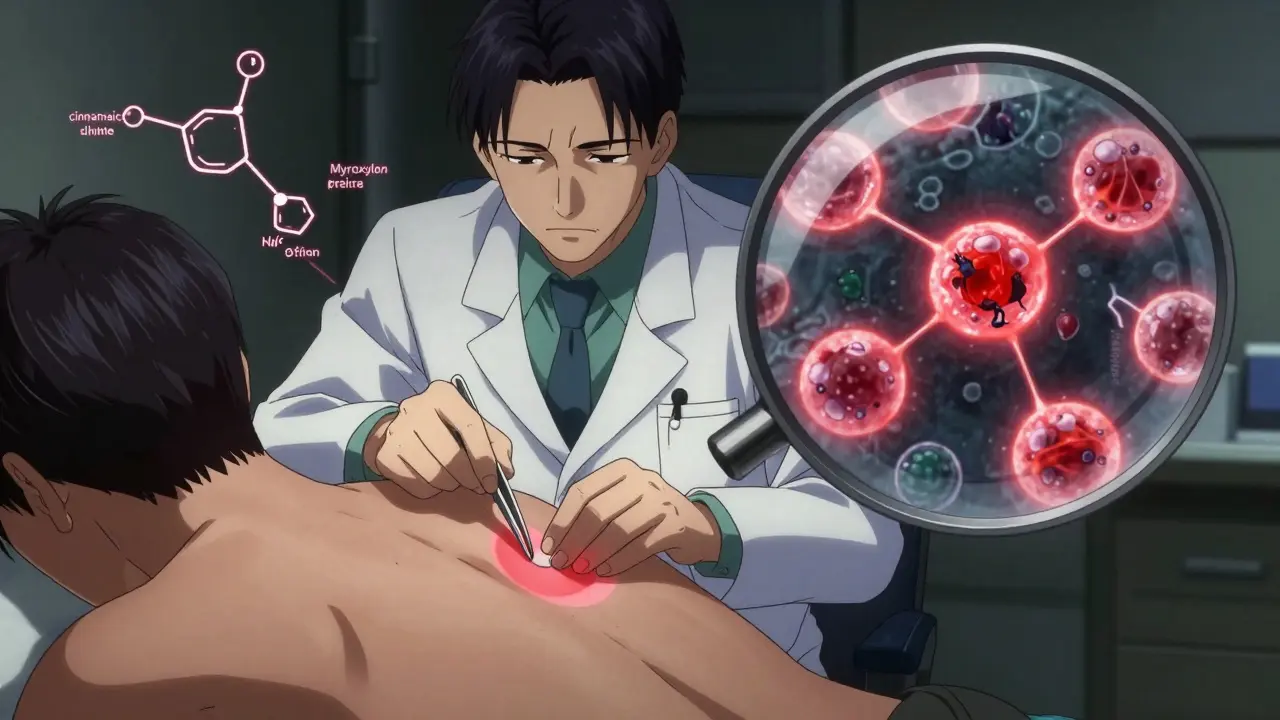
Reactions are graded on a scale: negative, doubtful, weak positive, strong positive, extreme. A strong positive means you’re definitely allergic. A weak positive might be a true allergy-or just irritation. That’s why interpretation matters. Only board-certified dermatologists trained in patch testing should read the results. General practitioners often misread them.
When you avoid the allergens you’re positive for, 60-80% of patients see their skin clear up. That’s not a small win. That’s life-changing. One Reddit user wrote: “Avoiding fragrance in my laundry detergent cleared my hand eczema completely.” Another said: “I had rashes for 10 years. Patch testing finally gave me answers.”
But it’s not foolproof. About 22% of patients get false negatives-meaning they’re allergic, but the test didn’t catch it. That’s why some experts now recommend “use testing”: applying the actual product you suspect (like your favorite lotion) directly to your skin under medical supervision. It’s not standardized, but it can help when patch testing doesn’t explain everything.
Why Other Tests Don’t Work
Some people ask: “Can’t you just do a blood test?” Blood tests like lymphocyte transformation tests (LTT) sound fancy, but they’re not reliable for fragrance allergies. Their sensitivity is only 60-70%. That means they miss nearly half the cases. They’re also not standardized across labs.
Photopatch testing exists for reactions triggered by sunlight, but that’s a different problem. For most people with chronic rashes, the standard patch test is all you need.
What Comes After the Test
Getting your results is just the start. The real work begins when you learn how to avoid your allergens. Nickel-free jewelry? Check. Fragrance-free laundry detergent? Look for products labeled “fragrance-free,” not just “unscented”-unscented can still contain masking fragrances. Read labels. Use apps like Think Dirty or SkinSAFE to scan products.
But here’s the hard truth: “hypoallergenic” doesn’t mean safe. Many products labeled that way still contain common allergens. The European Union requires 26 fragrance allergens to be listed if they’re above certain concentrations. The U.S. doesn’t yet-but the FDA is considering similar rules. Until then, you have to be your own detective.
Most people need at least one follow-up visit to understand how to avoid their triggers. About 78% of patients need help translating their test results into real-life changes. That’s normal. It’s not about perfection-it’s about progress. Avoiding nickel in your watch might not fix everything, but it might cut your flare-ups in half.

The Bigger Picture
Over 5.7 million patch tests are done in the U.S. every year. That number is growing 4.2% annually. Why? Because more people are developing allergies to everyday chemicals. Fragrances are becoming more complex. Metals are everywhere. And people are tired of guessing.
For dermatology practices, offering comprehensive patch testing is becoming a necessity. Only 22% of solo practices offer it, mostly because of the cost and training required. But for patients, it’s worth it. The diagnostic accuracy is 95-98%. That’s higher than most medical tests.
The future is moving toward more targeted panels. Researchers are even exploring peptide-based tests for metal allergies-something that could one day replace the sticky patches. But for now, the old-school patch test is still the best tool we have.
Frequently Asked Questions
How long does a patch test take from start to finish?
The full process takes about five to seven days. You’ll have three visits: one to apply the patches (Monday), one to remove them and check for early reactions (Wednesday), and a final check 48 to 96 hours after removal (Friday). Some clinics may ask you to return on day 7 if they suspect a delayed reaction.
Does patch testing hurt?
No, it doesn’t hurt. The patches are applied with a gentle adhesive, and you won’t feel anything during application. The only discomfort comes from itching if you develop a reaction. But even then, it’s usually mild. The real challenge is the 48-hour no-shower rule and resisting the urge to scratch.
Can I do patch testing at home?
No. Patch testing requires medical supervision. The allergens are applied under controlled conditions, and the results must be interpreted by a trained dermatologist. DIY tests or over-the-counter kits are unreliable and can cause serious irritation or false results.
What if my patch test is negative but I still have a rash?
A negative result doesn’t rule out contact allergy. About 22% of people with true allergies get false negatives. Your doctor may recommend a “use test”-applying your suspected product directly to your skin under supervision-or check for other triggers like irritants, fungal infections, or underlying eczema. Don’t give up if the first test doesn’t explain your symptoms.
Are there side effects from patch testing?
The most common side effect is a temporary rash at the test site. This is expected if you’re allergic. In rare cases, the patch adhesive causes irritation, or the allergen concentration is too high, leading to a false positive. That’s why interpretation by an experienced dermatologist is crucial. Severe reactions are extremely rare.
How accurate is patch testing for fragrance allergies?
Patch testing is the most accurate method we have, with a specificity of 95-98%. But accuracy depends on the panel used. Testing only with fragrance mixes misses 10-15% of cases. For full accuracy, you need both mixes and individual fragrance chemicals like Myroxylon pereirae and citral. The 2023 NACDG update now includes 20 fragrance allergens for better detection.
Is patch testing covered by insurance?
Most insurance plans, including Medicare and Medicaid, cover patch testing when ordered by a dermatologist for suspected allergic contact dermatitis. You may need a referral or prior authorization. Always check with your provider. The cost without insurance can range from $300 to $700, depending on the panel size and clinic.
Can children get patch tested?
Yes, children as young as 6 can be tested, especially if they have chronic eczema that doesn’t respond to standard treatments. The process is the same, but the number of allergens tested is often reduced to minimize discomfort. Pediatric dermatologists with patch testing experience are best suited to perform and interpret these tests.
Next Steps
If you’ve had unexplained rashes for months or years, don’t wait. Talk to a board-certified dermatologist who specializes in contact dermatitis. Ask if they use the full North American baseline series with extended fragrance testing. Don’t settle for a basic panel. Your skin deserves better.
Keep a journal: note what products you use, where your rash appears, and when it flares up. Bring it to your appointment. That kind of detail helps your doctor narrow down suspects before testing even begins.
And remember: this isn’t about being perfect. It’s about reducing flare-ups. Even avoiding one allergen can make a huge difference. You don’t need to throw out everything. Just learn what to avoid-and what’s safe to keep.
JUNE OHM
January 3, 2026 AT 03:54Philip Leth
January 3, 2026 AT 08:46Shanahan Crowell
January 4, 2026 AT 20:49Kerry Howarth
January 6, 2026 AT 16:16Joy F
January 6, 2026 AT 20:22Haley Parizo
January 8, 2026 AT 11:12Ian Detrick
January 8, 2026 AT 15:20Brittany Wallace
January 8, 2026 AT 16:34Palesa Makuru
January 9, 2026 AT 07:25Lori Jackson
January 10, 2026 AT 23:01