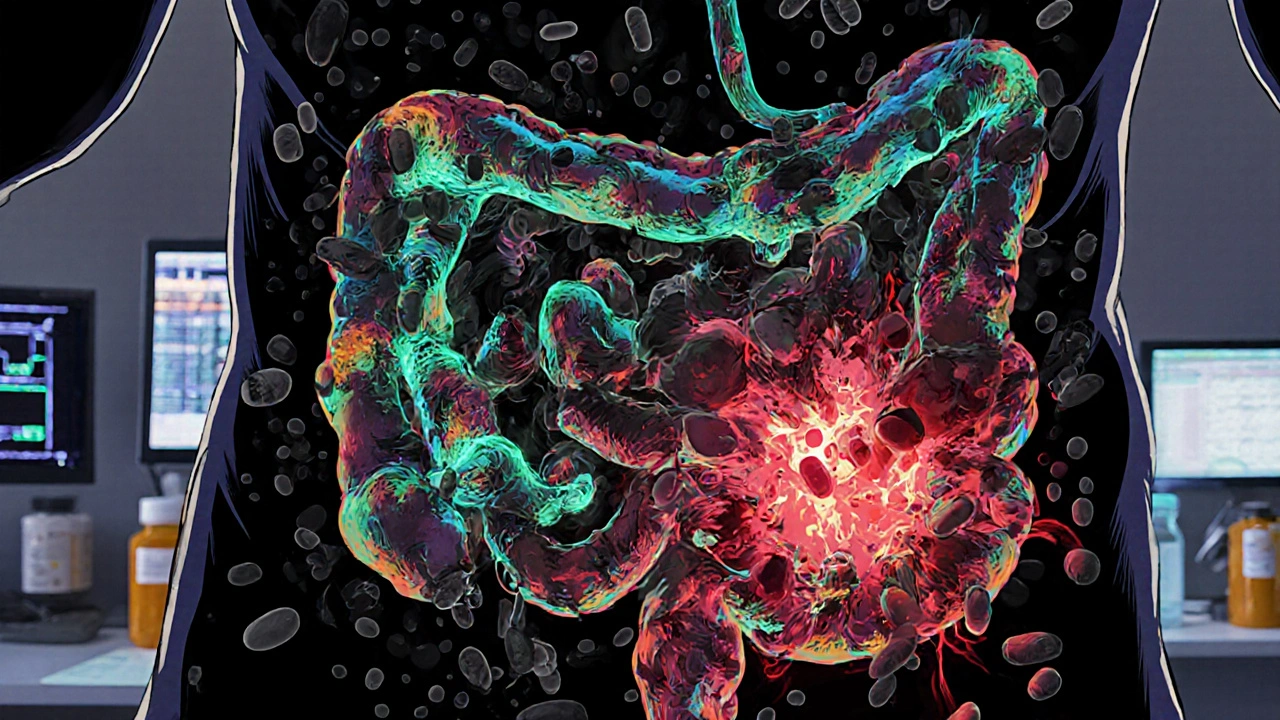
Antibiotics save lives. But sometimes, the very drugs meant to kill harmful bacteria end up wrecking the good ones-especially in your gut. When that happens, a dangerous troublemaker called Clostridioides difficile is a spore-forming, Gram-positive anaerobic bacterium that causes severe diarrhea and colitis, especially after antibiotic use. Also known as C. diff, this pathogen doesn’t just cause discomfort-it can turn deadly.
What Exactly Is C. diff?
Clostridioides difficile isn’t new. Doctors first noticed a strange link between antibiotics and deadly diarrhea in the 1950s. But it wasn’t until the 1970s, after a major outbreak tied to clindamycin, that scientists pinned it on this specific bacterium. Today, C. diff is the most common cause of bacterial diarrhea in U.S. hospitals. The CDC estimates nearly half a million infections happen every year, with over 12,000 deaths linked to it in 2017 alone.
What makes C. diff so dangerous isn’t just the bacteria itself-it’s the toxins it produces. Toxin A and Toxin B attack the lining of your colon, causing inflammation, swelling, and severe diarrhea. In worst-case scenarios, the colon becomes so damaged it can rupture. That’s when emergency surgery becomes the only option.
But here’s the twist: not everyone who carries C. diff gets sick. About 5% to 15% of healthy adults have it in their gut without symptoms. And in hospitals, up to half of patients may be colonized without knowing it. The problem only starts when the balance of gut bacteria gets knocked out-usually by antibiotics.
How Antibiotics Trigger C. diff Infection
Your gut is home to trillions of bacteria, many of which help keep harmful invaders like C. diff in check. When you take antibiotics-even for a simple sinus infection or urinary tract infection-you’re not just killing the bad bugs. You’re also wiping out the good ones that normally keep C. diff under control.
That’s when C. diff gets its chance. The spores, which are incredibly tough and can survive for months on doorknobs, bed rails, and toilets, germinate in the gut. Once they’re active, they multiply fast and start releasing toxins. Symptoms usually show up 5 to 10 days after starting antibiotics, but they can appear as early as the first day-or as late as two months after finishing them.
Classic signs include:
- Watery diarrhea (three or more times a day)
- Abdominal cramping and pain
- Fever
- Nausea
- Loss of appetite
- In severe cases: bloody stools, rapid heart rate, bloating, or signs of shock
Many people mistake these symptoms for a stomach bug or a normal side effect of antibiotics. That’s dangerous. If you’re on antibiotics and suddenly have persistent diarrhea, don’t brush it off. Get tested.
Who’s Most at Risk?
While anyone can get C. diff, some groups are far more vulnerable:
- People over 65: They make up 80% of all cases and are 10 to 15 times more likely to die from it.
- Those on antibiotics: Fluoroquinolones, cephalosporins, clindamycin, and carbapenems are the biggest culprits. Even short courses can trigger infection.
- Hospitalized patients: Each extra day in the hospital increases your risk by about 1.5%. Long stays, ICU admission, and recent surgery raise it even more.
- People with IBD: Those with Crohn’s disease or ulcerative colitis are over four times more likely to get C. diff.
- People with weakened immune systems: From chemotherapy to organ transplants, a compromised immune system can’t fight off the infection effectively.
And it’s not just hospitals anymore. Community-acquired C. diff cases have been rising. People who’ve never been hospitalized are getting infected after taking antibiotics at their doctor’s office or pharmacy.
How Is It Diagnosed?
Testing for C. diff isn’t simple. You can’t just look at a stool sample and know for sure. That’s because the bacteria can be present without causing disease-colonization isn’t infection.
The CDC recommends a two-step process:
- First, test for glutamate dehydrogenase (GDH), a protein produced by C. diff. This is highly sensitive but not specific-it can be positive even if the bacteria aren’t making toxins.
- If GDH is positive, test for toxins A or B using an enzyme immunoassay (EIA) or a nucleic acid amplification test (NAAT). NAATs detect the genes that make toxins, but they can’t tell if the bacteria are actually producing them.
Doctors must match test results with symptoms. If you have diarrhea and a positive test, it’s likely C. diff. If you’re asymptomatic but test positive, you’re probably just carrying it-and don’t need treatment.
False negatives happen in 10% to 30% of cases, especially if the sample isn’t collected properly or if you’re on antibiotics. That’s why clinical judgment matters as much as the lab results.
How Is It Treated? The Rules Changed in 2021
For years, metronidazole was the go-to treatment for C. diff. It was cheap, widely available, and seemed to work. But by 2021, evidence showed it wasn’t good enough anymore. It had higher failure rates and led to more recurrences.
The updated guidelines from the Infectious Diseases Society of America (IDSA) and the Society for Healthcare Epidemiology of America (SHEA) changed everything:
- First-line treatment: Fidaxomicin (200 mg twice daily for 10 days). It’s more expensive than vancomycin, but it cuts recurrence rates by nearly half.
- Alternative: Vancomycin (125 mg four times a day for 10 days). Still effective, especially if fidaxomicin isn’t available.
- Never use: Metronidazole for initial treatment. It’s no longer recommended by any major guideline.
Why does fidaxomicin work better? It targets C. diff more precisely, sparing the rest of your gut flora. That means fewer recurrences. Vancomycin wipes out a broader range of bacteria, which gives C. diff another chance to come back.
For people who have had multiple recurrences (two or more), the game changes again.
Fecal Microbiota Transplant (FMT): A Game-Changer
If you’ve had C. diff more than once, standard antibiotics have a 40% to 60% chance of failing again. But there’s a treatment that works 85% to 90% of the time: fecal microbiota transplant (FMT).
FMT means transferring healthy gut bacteria from a screened donor into your colon-usually through a colonoscopy, enema, or pill. It’s not as wild as it sounds. The idea is simple: replace the damaged microbiome with a healthy one, and C. diff can’t take hold.
The FDA now allows FMT under an enforcement discretion policy for recurrent C. diff. It’s not experimental anymore. It’s standard care.
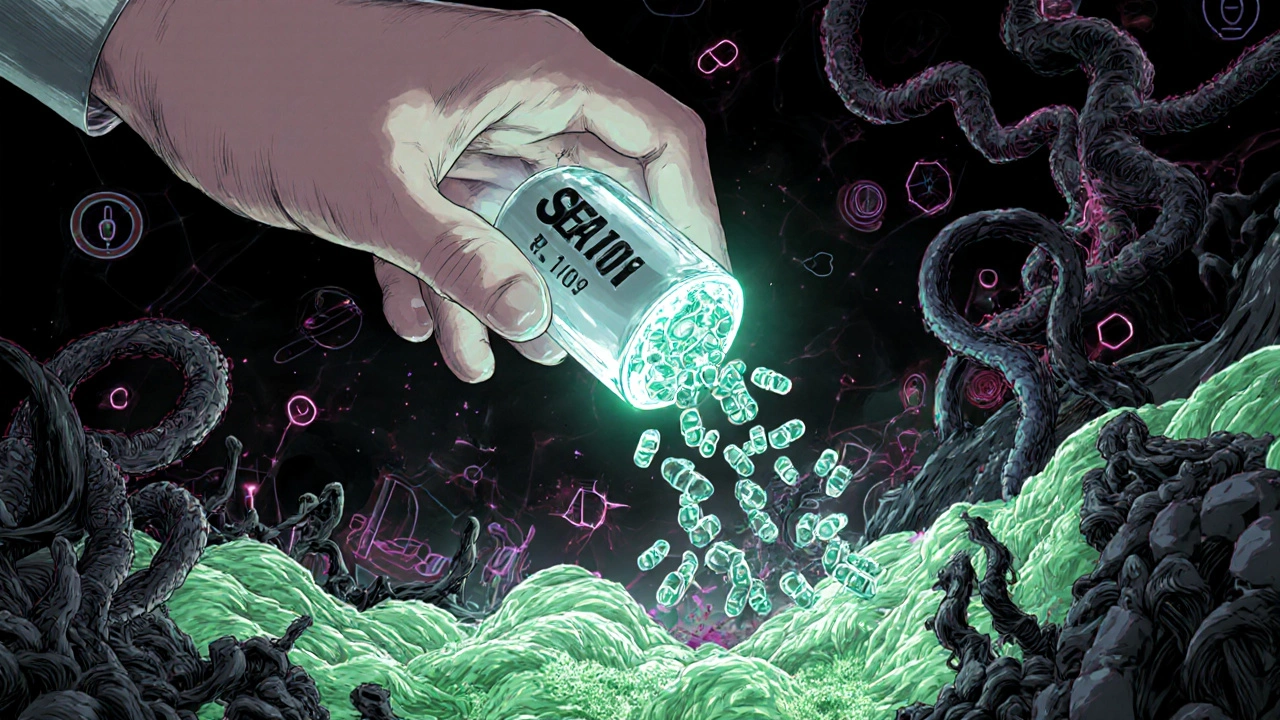
And now there’s something even newer: SER-109. Approved by the FDA in April 2023, it’s a purified, spore-based microbiome therapy made from carefully selected bacterial spores. In clinical trials, it prevented recurrence in 88% of patients over eight weeks. It’s a pill-no colonoscopy needed.
What About Probiotics?
You’ve probably seen ads for probiotics to prevent C. diff. But here’s the truth: they don’t work for that.
The American College of Gastroenterology and a major 2022 Cochrane review of nearly 10,000 patients found no strong evidence that probiotics prevent C. diff infection. Some showed a small drop in general antibiotic-associated diarrhea, but not in C. diff specifically.
Don’t waste your money. Probiotics might help with mild digestive upset, but they won’t stop C. diff. The real fix is protecting your gut flora before it gets damaged.
Prevention: The Real Key to Stopping C. diff
Once C. diff takes hold, treatment is hard. Prevention is the only real win.
1. Use antibiotics only when necessary. That’s the biggest factor. Hospitals with strong antibiotic stewardship programs have cut C. diff rates by 25% to 30%. Ask your doctor: "Is this antibiotic really needed? Is there a narrower-spectrum option?"
2. Wash your hands with soap and water. Alcohol-based hand sanitizers don’t kill C. diff spores. Only soap and water do. If you’re in a hospital or visiting someone who’s sick, wash thoroughly before and after.
3. Clean surfaces with bleach-based disinfectants. Standard cleaners won’t touch C. diff spores. Only EPA-registered List K disinfectants-those with bleach or hydrogen peroxide-can kill them. Hospitals must use them on bedrails, toilets, and door handles. At home, if someone has C. diff, clean the bathroom daily with bleach.
4. Isolate infected patients. In hospitals, contact precautions (gloves, gowns, private rooms) reduce transmission by 40% to 50%. If you’re at home and have C. diff, avoid sharing towels, utensils, or bathrooms if possible.
5. Avoid unnecessary hospital stays. The longer you’re in the hospital, the higher your risk. If you can recover at home with proper support, do it.
What’s Next for C. diff?
The fight against C. diff is moving beyond antibiotics. Researchers are testing:
- Monoclonal antibodies to neutralize toxins
- Phage therapies to target C. diff specifically
- Next-generation microbiome therapies beyond SER-109
But until these become routine, the best tools we have are simple: use antibiotics wisely, wash your hands, clean surfaces properly, and know the signs.
C. diff isn’t inevitable. It’s preventable. And it’s not just a hospital problem anymore. It’s a community problem. And that means each of us has a role to play.
Can you get C. diff without taking antibiotics?
Yes, but it’s rare. Most cases are linked to antibiotic use. However, people can pick up C. diff spores from contaminated surfaces or from someone who’s infected. Community-acquired cases are rising, especially in people with weakened immune systems, recent hospital visits, or chronic illnesses like IBD.
Is C. diff contagious?
Yes. C. diff spreads through the fecal-oral route. Spores from stool can contaminate surfaces, hands, and objects. If someone touches a contaminated surface and then touches their mouth, they can become infected. That’s why handwashing and disinfecting surfaces are so critical.
How long does C. diff diarrhea last?
With proper treatment, diarrhea usually stops within a few days. But symptoms can linger for up to two weeks. Even after symptoms clear, the bacteria may still be present. Recurrence can happen within weeks or months-up to 30% of people get it again after the first episode.
Can C. diff come back after treatment?
Yes, and it’s common. About 20% to 30% of people have a recurrence after the first infection. If you’ve had one recurrence, you have a 40% to 60% chance of having another. That’s why fidaxomicin and fecal transplants are preferred for people with multiple episodes.
Should I avoid antibiotics to prevent C. diff?
No-you should never avoid antibiotics when they’re truly needed. But you should avoid them when they’re not. Many infections, like colds or flu, are viral and won’t respond to antibiotics. Always ask your doctor if the antibiotic is necessary, what the risks are, and if there’s a safer alternative.
What’s the difference between C. diff colonization and infection?
Colonization means the bacteria are present in your gut but not causing symptoms. Infection means the bacteria are producing toxins and causing diarrhea, fever, or other signs of illness. You don’t need treatment for colonization unless you develop symptoms.
King Property
November 29, 2025 AT 08:10Let me break this down for you people who think probiotics are magic. Probiotics don’t stop C. diff. They never have. The Cochrane review said it plain: zero benefit for C. diff prevention. You’re wasting money on those fancy yogurt capsules while hospitals are drowning in spores. If you want to survive, wash your hands with soap-not hand sanitizer-and stop treating antibiotics like candy.
Yash Hemrajani
November 30, 2025 AT 11:20Oh wow, another article that tells us what we already know. Antibiotics bad, handwashing good, FMT works. But here’s the real question-why do 70% of US hospitals still use metronidazole because it’s cheaper? Because profit > patient. Fidaxomicin costs $3,000 a course. Metronidazole? $20. Who wins? The insurance company. Who loses? The 80-year-old in ICU who gets reinfected because someone didn’t want to pay the difference.
Pawittar Singh
November 30, 2025 AT 12:03Y’all need to stop panicking and start acting smart. I’ve seen this play out in my uncle’s hospital in Delhi-he’s a geriatric nurse. C. diff isn’t some alien monster. It’s a symptom of our laziness. We overprescribe, we skip handwashing, we think bleach is ‘too harsh.’ But guess what? Spores don’t care about your feelings. They live on doorknobs for MONTHS. If you’re visiting someone in the hospital, wash your hands like your life depends on it-because it might. And yes, FMT sounds gross, but it’s basically a gut transplant. Would you rather take a pill or have someone else’s poop in you? I’ll take the poop.
Also, SER-109? That’s the future. No colonoscopy. Just a capsule. I’m getting mine when it’s available. 🙌
Josh Evans
November 30, 2025 AT 15:41Just had my third C. diff episode last year. Took me 18 months to get back to normal. FMT saved me. No joke. I was skeptical too-until I was peeing blood and couldn’t leave my bed. My doc said, ‘You’ve tried everything else. Let’s do the poop.’ I cried. Then I got better. Now I tell everyone: if you’ve had it twice, don’t wait. Get the transplant. It’s not magic, it’s science. And yeah, the prep is rough-but so is dying.
Allison Reed
December 1, 2025 AT 15:05Thank you for writing this with such clarity. So many people don’t understand the difference between colonization and infection-and that misunderstanding leads to unnecessary panic and treatment. I’m a nurse, and I’ve seen patients refuse antibiotics for a simple UTI because they’re terrified of C. diff. That’s dangerous too. Antibiotics aren’t the enemy. Misuse is. The real hero here is antibiotic stewardship. Hospitals that track prescribing patterns and educate staff cut C. diff rates dramatically. It’s not complicated. It’s just not prioritized.
Jacob Keil
December 1, 2025 AT 19:30so like... if you kill all the good bacteria then the bad one takes over right? but what if the bad one was always there? like maybe we're not fighting bacteria... we're fighting our own biology? like maybe c diff is just evolution's way of saying 'you messed up' and now you gotta pay? i mean think about it... we've been poisoning ourselves with antibiotics since the 40s and now we're surprised? we're the virus. not c diff. c diff is just cleaning house.
Rosy Wilkens
December 2, 2025 AT 19:38Who funded this article? The pharmaceutical industry? Fidaxomicin is $3,000. Vancomycin is $200. Why the sudden shift? And why is the FDA pushing SER-109 now-right after the patent on vancomycin expired? And why are they not talking about the fact that 80% of C. diff cases occur in nursing homes where staff are underpaid, overworked, and don’t have time to properly disinfect? This isn’t science. It’s corporate strategy. They want you to believe the solution is expensive pills and magic poop. But the real solution? Pay nurses $30/hour and give them time to clean. That’s the real taboo.
Andrea Jones
December 4, 2025 AT 18:17Okay but let’s be real-how many of us have taken antibiotics for a cold? I did. Twice. And then I spent a week on the toilet wondering if I was dying. I didn’t know it was C. diff until my mom screamed at me to go to the ER. I’m lucky I didn’t die. So I’m telling you now: if you’re on antibiotics and you get diarrhea? Don’t wait. Don’t ‘see if it goes away.’ Call your doctor. Get tested. It’s not ‘just a side effect.’ It’s a red flag. And if you’re a parent? Don’t let your kid take antibiotics for an ear infection unless the doc proves it’s bacterial. We’re raising a generation of superbugs. And we’re all complicit.
Justina Maynard
December 5, 2025 AT 09:05I once Googled ‘C. diff’ after my mom got it. What I found was terrifying. But what terrified me more was the silence. No one talks about it. Not in school. Not in the media. Not even in doctor’s offices. It’s like we’ve normalized it. Like it’s just ‘one of those things’ that happens when you’re old. But it’s not. It’s preventable. It’s treatable. And yet, we act like it’s inevitable. Why? Because we don’t want to admit we’ve been careless. We don’t want to face the fact that we let profit override care. And now we’re paying the price-in blood, in pain, in death.
Evelyn Salazar Garcia
December 6, 2025 AT 19:29Probiotics are a scam. FMT is gross. Antibiotics are dangerous. Just don’t go to hospitals.
Clay Johnson
December 7, 2025 AT 09:54Evolution doesn’t care about your comfort. It cares about survival. C. diff survives because we create the conditions for it. We are the ecosystem. We are the problem. The bacteria is just responding. To call it an infection is to misunderstand the relationship. We are not invaded. We are balanced. Until we break the balance. Then we suffer. The solution is not more drugs. It is humility.
Jermaine Jordan
December 9, 2025 AT 02:44This isn’t just a medical issue. This is a moral crisis. Every time we prescribe an antibiotic like it’s aspirin, we’re betting someone’s life on convenience. Every time we skip handwashing because we’re in a hurry, we’re choosing speed over safety. Every time we accept a $20 pill over a $3,000 cure because of insurance, we’re saying a life is worth less than a balance sheet. C. diff doesn’t discriminate by race, income, or zip code. But our system does. And that’s the real infection. Not the spore. Not the toxin. The indifference. The quiet, systemic, soul-crushing indifference. Wake up. This isn’t about diarrhea. It’s about who we are.