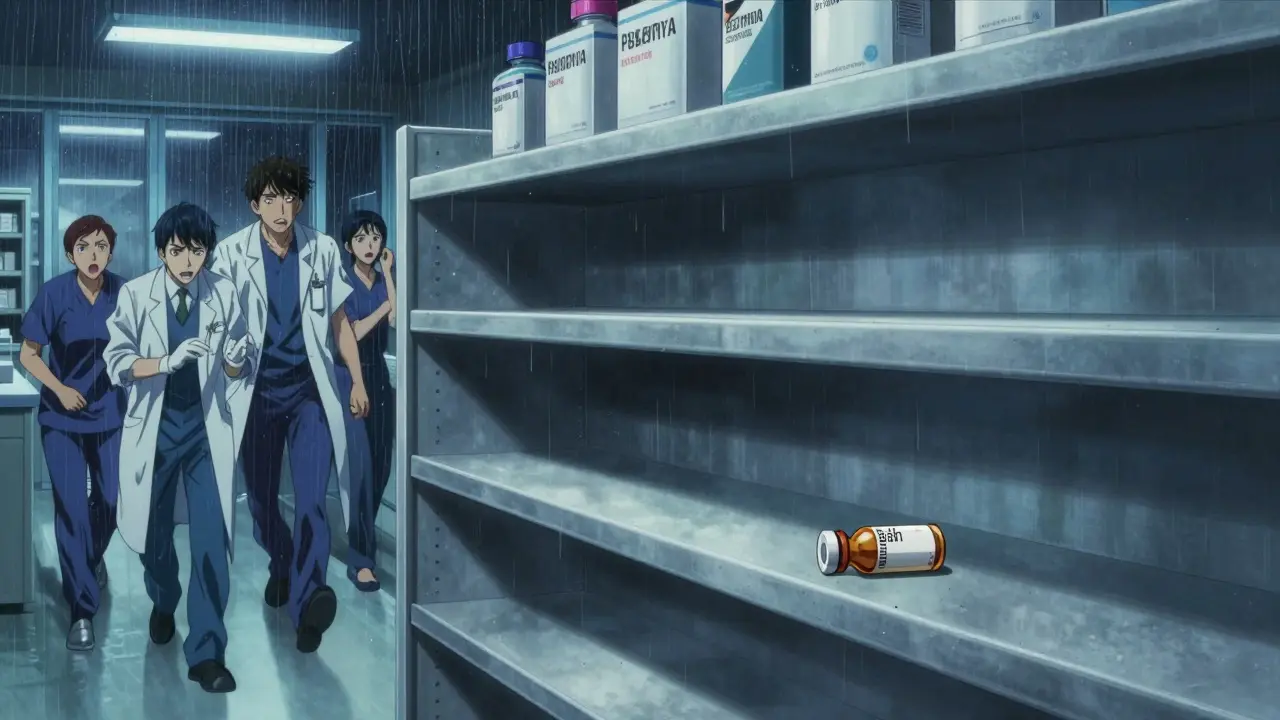
When antibiotics disappear from hospital shelves, it’s not just an inconvenience-it’s a life-or-death emergency. In 2023, one in six bacterial infections worldwide couldn’t be treated with standard antibiotics. For urinary tract infections, that number jumped to one in three. This isn’t science fiction. It’s happening right now, in hospitals from Leeds to Lagos, because the global supply of antibiotics is breaking down.
Why Antibiotics Are More Likely to Vanish Than Other Drugs
Antibiotics are 42% more likely to go out of stock than any other type of medication. Why? Because they’re cheap, hard to make, and unprofitable. While a new cancer drug can sell for $100,000 a year, a course of amoxicillin costs less than $5. Manufacturers don’t invest in factories that make sterile injectables-factories that cost millions-when they can earn more by producing acne creams or supplements. The result? A handful of plants in India and China make most of the world’s generic antibiotics. If one factory shuts down for inspection, or a shipping route gets blocked by geopolitical chaos, entire countries face empty shelves.
In the UK alone, antibiotic shortages jumped from 648 in 2020 to 1,634 in 2023. Brexit didn’t just change trade rules-it broke supply chains. The European Court of Auditors found that regulatory delays and lack of oversight meant manufacturers weren’t held accountable for maintaining stable production. Meanwhile, demand for antibiotics has been rising. More people are getting infections that won’t respond to older drugs, and hospitals are forced to use stronger ones, which are already in short supply.
The Real Cost: When There’s Nothing Left to Prescribe
When penicillin G benzathine vanished in 2015, it didn’t just delay treatment-it sent patients back home with untreated syphilis. When amoxicillin ran out in early 2023, hospitals across Europe cut its use by 69%. That might sound like progress, but it wasn’t. It meant children with ear infections and adults with pneumonia were left without the safest, most effective option. Clinicians scrambled to find substitutes, often turning to drugs like colistin-a toxic, last-resort antibiotic once reserved for superbugs. Now, it’s being used for routine urinary tract infections.
Doctors in the U.S. report similar stories. A California infectious disease specialist told the American Public Health Association forum: “We had a 72-year-old woman with a UTI. First-line antibiotics? Gone. We had to use colistin. She developed kidney failure.” That’s not an outlier. A 2025 survey found 78% of U.S. hospital pharmacists had to change treatment plans because of shortages. And 62% saw more patients get sicker because of it.
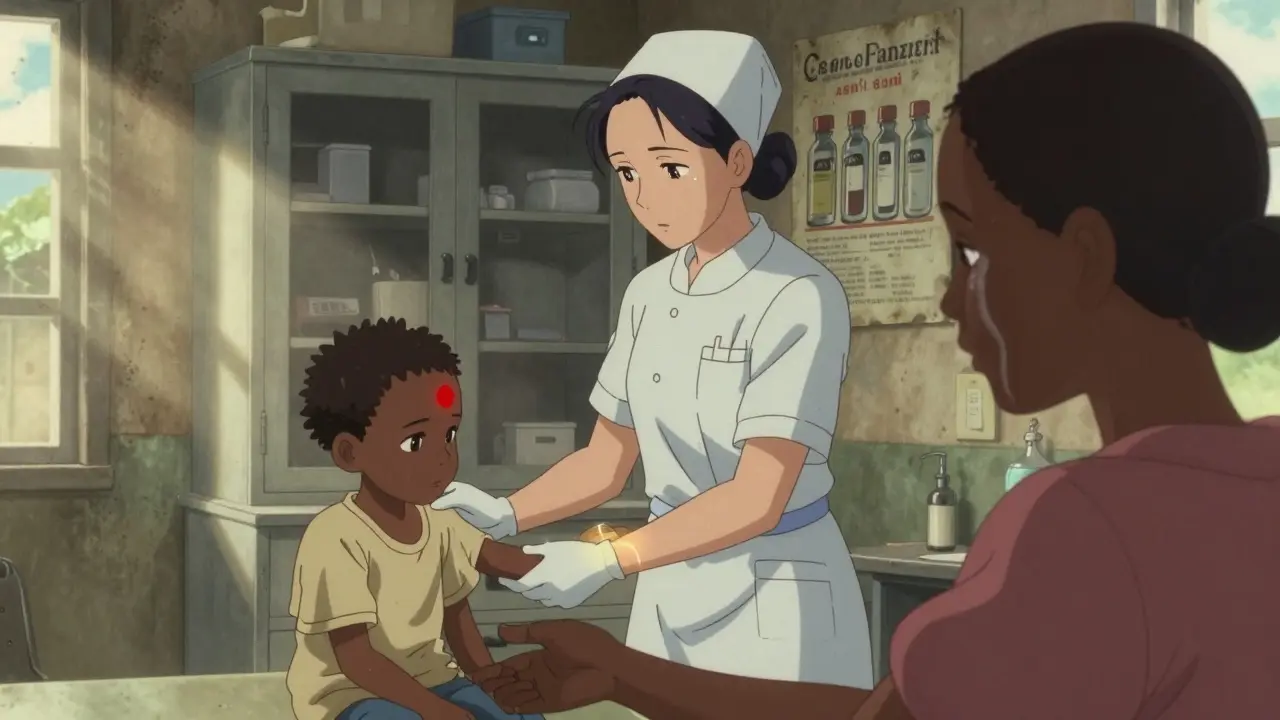
In low-income countries, the gap is even wider. While wealthier nations can import antibiotics from abroad, 70% of people in poorer regions already can’t access basic antibiotics. When a shortage hits, there’s no backup. A nurse in rural Kenya described sending mothers home with their feverish children because the clinic had no penicillin. “They know we can’t help them,” she said. “And they know it might kill them.”
Resistance Is Growing Faster Than We Can Replace Drugs
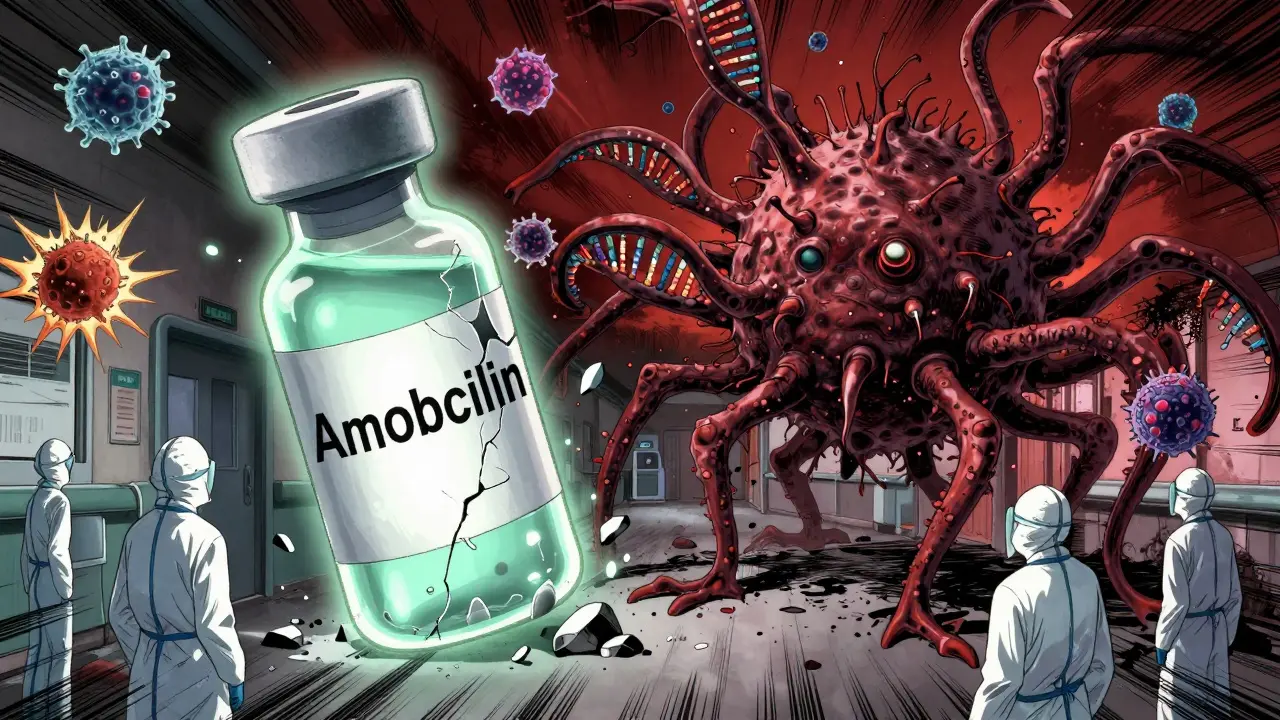
Every time a doctor has to use a broader-spectrum antibiotic because the first-line one isn’t available, they’re feeding the monster of antibiotic resistance. When amoxicillin isn’t there, doctors turn to amoxicillin-clavulanate. When that’s gone, they use ceftriaxone. When that fails, they reach for carbapenems-the last line of defense. But carbapenems are already being overused. In 2023, over 40% of E. coli and 55% of K. pneumoniae were resistant to third-generation cephalosporins. That means we’re running out of options before we even get to the final ones.
The WHO’s 2025 report found that between 2018 and 2023, resistance rose in over 40% of the pathogen-antibiotic combinations they tracked. In some regions, it’s climbing 5-15% every year. And it’s not just about misuse in hospitals. In places where diagnostics are poor, antibiotics are given for viral infections-because it’s the only thing available. That’s why Professor Ramanan Laxminarayan calls it a “perfect storm”: poor access, overuse, and now, shortages.
What’s Being Done-and Why It’s Not Enough
The European Commission and the U.S. FDA have started approving new manufacturing facilities. The FDA approved two new plants in January 2025, expected to cover 15% of current shortages by late 2025. The WHO launched a $500 million Global Antibiotic Supply Security Initiative, backed by G7 nations. But these are stopgaps. Building a single sterile injectable facility takes 3-5 years. And even if we built ten more, the economic model hasn’t changed. Companies still won’t invest if they can’t make money.
Some hospitals are trying to adapt. Johns Hopkins implemented rapid diagnostic testing during shortages and cut unnecessary broad-spectrum antibiotic use by 37%. California created a regional sharing network that cut critical shortages by 43% across 12 hospitals. But these are exceptions. Only 37% of U.S. hospitals meet all WHO standards for antimicrobial stewardship. Most still rely on outdated protocols and manual tracking.
And here’s the brutal truth: the global antibiotic market grew just 1.2% from 2019 to 2024. Meanwhile, the rest of the pharmaceutical industry grew at 5.7%. Why? Because antibiotics are a commodity, not a profit center. The industry knows this. That’s why only 12 new antibiotics have entered the market since 2010-and most are variations of old drugs. No one is building the next penicillin.
What Needs to Change
We can’t keep patching this problem. We need systemic fixes:
- Guaranteed government contracts for essential antibiotics-like the ones we have for vaccines. If a company makes 10 million doses of penicillin, the government buys them at a fair price, no matter the market.
- Investment in regional manufacturing. Europe and North America need to stop relying on single-source suppliers. Local production isn’t just about security-it’s about speed.
- Stronger regulation. Factories making sterile injectables must be inspected and maintained. No more letting cost-cutting override safety.
- Global access programs. If we want to slow resistance, we need to ensure everyone has access to the right antibiotics-not just the wealthy.
Without these changes, the WHO predicts a 40% increase in shortages by 2030. That doesn’t just mean longer waits or harder choices for doctors. It means more deaths from infections we’ve known how to treat for 80 years.
The Next Crisis Is Already Here
Antibiotic shortages aren’t a future threat. They’re a present emergency. Every time a child can’t get amoxicillin, every time a senior is sent home with a UTI because the pharmacy is out of ciprofloxacin, we’re losing ground. We’ve spent decades building better hospitals, better diagnostics, better vaccines. But if we can’t keep the most basic drugs on the shelf, none of it matters.
The next time you hear about a drug shortage, don’t think of it as a supply chain hiccup. Think of it as a crack in the foundation of modern medicine. And if we don’t fix it now, the next infection that kills someone won’t be because it’s untreatable. It’ll be because we ran out of the cure.
Why are antibiotic shortages worse than shortages of other drugs?
Unlike most medications, antibiotics often have no equally effective alternatives. For example, if penicillin is unavailable, you can’t just switch to another drug for syphilis or strep throat. Many infections require specific antibiotics. Also, unlike specialty drugs that are expensive and profitable, antibiotics are cheap to make and sell, so manufacturers have little incentive to keep producing them. This makes them far more vulnerable to supply disruptions.
Which antibiotics are most commonly in short supply?
Penicillin G benzathine has been in chronic shortage since 2015 due to manufacturing issues and low profit margins. Amoxicillin and amoxicillin-clavulanate faced major shortages in 2023, leading to a 69% drop in use. Other critical shortages include ceftriaxone, azithromycin, and carbapenems like meropenem. Injectable forms are especially vulnerable because they require complex sterile manufacturing.
How do antibiotic shortages affect antibiotic resistance?
When first-line antibiotics aren’t available, doctors are forced to use broader-spectrum or last-resort drugs like carbapenems or colistin. These drugs are more likely to kill off beneficial bacteria and promote resistance. Overusing them accelerates the spread of superbugs. In fact, resistance to third-generation cephalosporins is now over 40% for E. coli and 55% for K. pneumoniae-partly because of these substitution practices.
Are low- and middle-income countries affected differently?
Yes. While high-income countries can import antibiotics during shortages, 70% of people in low- and middle-income countries already lack access to basic antibiotics. When shortages hit, there’s no backup. Many clinics can’t afford alternatives, and diagnostics are limited, so patients get no treatment at all. This creates a deadly cycle: untreated infections spread, resistance grows, and more people die from preventable illnesses.
What can hospitals do to manage antibiotic shortages?
Hospitals with strong antimicrobial stewardship programs (ASPs) are better prepared. These programs use rapid diagnostics to identify infections quickly, avoid unnecessary antibiotic use, and track supply levels. California’s regional sharing network, which allows hospitals to transfer antibiotics during shortages, reduced critical impacts by 43%. Training pharmacists to manage rationing and substitution is also critical. But most hospitals still lack these systems.
Is there hope for long-term solutions?
Yes-but only if governments act. The WHO’s $500 million Global Antibiotic Supply Security Initiative and new FDA-approved manufacturing plants are steps forward. But real change requires guaranteed government purchases, investment in regional production, and regulations that force manufacturers to maintain supply. Without these, the problem will only get worse. The next decade will determine whether we treat antibiotics as a public good-or let them vanish.
phyllis bourassa
March 7, 2026 AT 00:47Let me tell you something straight - this isn’t just a supply chain issue, it’s a moral failure. We’ve got entire hospitals in the US and Europe scrambling because a factory in India had a power outage, and meanwhile, people in Kenya are literally sending their kids home with fevers because there’s no penicillin left. And we’re still debating whether to subsidize antibiotics like we do vaccines? No. We should be treating them like oxygen. Basic. Non-negotiable. If you’re a pharma exec making $12M a year while a child dies because your board decided to cut production lines… you should be ashamed. Not fined. SHAMED.
Bridget Verwey
March 7, 2026 AT 08:36Oh honey. You think this is bad? Wait till you see what happens when the next geopolitical shitstorm hits and China decides to ‘pause’ exports. 😏 We’re already one factory fire away from a global pediatric antibiotic crisis. And no, the FDA approving two new plants in 2025 isn’t a solution - it’s a Band-Aid on a hemorrhaging artery. The system’s rigged. Profit > survival. Always has been. Always will be. Until we make antibiotics a public utility, we’re just rearranging deck chairs on the Titanic. 🚢💀
Sean Callahan
March 7, 2026 AT 14:44ok so i read this whole thing and like… i get it? but like… why dont we just make more? like its not rocket science. antibiotics are just chemicals right? why cant we just like… pump out more? i mean, i got my amoxicillin last week and it cost like $4. why is this so hard? maybe im dumb but like… someone explain??
Ferdinand Aton
March 8, 2026 AT 08:56Wow. So we’re all just supposed to cry about antibiotics being unavailable while we’re still pumping out $100k cancer drugs? Maybe the real problem isn’t the shortage - it’s that we’ve turned medicine into a luxury market. If you want to save lives, stop pretending antibiotics are ‘cheap commodities.’ They’re essential infrastructure. Treat them like the grid. Or maybe we can just let the free market handle it - you know, like it did with insulin. 😅
William Minks
March 9, 2026 AT 08:50Y’all really need to chill and think globally 🌍❤️. I’ve worked in clinics in Ghana and Nigeria - when antibiotics vanish, people don’t just ‘wait.’ They go to the market, buy whatever’s labeled ‘antibiotic’ - even if it’s expired, fake, or meant for cows. We need global supply chains, yes - but we also need education, regulation, and trust. Let’s not just panic and blame China or India. Let’s build real partnerships. 🙏💊 #AntibioticsAreHumanRights
Jeff Mirisola
March 9, 2026 AT 13:41This is the most terrifying thing I’ve read this year. And I’ve read about asteroid impacts and nuclear winter. The fact that we’re losing ground on infections we’ve beaten for 80 years? That’s not science. That’s negligence. We’ve got the tech, the knowledge, the resources. We just lack the political will. I’m not mad - I’m disappointed. And I’m not alone. If we don’t fix this in the next 5 years, we’re not just going backwards - we’re going back to the 1800s. No one’s talking about this because it’s too real. But I’m talking about it. Now.
Susan Purney Mark
March 9, 2026 AT 14:05I’m a nurse in rural Ohio. Last month, we had a 5-year-old with pneumonia. Amoxicillin? Out. Amoxicillin-clav? Out. Ceftriaxone? We had one vial left. We had to split it, dilute it, and give half. The mom cried because she remembered her brother dying of pneumonia in the ‘80s. We didn’t have a choice. We don’t have backups. We don’t have options. And we’re not alone. This isn’t a policy debate - it’s a daily trauma. If you’re not crying reading this, you’re not listening. 🥺🩹
Ian Kiplagat
March 10, 2026 AT 13:28UK shortages tripled since 2020. Brexit? Partly. But also, we stopped caring. We assumed the system would always work. It didn’t. We need local manufacturing. Not just for security. For dignity. A child in Leeds shouldn’t be at the mercy of a factory in Guangzhou. Simple as that. 🇬🇧💊
Amina Aminkhuslen
March 11, 2026 AT 21:17Let me just say this: the pharmaceutical industry is a vampire. It drains the life out of public health and calls it ‘innovation.’ We’re not running out of antibiotics because we can’t make them - we’re running out because we’re too busy selling $500 weight-loss drugs and $2000 acne creams. We’re in a post-capitalist nightmare where the cure for infection is less profitable than a TikTok filter. I’m not mad. I’m just… disgusted. And honestly? I’m done pretending this is about economics. It’s about ethics. And we’re failing. Spectacularly.
Aaron Pace
March 13, 2026 AT 10:18So if we’re all just gonna cry about this… why don’t we just make antibiotics free? Like, government-funded, mass-produced, distributed like water. No profit. No patents. Just… do it. People are dying. We’ve got the tech. We’ve got the labs. We’ve got the money. We just need the guts. 🤷♂️💊